



On December 23, 2025, Australian Prime Minister Anthony Albanese announced an invitation to Israeli President Isaac Herzog to visit Australia on February 7. The visit aims to honor the victims of the Bondi antisemitic terrorist attack and provide support for Jewish Australians. However, the timing of this invitation has sparked significant controversy.
Just a day before the announcement, Israel’s security cabinet endorsed the establishment of 19 new settlements in the West Bank, a move deemed illegal under international law. This decision has intensified the criticism against Albanese’s invitation, as it appears to contradict his government’s efforts to promote social cohesion and respect for international law.
Herzog’s Controversial Statements and Legal Challenges
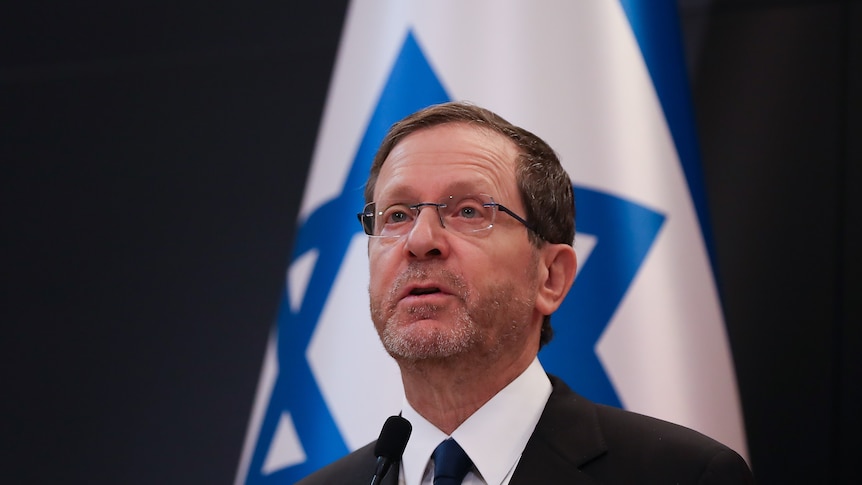
Isaac Herzog, the president of Israel, is currently embroiled in a legal battle at the International Court of Justice (ICJ). South Africa has accused Israel of committing acts of genocide in Gaza, citing statements made by Herzog as evidence of genocidal intent. At a press briefing shortly after the October 7, 2023, attacks in southern Israel, Herzog stated:
“It’s an entire nation out there that is responsible. It is not true, this rhetoric about civilians who were not aware and not involved. It is absolutely not true. They could have risen up. They could have fought against that evil regime which took over Gaza in a coup d’état.”
Herzog has denied these allegations, arguing that his statements have been distorted. Despite his denial, the ICJ has ordered Israel to take measures to prevent acts that might be considered genocidal and to allow humanitarian assistance to Gaza.
International Reactions and Domestic Implications
In September 2024, a United Nations Human Rights Council commission found that Herzog’s statements, while not explicitly calling for genocide, could be interpreted as incitement. Herzog responded by criticizing international institutions for blurring the lines between victim and aggressor, especially in the context of the largest massacre of Jews since World War II.
Meanwhile, Herzog’s praise for Israeli settlements in the West Bank as a “cornerstone of Zionism and Judaism” has drawn ire from many Jewish and Zionist communities worldwide. This stance is seen as contrary to the diverse views within Jewish communities regarding Israel’s policies towards Palestinians.
Political Ramifications for Albanese
Prime Minister Albanese has consistently advocated for a rules-based global order. His past statements, such as condemning the Israeli Defense Forces’ actions in Gaza, highlight a commitment to international law. However, Herzog’s visit places the Australian government in a difficult position, as it has also advocated for laws criminalizing hate speech and incitement to violence.
The invitation has provoked concerns from Jewish organizations in Australia. Nine groups recently expressed fears that Herzog’s visit could lead to mass protests and exacerbate antisemitism by associating Jewish people with alleged war crimes.
The federal government may argue that Herzog’s visit should transcend politics, but the controversy suggests otherwise. Jeremy Leibler, president of the Zionist Federation of Australia, welcomed the invitation, stating it shows Australia’s support for its Jewish citizens and Israel against terrorism and hatred.
Broader Community Impact
The ceasefire between Israel and Hamas in October 2025 has not alleviated the humanitarian crisis in Gaza, where over 100 children have died since, according to UNICEF. Israel’s actions, including the demolition of UN aid agency headquarters, have drawn international condemnation.
In Australia, the Muslim community, comprising 750,000 citizens, is deeply affected by the ongoing conflict. Many, like Palestinian Australian school principal Sami Muamar, who lost 130 family members in Gaza, are dismayed by Herzog’s impending visit.
Anthony Albanese, known for cautious decision-making, faces a significant challenge. Herzog’s visit risks undermining efforts to address rising tensions and polarization within Australia, particularly concerning the conflict in Gaza and the increase in antisemitism linked to Israel’s military actions.
As hearings at the ICJ continue, the Australian government must navigate the complexities of international diplomacy and domestic unity, balancing its support for Jewish Australians with a commitment to global human rights standards.