



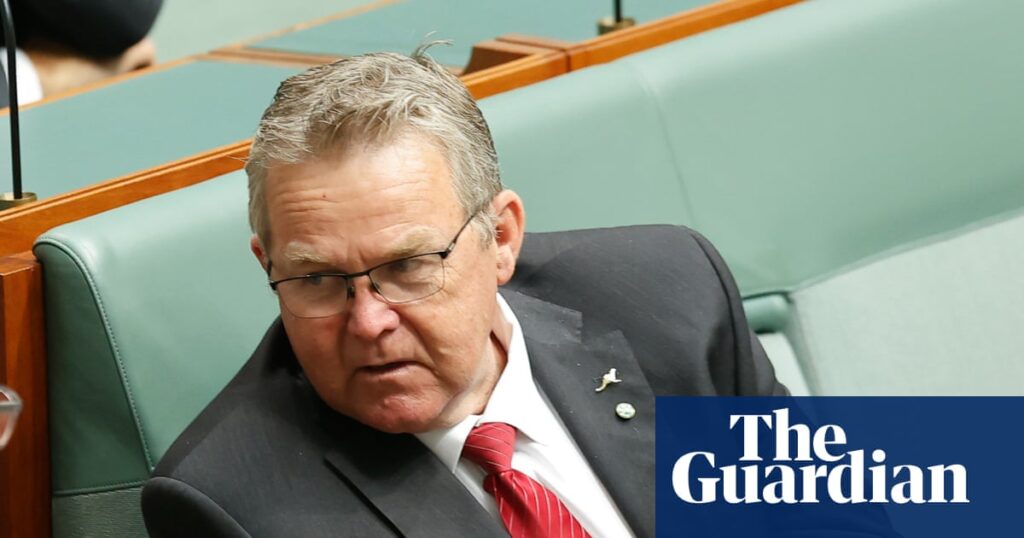
When Colin Einar Boyce, a cattle farmer from Taroom, was elected to the Queensland parliament in 2017, his primary opposition came from One Nation. Fast forward three years, Boyce’s straightforward approach as a Liberal National party backbencher, which included controversial stances on climate and mining legislation, earned him the endorsement of One Nation leader Pauline Hanson. The minor party’s decision not to contest his seat of Callide led to a 24% increase in his vote share.
This week, Boyce announced his candidacy for the Nationals leadership, expressing his frustration over the Coalition’s disarray. Speaking to 4CC radio in Gladstone, Boyce described the Nationals as “the nothing party” due to recent events in Canberra. “I am not happy about it one little bit,” he declared, criticizing the situation as a “complete debacle” driven by egos and personalities.
Boyce’s Political Journey and Controversial Stances
Boyce has been a staunch supporter of former Nationals leader Barnaby Joyce, who recently defected to One Nation. Despite speculation about his potential defection, Boyce insists he will remain with the party he joined in the 1980s, although he acknowledges that others might leave. His critics, including many within his own party, argue that his leadership bid lacks support and coherence.
As one of seven Nationals MPs who crossed the floor on hate speech legislation, Boyce played a role in the resignations from the shadow cabinet and the subsequent Coalition split. He claims his push for a leadership spill aims to preserve the Coalition but has also suggested a leadership review within the Liberal party.
Climate Policy and Ideological Battles
Boyce’s opposition to net zero climate policies and renewable energy has been a defining feature of his political career. He left the Queensland parliament in 2022 to secure the federal seat of Flynn. His decision to cross the floor on a mining rehabilitation bill was described as “the Alamo” moment, underscoring his willingness to stand firm on his beliefs.
During the 2020 state election, Boyce ran Facebook ads dismissing renewable energy as a “fantasy.” Following an explosion at the Callide coal-fired power station, he criticized the opposition to new coal plants as being driven by “eco-Marxist millennials” and “upper middle-class ‘wokes.'” Boyce is a founding member of the Saltbush Club, which denies climate science and refutes the existence of a climate emergency.
“For me it was the Alamo – make a stand, fix bayonets and over the top,” Boyce said of his decision to cross the floor over a mining bill.
Prospects and Political Implications
Despite his long-standing presence in politics, Boyce has never been considered a serious contender for the frontbench by his colleagues. Former Queensland deputy premier Cameron Dick once remarked, “Colin Boyce was a crank, but at least he never pretended to be anything else.” Boyce’s alignment with climate science deniers and conspiracy theorists has been a consistent theme throughout his career.
Boyce’s leadership bid comes at a time of significant upheaval within the Nationals and the broader Coalition. His candidacy raises questions about the party’s direction and its ability to reconcile internal divisions. As the Nationals grapple with these challenges, Boyce’s leadership aspirations could either catalyze change or further deepen the existing rifts.
Looking ahead, the Nationals face critical decisions about their leadership and policy direction. Boyce’s bid, while unlikely to succeed according to many observers, highlights the ongoing ideological battles within the party. As the political landscape continues to evolve, the Nationals must navigate these complexities to maintain their relevance and influence in Australian politics.