


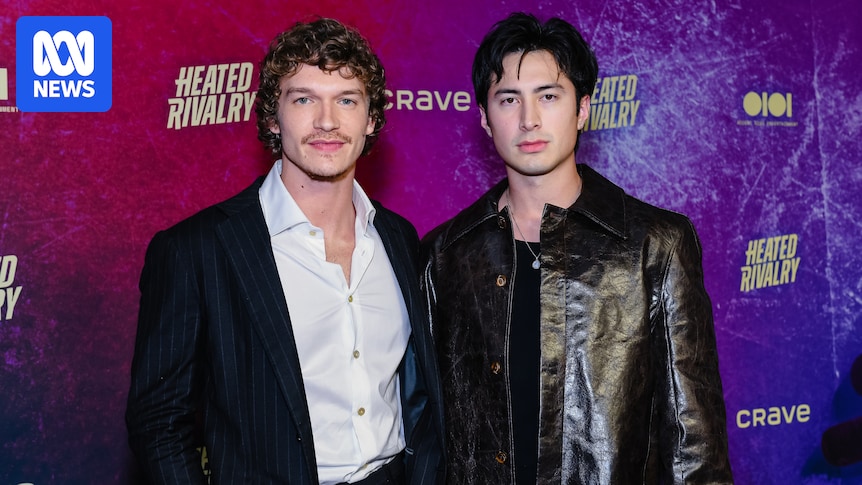
Canada’s Heated Rivalry has become a global sensation since its release in November, captivating audiences with its steamy six-part ice hockey romance. Adapted from Rachel Reid’s Game Changers series, the show portrays fictional queer love stories of male athletes in an imagined professional hockey league, akin to the NHL. The series has already been renewed for a second season, reflecting its widespread appeal.
Interestingly, the show and its source material have found a significant fan base in Australia, a country where ice hockey is not a mainstream sport. This popularity aligns with a broader trend in the romance fiction genre in Australia, where sales have surged with an average growth rate of 49% over the past three years. The rise of dedicated romance bookstores across the country underscores this trend, with sports romance playing a pivotal role.
The Rise of Queer Sports Romance
While many romance titles replicate traditional heteronormative tropes, a vibrant sub-genre of queer sports romance is emerging. These narratives offer fresh perspectives and diverse representation, challenging conventional sports storytelling. Australian authors are at the forefront, contributing new stories that highlight voices often overlooked in traditional sports writing.
Tackling True Love in AFL
In 2025, author Darcy Green released After the Siren, a novel exploring the coming out story of two queer men on a fictional AFL team. Green’s work imagines a world where male AFL players openly embrace their identities, inspired by the leadership of AFLW players in queer inclusion.
“I am honestly floored by how many beautiful messages I’ve received,” Green said. “A lot of people have said I made them cry (in a good way). I’ve also had some wonderful messages from footy fans.”
Green’s portrayal allows readers to re-imagine the sport, fostering hope for a more inclusive future. The novel’s release coincided with Mitch Brown becoming the first former or current male AFL player to come out as bisexual, highlighting the need for diverse sports storytelling.
Women’s Sport Leading the Way
Author Clare Fletcher’s Love Match, published in 2023, depicts a Sapphic romance between women playing community rugby in regional Queensland. Fletcher’s work is part of a growing interest in women’s sports and their role in disrupting traditional sports narratives.
“Women’s sport should also get a lot of credit for disrupting traditional storytelling around sport,” Fletcher said. “Particularly in football codes which have professionalised generations later than those for men, like the AFLW and NRLW, queer players are out, proud and unapologetic.”
Fletcher notes the genre’s ability to convert female readers into sports fans, expanding the audience and challenging stereotypes.
Alternate Realities and Celebratory Spaces
The romance genre, often dismissed as unrealistic, thrives by offering alternative realities. This aspect is pivotal in the recent boom of sports romance fiction. Green emphasizes the genre’s ability to tweak real-world elements while maintaining a connection to actual sports.
“Where that diversity might be lacking (or invisible) in reality, you can bring it to the foreground of the story — and, unlike real people, your characters don’t bear the real-life cost of being trailblazers or role models,” Green said.
Fletcher concurs, highlighting the genre’s power to envision inclusive sports environments where professional athletes can openly express their identities.
Celebrating Queer Joy in Sport
Green points out that queer stories in sports often focus on homophobia, overshadowing the joy of queer culture. Celebrating these aspects is crucial for fostering optimism and hope.
“It’s vital to recognise and tell those stories, but I think it’s very difficult to keep fighting for fairness and representation without a sense of joy and optimism,” Green said.
The question remains whether these stories can drive real change in sports. Shows like Heated Rivalry and diverse sports novels may encourage sports organizations to reflect on barriers to inclusion.
“I hope sports organisations see the value of having more women and queer people engaging with their leagues and athletes,” Fletcher said. “A more diverse audience encourages a broader cultural shift within men’s sport where more athletes are supported to be their authentic selves.”
Green acknowledges the potential for storytelling to initiate conversations about inclusivity, though significant work remains to translate these discussions into action. The popularity of these stories may signal to sports organizations the demand for diversity at all levels.
As Green aptly concludes, “You can be both very serious about sports and love a sports romance.”