



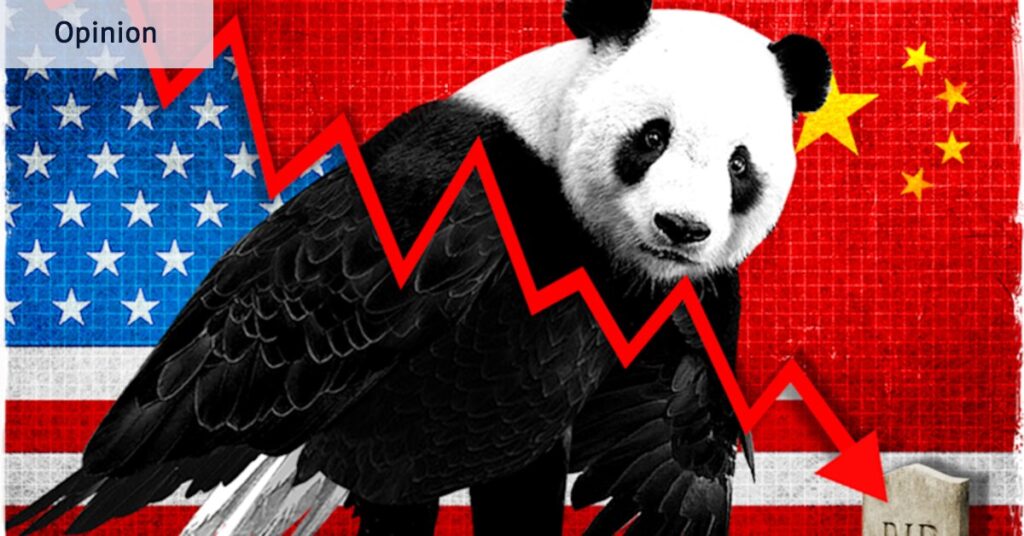
For weeks, China’s online media has been captivated by discussions surrounding the United States’ healthcare system, particularly focusing on the concept of the “kill line.” This term, borrowed from Chinese gaming culture, describes a critical point where a single event can lead to financial ruin. It gained traction after a Chinese international student in Seattle used it to highlight the precarious nature of life in America, where a medical crisis can financially devastate even the middle class.
The narrative spread quickly across Chinese platforms like Bilibili, with videos recounting unverified stories of Americans burdened by medical debt. Despite questions about their accuracy, the tales resonated, underscoring the harsh realities of the U.S. healthcare system.
The Mirror Effect: Comparing Systems
This online discourse has become a reflection of the perceived virtues of China’s socialist model versus the perceived moral failings of America’s capitalist system. Many Chinese citizens used the discussion to express pride in their country’s achievements, contrasting them with the struggles faced by Americans.
“For the first time, this made me, a middle-aged person, feel fear of this world. Their people are really so pitiful. Then I realized how wonderful it is to live in a socialist country,” commented one Chinese user. Another added, “If you’re a capitalist, America is good. If you’re an ordinary person, China is good.”
These sentiments are rooted in China’s rapid economic transformation over the past three decades, which has lifted nearly 800 million people out of poverty and created a burgeoning middle class. However, not all voices in China agree with this narrative.
Voices of Dissent and Internal Challenges
Some commentators argue that the focus on American inequality serves as a distraction from China’s own systemic issues. Li Yuchen, a legal blogger, criticized this perspective, stating, “You gain not the truth, but a cheap, illusory sense of superiority.” His essay, which has since been censored, highlighted China’s own “kill lines,” such as the hukou system that restricts citizens’ access to services based on their registered region.
The hukou system significantly impacts China’s rural poor, particularly migrant workers who move to cities for low-paying jobs. These workers face limited access to social services and endure tough economic conditions, exacerbated by the collapse of China’s real estate market and stagnating wages.
State Propaganda and Economic Realities
Despite these challenges, China’s state propaganda has seized upon the “kill line” narrative, using it to highlight perceived American failings while downplaying domestic issues. According to Lizzi C Lee, a fellow at the Asia Society Policy Institute, this narrative serves to divert attention from China’s economic slowdown and rising public anxiety.
State-run media outlets have framed the “kill line” as evidence of the superiority of China’s policies. For example, China Daily published an article titled “US ‘kill line’ in stark contrast to China’s supportive policies,” emphasizing the government’s pledges to expand its social safety net. Xinhua, another state outlet, discussed the decline of the American Dream due to wealth inequality.
Even Qiushi, the Communist Party’s theoretical magazine, weighed in, criticizing the capitalist system for prioritizing profit over workers’ well-being. However, as with all propaganda, the narrative is shaped as much by what it omits as by what it includes.
Looking Forward: Navigating Complex Realities
As China continues to grapple with its own economic and social challenges, the “kill line” debate serves as a reminder of the complexities facing both nations. While the narrative highlights genuine issues within the U.S. healthcare system, it also underscores the need for China to address its own systemic inequalities and economic vulnerabilities.
As the global landscape evolves, the interplay between these narratives will continue to shape perceptions and policies in both countries. The challenge for China will be to balance national pride with honest introspection, ensuring that its economic and social progress is inclusive and sustainable.