


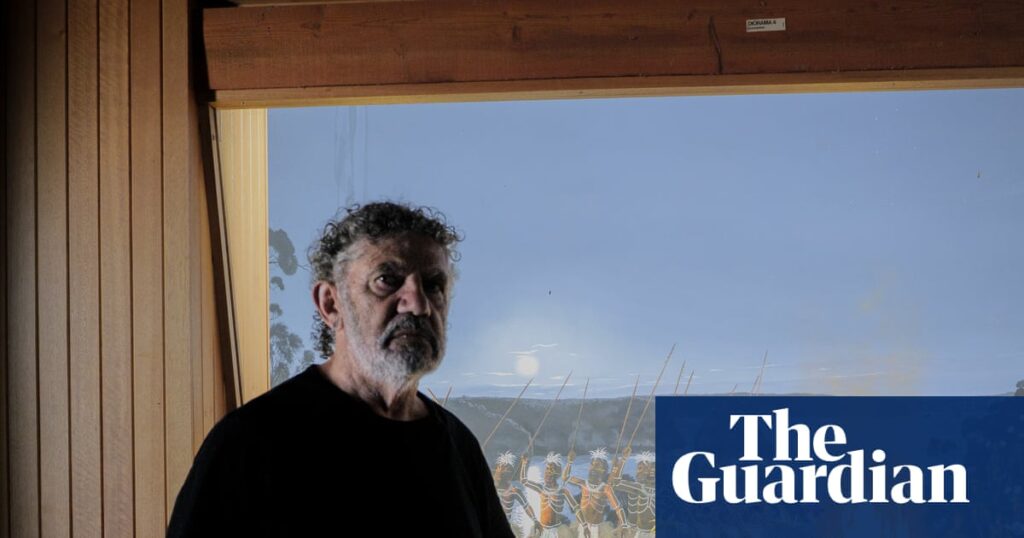
Kevin Atkinson, a Bangerang elder, stands firm in his belief that history is deeply rooted in the land along the Murray River. However, a recent decision by the Federation Council in New South Wales to remove the Aboriginal flag from council chambers has left him feeling that this history is being erased. “If they want (Aboriginal) people to respect them and their history, they gotta do the same to us,” Atkinson asserts. “That’s the way that you move forward together, instead of two different groups going in two different directions.”
The decision, made in November, saw the Federation Council vote to exclusively fly the Australian flag on all flagpoles within the shire, while relegating the Aboriginal and Torres Strait Islander flags to “available flagpoles” during Naidoc and Reconciliation weeks. This move was part of a draft document titled Aboriginal and Torres Strait Islander protocols, which also proposed changes to how welcome to country ceremonies are conducted.
Community Reaction and Historical Context
The Bangerang country, which spans parts of north-east Victoria and the southern Riverina in New South Wales, is home to Corowa, a town known as the birthplace of the Australian federation. Despite its rich history, the council’s decision has stirred controversy, particularly among the Bangerang and Wiradjuri people who share custodianship of the region.
Corowa’s mayor, Cheryl Cook, defended the council’s decision, stating it was driven by a desire to return to a “standardised civic protocol.” She emphasized that the Australian flag serves as a “primary symbol of unity for all residents.” Cook also cited the need for “transparency and fiscal responsibility” in the allocation of ceremonial costs.
“While we acknowledge the spiritual and cultural significance these ceremonies hold for many, Council must balance ceremonial costs with our broader infrastructure and service obligations to the entire community,” Cook said.
Implications of the Decision
While the council’s decision may appear to have minimal immediate impact—since the Aboriginal and Torres Strait Islander flags were not previously flown on public flagpoles—the symbolic gesture has significant implications. The move has been perceived by some as a dismissal of Indigenous history and identity. Joanne Atkinson, a Bangerang and Wiradjuri woman, described the decision as a “ripple effect” of the failed referendum to create an Indigenous voice to parliament.
The referendum, held in October 2023, saw the electorate of Farrer, which includes Corowa, record a 75% no vote. This outcome, coupled with a neo-Nazi march in the town, has raised concerns about the community’s reputation. Councillor David Harrison, who voted against the proposal, warned that the town’s image is at risk.
“I can understand how Corowa is now known as the place where we have 40 neo-Nazis march up and down our main street on a Saturday morning. Now we’re starting to remove flags. I can understand how someone can see it cascading,” Harrison said.
The Historical Significance of the Region
The Murray River region holds significant historical importance for Aboriginal communities. It is the birthplace of many notable figures in Aboriginal political history, including Sir Doug Nicholls, a Yorta Yorta man born at the Cummeragunja Aboriginal mission. The area also served as a refuge for Bangerang people and other tribes during colonial disruptions.
Despite the area’s rich Indigenous history, many residents of Corowa are more concerned with practical issues such as ageing infrastructure. Of the residents interviewed, only one expressed support for the council’s proposal. Others, like local woman Danielle, questioned the decision-making process.
“Everybody has a right to be represented … the Aboriginal [flag] in particular deserves a place up there with the Australian flag,” Danielle said.
Next Steps and Community Engagement
The draft Aboriginal and Torres Strait Islander protocols document was open for public submissions until December 24, 2025. The council now faces the task of reviewing these submissions before a final vote in March 2026. Ethan Williams, a Wiradjuri man and chairperson for the Southern West Yiradyuri Clans Land, Water and Sky Country Aboriginal Corporation, has voiced strong opposition to the proposed changes.
“This includes speaking up when symbols and decisions in our region affect how First Nations peoples are seen, respected and included in civic life,” Williams stated.
As the council prepares to revisit the decision, the debate over the flags continues to highlight broader issues of representation and recognition within the community. The outcome of this decision will likely have lasting impacts on how the region navigates its complex historical and cultural landscape.