



For decades, scientists believed that Earth’s vast oceans were primarily delivered by asteroids and comets during the early Solar System. This theory was rooted in the Late Heavy Bombardment period, approximately 4.1 to 3.8 billion years ago, when collisions with celestial bodies were frequent. The prevailing thought was that planets close to the Sun, including Earth, were too hot to support volatile compounds like water, making meteorites and comets the likely sources. However, recent research on lunar rocks brought back by the Apollo missions has cast doubt on this assumption, suggesting that meteorites contributed only a minor fraction of Earth’s water.
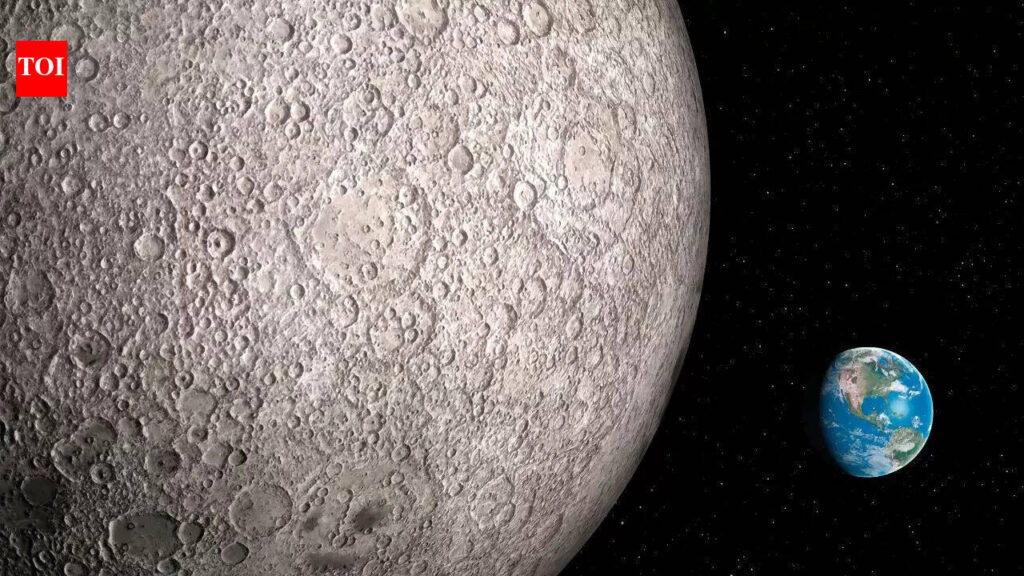
The announcement comes as scientists delve deeper into the Moon’s geological history. Earth’s surface is constantly renewed, erasing much of its ancient history. In contrast, the Moon’s surface remains largely unchanged, preserving a record of impacts over billions of years. By studying lunar rocks and regolith, researchers can identify the types of celestial objects that have collided with the Moon and estimate their composition. This makes the Moon an invaluable time capsule, holding clues to the early Solar System that Earth’s dynamic surface has lost.
Lunar Rocks Provide New Insights
Led by Dr. Tony Gargano of the Lunar and Planetary Institute and the University of New Mexico, a team of scientists used triple oxygen isotope data to analyze lunar materials. This method allows them to distinguish between materials deposited by meteorite impacts and those altered by the high temperatures and vaporization of such impacts. Dr. Gargano explained, “The lunar regolith is one of the rare places where we can actually interpret time-integrated data on what was hitting Earth’s neighborhood for billions of years. And, basically, the fingerprint that can be used is to ‘pull out’ an impactor signal from a mixture that has melted, vaporized, and reworked many times.”
Meteorites’ Minimal Contribution
The study revealed that only about 1% of the Moon’s regolith mass came from meteorites, predominantly C-type asteroids. This finding suggests that the amount of water these meteorites could have delivered to Earth is negligible, especially considering that over 70% of our planet is covered by oceans. While Earth’s water constitutes just 0.023% of its total mass, or 1.46 x 10²¹ kilograms, meteorites appear to have played a minimal role in this. Dr. Justin Simon of NASA’s ARES Division noted, “The truth is, our findings don’t preclude meteorites carrying no water at all. Our findings indicate that the Moon’s long-term history makes it very hard for a late meteorite delivery to be the dominant source of oceans on Earth.”
Moon’s Water and Future Space Exploration
Meanwhile, the Moon’s water, mainly located in permanently shadowed regions near its poles, is crucial for future space missions. These ice deposits can provide drinking water, crop irrigation, radiation shielding, and fuel production through liquid hydrogen and oxygen. Space agencies like NASA, ESA, Roscosmos, and the China Manned Space Agency are planning human habitats in areas such as the South Pole-Aitken Basin, where water ice is accessible. Even the small amount of water delivered by meteorites may have been vital for early lunar exploration and establishing infrastructure for scientific endeavors, such as radio telescopes free from Earth-based interference.
Implications for Understanding Earth’s Habitability
This development follows a broader effort to comprehend how Earth became habitable. By examining the Moon’s preserved impact record, scientists can assess the relative contributions of various celestial bodies in delivering life-essential materials. While meteorites might have provided some water, they were likely not the primary source of Earth’s oceans. This calls for further investigation into other origins, such as water retained during Earth’s formation or even from the Solar Nebula. Dr. Gargano emphasized, “The value of the Moon is that it gives us ground truth: real material we can measure in the lab and use to anchor what we infer from meteorites and telescopes.”
The move represents a significant shift in our understanding of Earth’s water origins, prompting new questions and research directions. As scientists continue to explore these ancient clues, the Moon remains a key to unlocking the mysteries of our planet’s past and the broader history of the Solar System.