




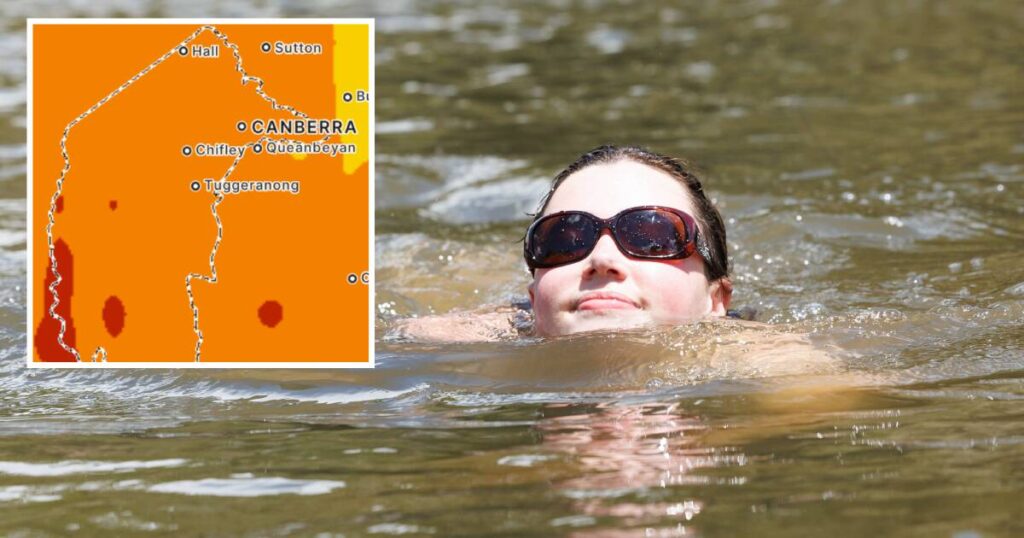
Canberrans are bracing for a sweltering week as the Bureau of Meteorology (BOM) forecasts the territory’s second-hottest January day since 1939, with temperatures expected to soar to a scorching 42 degrees Celsius midweek. This intense heatwave, compounded by a severe weather warning, has prompted residents to prepare for extreme conditions.
In a recent weather update, the BOM extended an existing severe heatwave warning for Canberra to Wednesday, cautioning that the heatwave is likely to intensify. Areas expected to be most affected include Belconnen, Tuggeranong, and Woden Valley. If temperatures reach the predicted 42 degrees, it will fall just two degrees short of the ACT’s hottest day on record, which was recorded on January 4, 2020, during the devastating Black Summer bushfires.
Heatwave Intensifies Across Canberra
Senior meteorologist Kristy Johnson has indicated that the “very hot week” could potentially escalate the severe heatwave alert to an extreme level. “There is some indication, particularly on Tuesday, Wednesday, and Thursday, that we might see it reaching that extreme heatwave criteria – very hot days, hot nights extended over a few days,” she explained.
The forecast predicts a maximum of 33 degrees on Monday, climbing to 36 degrees on Tuesday, and peaking at 42 degrees mid-afternoon on Wednesday, January 28. The heatwave is expected to ease slightly on Thursday, with a predicted high of 35 degrees, before rising again to 38 degrees on Friday and 39 degrees on Saturday. A high fire danger rating remains in place until Wednesday, with no rain expected until the weekend, when partly cloudy conditions may offer some respite.
Contributing Factors to the Heatwave
According to Ms. Johnson, a marine heatwave is also contributing to the extreme temperatures expected this week. “We’ve got very warm oceans around us at the moment. There’s quite a few meteorological factors coming together to give us this very long-lasting and very intense heatwave,” she said.
Additionally, heat building over parts of Western Australia last week, where temperatures approached 50 degrees, has been dragged eastwards by a trough off the coast of Perth, affecting the entire southeast of the continent. “We haven’t had much cloud over much of northern Australia, which has allowed the heat to build up. At this time of year, we usually get a bit more cloud from monsoon activity,” Ms. Johnson noted.
Historical Comparisons and Public Safety
January 28 was also Canberra’s hottest day last year, with temperatures reaching 37.5 degrees. The current forecast suggests a significant increase, underscoring the severity of the current heatwave. Ms. Johnson has urged residents to take the BOM’s heatwave warnings seriously, emphasizing the importance of staying hydrated, looking after vulnerable individuals, and avoiding leaving children or pets in cars.
“Heatwaves may lead to more heat-related deaths,” Ms. Johnson warned, highlighting the potential health risks associated with prolonged exposure to extreme temperatures.
As Canberra prepares for this unprecedented weather event, residents are advised to stay informed and take necessary precautions to ensure their safety and well-being.