

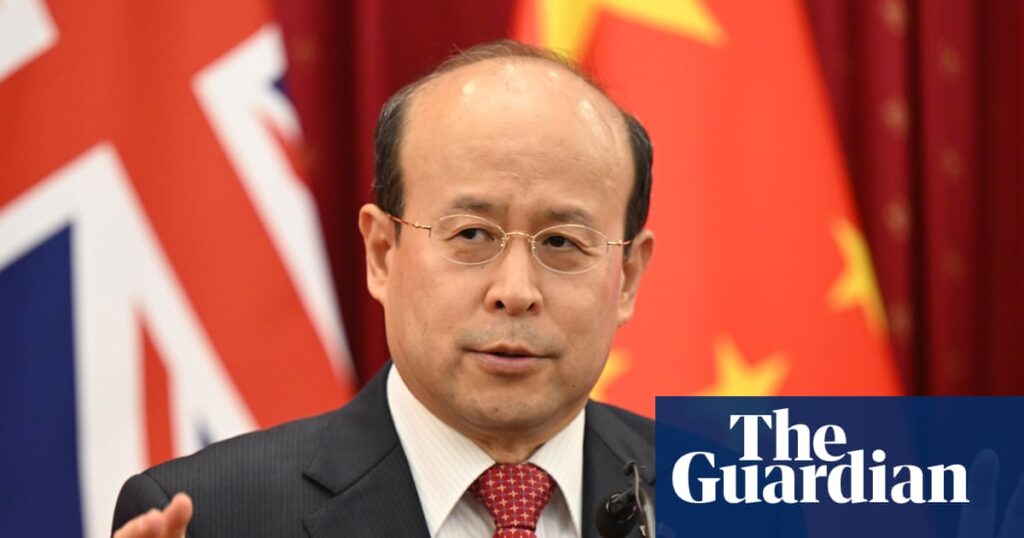
China’s ambassador to Australia, Xiao Qian, has issued a stern warning to the Albanese government regarding its plans to reclaim the Port of Darwin from Chinese ownership. The ambassador cautioned that such a move could jeopardize future trade relations and compel Beijing to intervene.
The controversy centers on Labor’s policy to compel the Chinese-owned company Landbridge to sell its 99-year lease on the port. This decision was largely driven by national security concerns raised by both major political parties prior to the election. Despite the announcement, the government has not yet provided a timeline for the forced sale.
Historical Context and Initial Concerns
Landbridge, owned by Chinese billionaire Ye Cheng, acquired the port in 2015 without needing federal approval. The acquisition quickly drew criticism from national security agencies and even prompted a reaction from then U.S. President Barack Obama. The sale has been under scrutiny ever since, with two government reviews concluding there were no security grounds to terminate the lease.
Ambassador Xiao, speaking at a press conference, highlighted the investments Landbridge has made over the past decade. “Over the last 10 years, Landbridge has invested a lot,” he stated. “Starting from last year, the Darwin port has stopped losing money and started to make money.”
“Suddenly we hear the government of Australia wants to take it back. When you’re losing money, you lease it to a foreign country company, and when it has started making money, you want to take it back. That’s not a way to do business.” — Ambassador Xiao Qian
Economic Implications and Trade Relations
Landbridge secured the port lease for $506 million and reported a $9.6 million profit last financial year, a significant turnaround from a $37 million loss the previous year. Xiao emphasized that the decision to reclaim the port could adversely affect Chinese investment and trade with Australia, which is China’s largest two-way trading partner, accounting for 24% of all goods and services trade last financial year, valued at $309 billion.
Prime Minister Anthony Albanese had announced plans for the forced sale during a radio interview amid the election campaign, criticizing Landbridge for insufficient investment in the port’s operations. This stance marked a shift from earlier positions where the government had ruled out canceling the lease.
Military Movements and Diplomatic Tensions
Adding to the complexity of the situation, Xiao downplayed recent deployments of the Chinese People’s Liberation Army (PLA) navy near Australian waters. In December, Australian defense tracked a group of Chinese ships, and in February 2025, a Chinese naval task group conducted live-fire exercises near Australia, raising concerns.
“It just happened to be connected in that region, in that part of the world. It happened to be near Australia, but not in Australian territory, or even in the EEZ, the exclusive economic zone. It has nothing to do with Australia.” — Ambassador Xiao Qian
Broader Geopolitical Implications
Beyond the immediate economic and security concerns, the situation reflects broader geopolitical tensions between China and Australia. Xiao urged Canberra to prepare for a “reunified China,” underscoring Beijing’s stance on Taiwan. Australia maintains support for the status quo in Taiwan and opposes any unilateral moves by Beijing to control the island.
“We’re somewhat flexible in managing some of the issues of differences between our two countries, for example, trade relations and issues in other areas,” Xiao noted. “But the question of Taiwan is not a question the region should compromise or be flexible with. There’s no room for us to do that.”
The unfolding situation at the Port of Darwin will likely continue to test the diplomatic and economic ties between Australia and China, with significant implications for regional stability and international relations.