


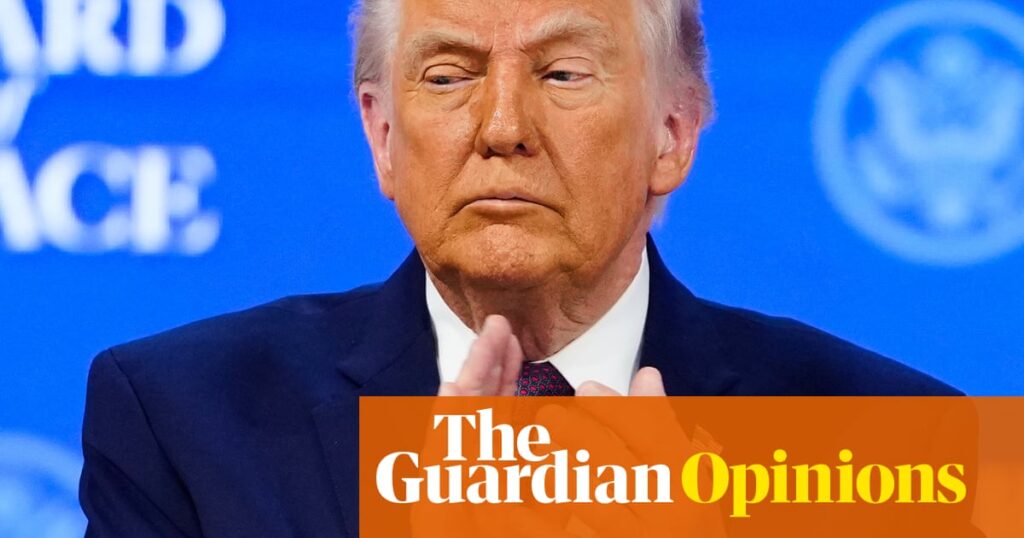
The French President Emmanuel Macron recently invoked a scene from the popular film “Love Actually” at the World Economic Forum in Davos, directing his critique at U.S. President Donald Trump. Macron’s comments followed a leaked text message intended to coax Trump into discussions aimed at stabilizing the rapidly deteriorating global order.
In the film, Hugh Grant, portraying a British Prime Minister, confronts a bullying U.S. President with the words, “A friend who bullies us is no longer a friend, and since bullies only respond to strength, from now onward, I will be prepared to be much stronger.” This cinematic moment now mirrors reality as global leaders grapple with Trump’s unpredictable tactics.
Trump’s Greenland Gambit and Its Global Repercussions
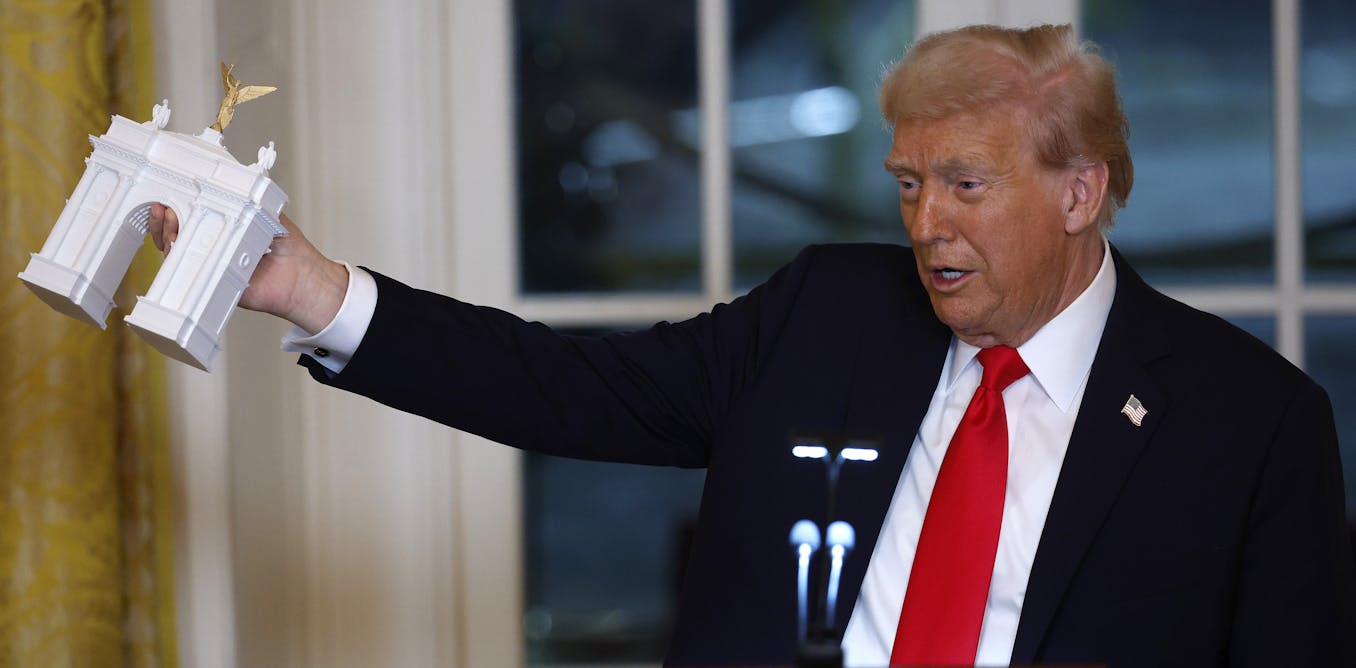
Macron’s text message was specifically about Greenland, which became the focal point of a classic Trump maneuver designed to provoke and demonstrate his power. Trump’s threat to impose tariffs on several European nations over their opposition to American control of Greenland achieved its desired effect. Europe was forced into a defensive stance, contemplating retaliatory measures and even deploying troops to Greenland.
Ultimately, Trump claimed a vague “deal” with NATO and withdrew the tariff threats. However, his statement, “We probably won’t get anything unless I decide to use excessive strength and force, where we would be, frankly, unstoppable,” left many uneasy about the potential for future confrontations.
The Erosion of Trust in Global Alliances
The global order, long built on mutual trust, faces a crisis under Trump’s leadership. As Canadian Prime Minister Mark Carney noted in his pivotal speech at Davos,
“the old order is not coming back.”
Carney’s remarks have resonated widely, underscoring the obvious yet unsettling reality that the United States’ reliability as a global partner is in question.
Trump’s actions have profound implications for nations like Australia, which find themselves marooned in a new geopolitical landscape. The Atlantic alliance, a cornerstone of peace in Western Europe for nearly 80 years, is unraveling, raising concerns about Australia’s own security and alliances.
Australia’s Strategic Dilemma
Australia’s defense, security, and economic systems are deeply intertwined with those of the United States. Trump’s erratic policies, including threats to abandon NATO commitments, challenge the value of alliances like AUKUS. As the global order shifts, Australia must navigate a complex and uncertain future.
Reports suggest that Canada has even considered scenarios involving a hypothetical U.S. invasion, highlighting the fragility of historic alliances. Carney emphasized the need for middle powers to unite, stating,
“Middle powers must act together because if we’re not at the table, we’re on the menu.”
This sentiment reflects a growing awareness that traditional alliances can no longer be taken for granted.
Looking Ahead: Navigating a New Global Reality
Australia’s strategic position is further complicated by domestic perceptions. Steve Bannon, a key figure in Trump’s political circle, recently criticized Australia’s handling of the COVID-19 pandemic, suggesting it damaged the country’s image among Trump supporters. This underscores the complex interplay of domestic and international politics that Australia must navigate.
As the global order continues to evolve, Australia faces the challenge of redefining its alliances and strategies. Hope alone is not a strategy, and the nation must adapt to the realities of a world where traditional partnerships are no longer guaranteed.
In conclusion, Australia’s future lies in its ability to forge new alliances and strategies that reflect the changing geopolitical landscape. As the global order shifts, Australia must remain vigilant and proactive in securing its place on the world stage.