


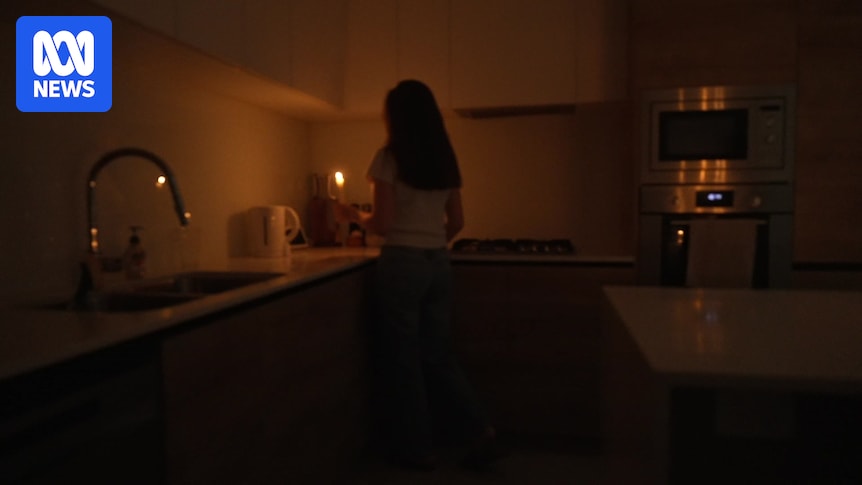
When a storm struck south-east Queensland late one October Sunday afternoon, Grayson Cavanagh, who was at home preparing dinner, felt well-protected from the hail pounding outside. However, a few hours later, as the power went out in her Brisbane apartment, she faced an uncomfortable night ahead without air conditioning or fans.
“Losing the power – it is a massive thing when you’re living here,” Ms. Cavanagh remarked. Despite having a gas stove that allowed her and her partner to finish their dinner by candlelight, the rest of the food in their fridge, valued at about $200, did not survive.
“We’re in Australia, it’s hot, and there’s always concerns… especially if you have seafood or raw chicken, which is what we had,” she added. The power outage also posed challenges for residents in her building, particularly the elderly who rely on the lift, which was non-operational without electricity.
Rising Blackouts and Grid Vulnerabilities
Ms. Cavanagh’s experience is not unique. Tens of thousands of Queensland residents have faced blackouts this season, with some areas left without power for several days. The Australian Energy Market Operator (AEMO) has previously warned of Queensland’s risk of blackouts due to “short-term” challenges, including a “reliability gap” in supplies.
With climate change expected to intensify storms, experts emphasize the need for enhanced preparation. According to Dr. Yateendra Mishra from Queensland University of Technology, Australia’s electricity grid is “long, lean and sparsely” connected, making it susceptible to natural disasters like storms.
“The conventional way of… one-way operation and direct control of the load is old-fashioned,” Dr. Mishra stated.
Innovative Solutions: Microgrids and Smart Technologies
To address these challenges, Dr. Mishra and his team are exploring “smart grids” that incorporate technologies like Artificial Intelligence (AI) and batteries to manage the grid more efficiently and restore power swiftly after outages. One promising solution is the implementation of microgrids—small, independently operated sections of the network powered by batteries.
Strategically placing community and network batteries around the grid can help manage excess power from rooftop solar generation, easing the load during outages. Dr. Mishra highlighted that “giant, community-based battery systems actually help to relieve the peak demand and operate in segmented sections where storms are hitting.”
Microgrid Trials in Remote Queensland
Energy Queensland, responsible for managing the state’s electricity networks, is trialing several microgrid projects in remote areas, including Mossman Gorge and Jumbun. Suzanne Shipp, the company’s chief engineer, explained that these microgrids are designed to operate in “islanded mode,” enhancing resiliency during network issues.
Other microgrids are in the early stages of construction, and more batteries are being installed across the networks. Ms. Shipp noted that these batteries can absorb excess generation from rooftop solar and feed it back into the grid during peak times.
“With each of those batteries and microgrids carrying a multi-million-dollar price tag, our role is to ensure they’re prudent and efficient,” Ms. Shipp said.
Future Prospects and Technological Advancements
While microgrids are unlikely to be implemented in capital cities like Brisbane due to demand and load requirements, they are expected to become more common on the “fringe of grids” or in isolated communities. Ms. Shipp mentioned that although current units are not mobile, future advancements could lead to more flexible solutions.
As for AI integration, Energy Queensland is considering its application in future projects. “We’ve got the horizon now, which is about what we can do to the network right here and now to make it more resilient, but we’re looking beyond that into the future,” Ms. Shipp concluded.
The ongoing trials and technological explorations represent a significant step towards enhancing Queensland’s energy resiliency, crucial in the face of increasing climate challenges and the need for sustainable energy solutions.