




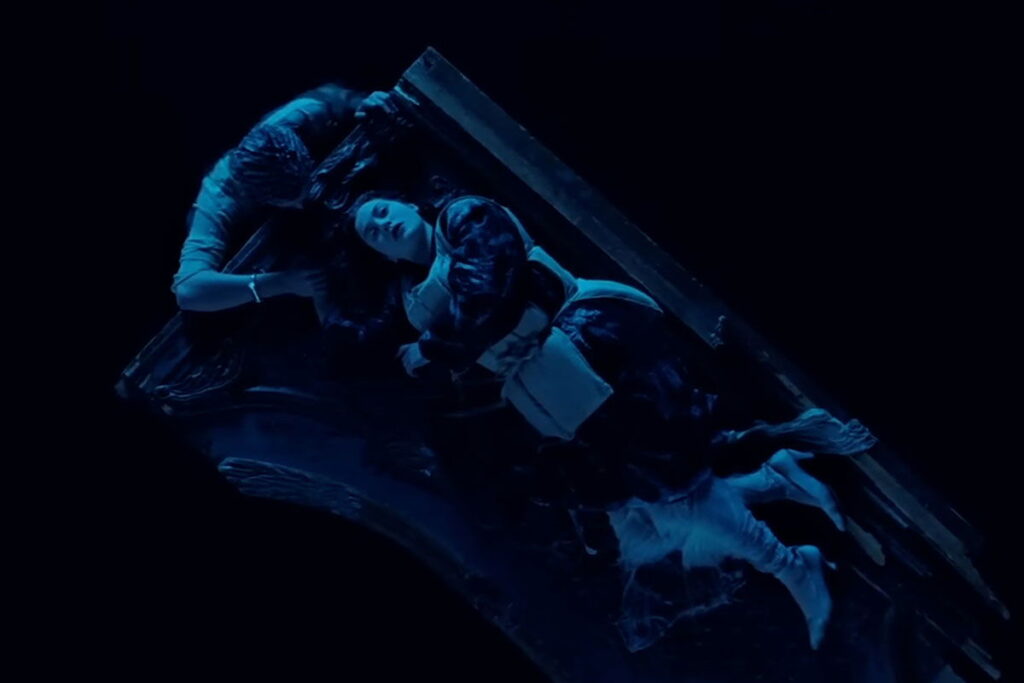
One of the most enduring debates in modern cinema, apart from the perennial question of whether “Die Hard” qualifies as a Christmas movie, has been the ending of James Cameron’s 1997 epic, “Titanic.” The film concludes with Leonardo DiCaprio’s character, Jack, sacrificing himself in the icy waters of the Atlantic so that his beloved Rose, played by Kate Winslet, can survive on a makeshift raft fashioned from a floating door. For years, fans have argued that the door was large enough to accommodate both characters, sparking endless discussions and speculations.
In early 2023, National Geographic released a documentary special that aimed to put this debate to rest. With Cameron’s involvement, the documentary featured a scientific study designed to determine whether two people could have indeed survived on the door. Cameron employed two stunt performers with similar height and weight to DiCaprio and Winslet at the time of filming, recreating the infamous scene in a controlled pool environment to test various theories and outcomes.
Cameron’s Experiment and Findings
The results of the experiment were conclusive. According to the study, it was nearly impossible for both Jack and Rose to survive on the door, except under a highly improbable set of circumstances. Cameron explained that the only scenario in which Jack might have survived involved him being an expert in hypothermia, with knowledge far beyond what was available in 1912.
“The answer is, if Jack somehow was an expert in hypothermia and somehow knew what science now knows back in 1912, it is theoretically possible, with a lot of luck, that he might have survived. Therefore, the answer is no, he could not have. There’s no way. The conditions were not met. He couldn’t have known those things.” — James Cameron
Despite the detailed explanation and scientific backing, the debate continued to persist among fans. Cameron, however, has decided to move on. During an appearance on THR’s Awards Chatter podcast, he expressed his frustration, stating, “Don’t ask me about the f—ing raft, people!”
The Legacy of “Titanic”
Nearly three decades after its release, “Titanic” remains one of the most successful films in history. It grossed an astounding $2.3 billion worldwide, holding the record for the highest-grossing film until it was surpassed by Cameron’s own “Avatar” in 2009. The film’s impact on popular culture is undeniable, with its iconic scenes and memorable lines etched into the collective memory of audiences around the world.
The debate over the door scene is just one of many aspects of “Titanic” that has kept it in the public eye. The film’s blend of historical drama and romantic tragedy, coupled with groundbreaking visual effects, has ensured its place in cinematic history. Cameron’s meticulous attention to detail and commitment to authenticity have been both praised and scrutinized, contributing to the film’s lasting legacy.
Moving Forward
As Cameron wraps up his promotional work for “Avatar: Fire and Ash,” he seems ready to close the chapter on the “Titanic” door debate. The director’s focus now shifts to new projects and the ongoing expansion of the “Avatar” universe. With his latest film continuing to explore themes of survival and sacrifice, Cameron’s storytelling prowess remains as compelling as ever.
While the debate may never fully disappear from fan discussions, Cameron’s definitive stance provides a sense of closure. For those still pondering the possibilities of that fateful night in 1912, the director’s final word is clear: Jack’s sacrifice was a narrative choice, grounded in the realities of the story he chose to tell.