




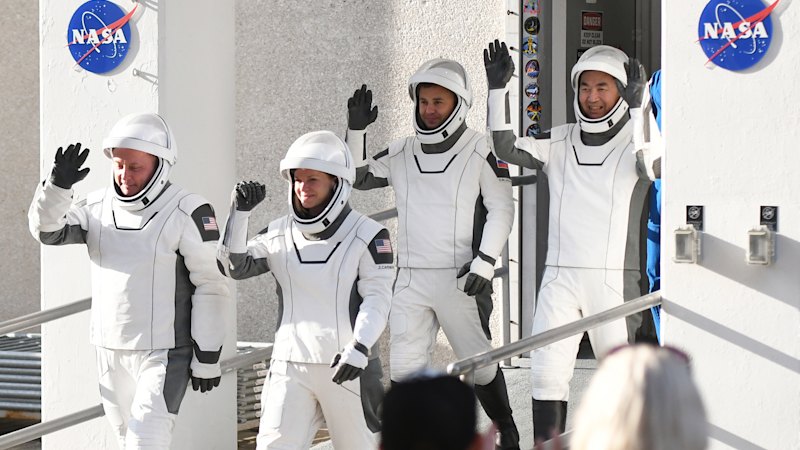
NASA is set to conduct its first-ever medical evacuation of an astronaut from the International Space Station (ISS) due to an undisclosed medical condition, according to agency officials. This unprecedented move will see the early return of the astronaut and their crew, marking a significant moment in space exploration history.
The affected astronaut is part of Crew-11, which launched to the ISS in August and was originally scheduled for a six-month mission. However, the medical evacuation will cut the mission short by over a month. The crew includes NASA astronauts Zena Cardman and Mike Fincke, Japan Aerospace Exploration Agency’s Kimiya Yui, and Roscosmos cosmonaut Oleg Platonov.
Details of the Medical Situation
Dr. James Polk, NASA’s chief health and medical officer, assured reporters that the astronaut is “absolutely stable.” He explained, “We’re not immediately disembarking and getting the astronaut down, but it leaves that lingering risk and lingering question as to what that diagnosis is.”
The agency has not disclosed the astronaut’s identity or specific medical condition, citing privacy concerns. However, Dr. Polk confirmed that the ailment is unrelated to any operations on the ISS. “This was not an injury that occurred in the pursuit of operations,” he emphasized.
Impact on ISS Operations
The decision to return Crew-11 early has prompted NASA and SpaceX to expedite the launch of the next crewed mission, Crew-12, which was initially planned for February 15. Typically, NASA coordinates new arrivals before departures to ensure a smooth transition of operations. With Crew-11’s early departure, the ISS will temporarily be staffed by two Russian cosmonauts and a single NASA astronaut, Christopher Williams.
Amit Kshatriya, NASA’s associate administrator, reassured that “Chris is trained to do every task that we would ask him to do on the vehicle,” indicating confidence in the remaining crew’s ability to maintain station operations until reinforcements arrive.
Historical Context and Future Implications
This development follows NASA’s announcement on Wednesday, which saw the postponement of a January 8 spacewalk due to the emerging health concern. The decision underscores the challenges of medical care in space, where the capability to diagnose and treat conditions is limited.
“The capability to diagnose and treat this properly does not live on the International Space Station,” NASA administrator Jared Isaacman stated, highlighting the necessity of the evacuation.
Historically, space missions have been extended or adjusted due to technical issues or external factors, but this marks the first instance of a mission being cut short for medical reasons. The move represents a critical test of NASA’s emergency protocols and could influence future mission planning and astronaut health monitoring.
Looking Ahead
As NASA and its partners work to facilitate the swift return of Crew-11, the situation highlights the ongoing need for advancements in space medicine. The incident may prompt further investment in medical technologies capable of diagnosing and treating astronauts in space, potentially paving the way for longer and more ambitious missions.
Meanwhile, the space community will be closely monitoring the situation as NASA navigates this unprecedented challenge. The outcome could have significant implications for the future of crewed space exploration, particularly as agencies aim for missions beyond low Earth orbit.