


Until its premiere in October, the buzz around Apple TV’s latest show, Pluribus, was shrouded in mystery. Despite starring Rhea Seehorn of Better Call Saul fame and being the brainchild of Vince Gilligan, the narrative details remained elusive. The show, featuring enigmatic smiling petri dishes, was green-lit for two seasons before airing, yet its plot was a well-guarded secret.
In an era where new shows often need to make a loud entrance to capture attention, Pluribus took a different approach by staying quiet. The series banked on Gilligan’s reputation, the mastermind behind Breaking Bad and Better Call Saul, to captivate audiences once more. Gilligan, who began his career with the long-running sci-fi series X-Files, expressed his excitement about returning to the genre. “There was a certain level of expectation for me to do something else in the Breaking Bad universe,” Gilligan shared with ABC News. “I haven’t written a flat-out hero since Scully and Mulder.”
The Success of Pluribus
As Pluribus nears the end of its first season, it has already garnered multiple award nominations. Following the airing of its seventh episode, Apple TV announced that Pluribus became the streaming service’s most-watched show ever. This achievement is a testament to Gilligan’s ability to create another hit series.
“Gilligan has done it again,” the industry buzz suggests, as audiences and critics alike praise the show.
The Sci-Fi Narrative
Pluribus begins as a hard science fiction tale, depicting a world where a beamed RNA sequence transforms humanity into a single, blissful hive mind. With famine, war, and disease eradicated, the show explores the consequences of such unity. Yet, beyond its high concept, the series delves into the lives of its human characters, set in the vibrant backdrop of Albuquerque, New Mexico.
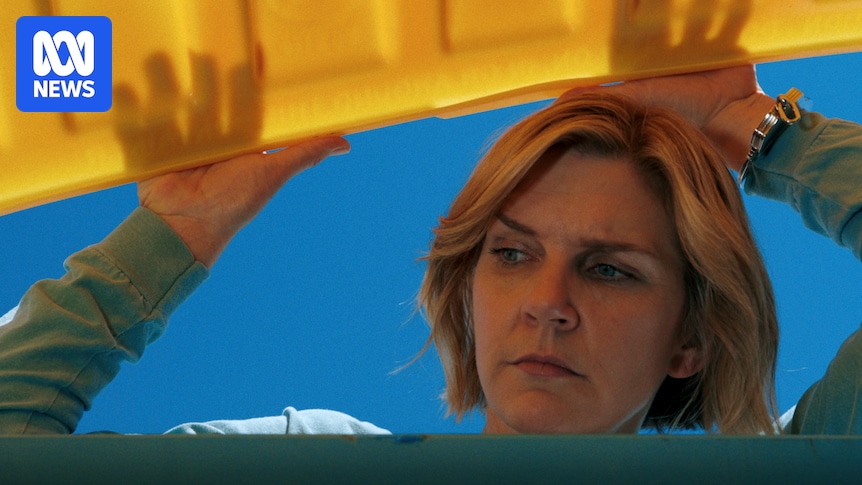
Central to the story is Carol Sturka, portrayed by Seehorn, a discontented, closeted romance author who resists the hive mind’s pull. Carol’s quest to uncover the truth behind the phenomenon drives the narrative. Seehorn’s performance has been widely praised, a fact that comes as no surprise to Gilligan, who crafted the character specifically for her. “I realized I wanted to work with Rhea Seehorn again, so the character went from male to female,” Gilligan explained. “When you have an idea like that, you kind of have to explain it in science fiction terms.”
Exploring Individuality and Conformity
Carol is not alone in resisting the hive mind, but the few others who do are less inclined to fight back. Some even hope to join the collective, drawn by the promise of perfect contentment with their families. Gilligan insists that Pluribus is not a commentary on virtue-signaling but rather an exploration of individuality versus conformity. “I’m intrigued by the difference between individuality and conformity,” he noted. “The idea of being happy, and how important is that to us?”
The series also draws inspiration from the current political climate in the United States, where division seems ever-present. Gilligan hopes to show that a world where everyone agrees isn’t as idyllic as it appears. “It feels like we’re on the edge of civil war some days, and I hate that,” he remarked. “I don’t think anybody wants to live like this. But can we find a place where people disagree but they’re cool about it?”
The AI Connection
As Carol grapples with her fellow resisters’ acceptance of the hive mind, viewers may draw parallels to the growing influence of AI in society. Gilligan, however, insists this was unintentional. “I really wasn’t thinking about AI when I came up with Pluribus, partly because I came up with it almost 10 years ago,” he said. “But if people have that takeaway, more power to them.”
Gilligan has been vocal about his concerns regarding AI in storytelling, emphasizing the importance of human creativity.
“That’s one of our highest achievements, the stories we tell one another. The idea of robots or computers telling stories to human beings, it horrifies me.”
As Pluribus continues to captivate audiences, its success underscores the power of storytelling and the enduring appeal of Vince Gilligan’s creative vision. With its blend of science fiction and human drama, the series invites viewers to ponder the complexities of identity, happiness, and the future of humanity.