


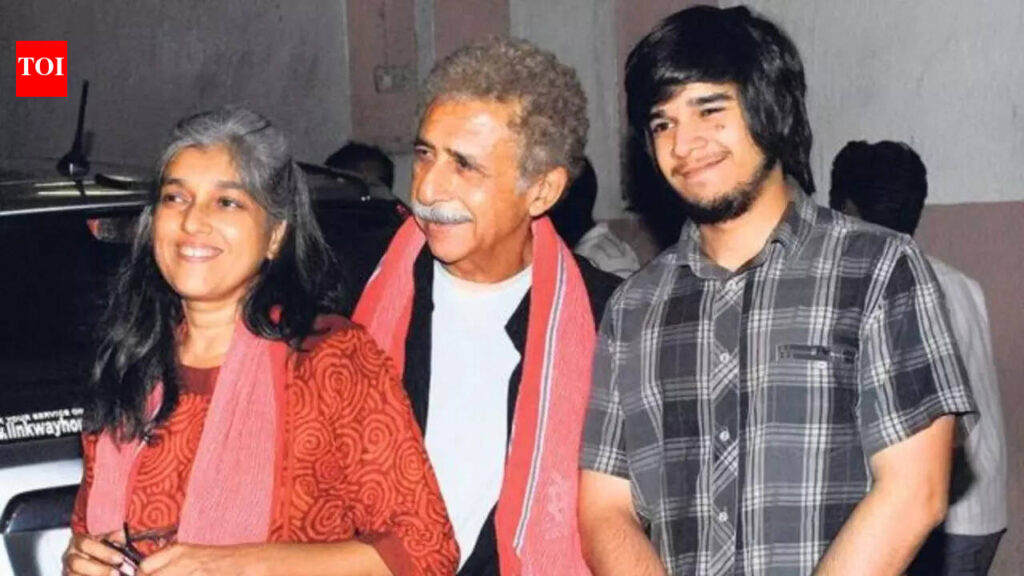
Naseeruddin Shah, the acclaimed Indian actor known for his candid opinions on a range of topics, has typically kept his personal beliefs about religion and spirituality under wraps. However, a recent conversation with his son, actor Vivaan Shah, has shed some light on this private aspect of his life. During an interview with Bollywood Bubble, Vivaan was asked whether his father is an atheist. His response was both revealing and thought-provoking: “You know, this is a really good question, and I really don’t know.”
Vivaan further elaborated on what might seem like a contradiction—Naseeruddin Shah’s visits to the Ajmer Sharif Dargah, a revered Sufi shrine, despite possibly not being a firm believer. He shared, “Absolutely. Actually, before exams, we always used to go to Ajmer Sharif. I used to go to pray that I would get good marks. But it is an interesting question, and I should ask him, because I have never heard him directly talk about this. In fact, on this topic, he has not expressed any view that is definitive.”
Navigating Faith and Doubt
Vivaan’s reflections highlight a broader theme of uncertainty around faith that many people experience. He noted, “So with my father, it is something like that. I would say he is maybe agnostic, perhaps.” This candid admission points to a common human experience where individuals navigate a spectrum between belief and disbelief.
Historically, agnosticism has been a philosophical stance where individuals neither affirm nor deny the existence of a deity, often due to the belief that such knowledge is inherently unknowable. This position allows for a nuanced approach to spirituality, one that is not bound by rigid definitions or dogmas.
The Cultural Significance of Ajmer Sharif
The Ajmer Sharif Dargah, which Naseeruddin Shah visits, holds significant cultural and religious importance in India. It is the shrine of Moinuddin Chishti, a revered Sufi saint, and attracts millions of pilgrims from diverse religious backgrounds. The practice of visiting such sites, even by those who may not strictly adhere to a particular faith, underscores the cultural and spiritual tapestry of India.
For many, these visits are less about religious dogma and more about seeking solace, inspiration, or a connection to something greater than themselves. This reflects a broader trend where spirituality is often expressed through cultural and traditional practices rather than strict religious observance.
Expert Perspectives on Agnosticism
According to Dr. Radhika Chopra, a sociologist specializing in religion and culture, “Agnosticism allows individuals to engage with spirituality on their own terms. It acknowledges the complexities of belief and the personal nature of faith.” She adds that this approach is becoming increasingly common in a world where traditional religious boundaries are often blurred.
Dr. Chopra’s insights resonate with Vivaan’s description of his father’s stance. The idea that one can be spiritual without being religious, or engage with religious practices without firm belief, is reflective of a modern, pluralistic approach to faith.
Implications and Reflections
The discussion around Naseeruddin Shah’s beliefs, as shared by his son, opens up a broader conversation about how individuals relate to faith in contemporary society. It highlights the personal nature of belief systems and the ways in which they can evolve over time.
As Vivaan considers asking his father directly about his beliefs, it underscores the ongoing dialogue and exploration that many people experience in their spiritual journeys. This openness to questioning and understanding is a vital part of navigating the complexities of faith in today’s world.
Meanwhile, the broader cultural practices, such as visiting Ajmer Sharif, continue to play a significant role in how spirituality is expressed and experienced, offering a space for reflection, hope, and community.
Stay tuned for more insights and updates from the world of entertainment and culture, as we continue to explore the intersections of personal belief and public life.