


Hackers have disrupted Iranian state television satellite transmissions to air footage supporting the country’s exiled former prince, Reza Pahlavi, and calling for security forces to lay down their weapons. The footage was broadcast across multiple channels operated by the Islamic Republic of Iran Broadcasting, the state broadcaster.
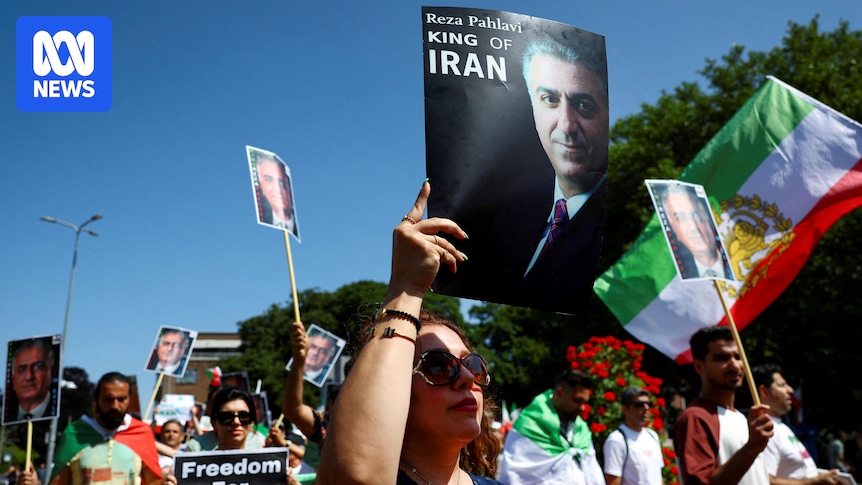
The broadcast included two clips of Reza Pahlavi, the exiled crown prince who declared himself shah of Iran following the death of his father, Mohammed Reza Pahlavi, in 1980. The footage also showed individuals in what appeared to be Iranian police uniforms, with a message urging security forces to join the people for the freedom of Iran.
“This is a message to the army and security forces,” one graphic read. “Don’t point your weapons at the people. Join the nation for the freedom of Iran.”
The semiofficial Fars news agency, known for its close ties to the country’s paramilitary Revolutionary Guard, reported that the state broadcaster acknowledged a momentary disruption of the signal in some areas by an unknown source, but did not discuss the content aired.
Pahlavi’s Reaction and Historical Context
A statement from Reza Pahlavi’s office acknowledged the disruption that featured him, though it did not respond to inquiries from The Associated Press regarding the hack. The extent of Pahlavi’s support within Iran remains uncertain, despite pro-shah chants during recent demonstrations.
This incident is not the first time Iranian airwaves have been disrupted. In 1986, The Washington Post reported that the CIA provided Pahlavi’s allies with a miniaturized television transmitter for an 11-minute clandestine broadcast into Iran. More recently, in 2022, Iranian channels aired footage from the exiled opposition group Mujahideen-e-Khalq, calling for the death of Iran’s Supreme Leader Ayatollah Ali Khamenei.
Growing Concerns Over Protest Crackdown
The hacking incident coincides with a severe crackdown on demonstrators by state authorities, resulting in a death toll of at least 4,029 people, according to the US-based Human Rights Activists News Agency (HRANA). The agency fears the number will rise as more information emerges from a country where the government has restricted internet access.
An Iranian official, speaking anonymously, stated that at least 5,000 people have been killed in protests, primarily in Kurdish areas of northwestern Iran. The toll includes about 500 security personnel and surpasses any previous unrest in Iran in decades.
On Saturday, Ayatollah Khamenei acknowledged the protests had resulted in “several thousand” deaths, blaming the United States for the casualties. This was the first indication from an Iranian leader regarding the scale of the casualties since the protests began on December 28 over Iran’s struggling economy.
International Repercussions and Tensions
In response to the ongoing unrest, the World Economic Forum withdrew its invitation to Iran’s Foreign Minister Abbas Araghchi to speak in Switzerland. The forum cited the tragic loss of civilian lives in Iran as the reason for the cancellation.
“Although he was invited last fall, the tragic loss of lives of civilians in Iran over the past few weeks means that it is not right for the Iranian government to be represented at Davos this year,” the forum stated.
Araghchi criticized the decision, accusing the forum of succumbing to political pressure from Israel and its US-based allies. Meanwhile, tensions between the US and Iran remain high, with President Donald Trump setting red lines for the Islamic Republic regarding the treatment of protesters.
In a related development, a US aircraft carrier, which had recently been in the South China Sea, passed through Singapore and entered the Strait of Malacca, potentially positioning itself for deployment to the Middle East.
The situation in Iran continues to evolve, with international observers closely monitoring the government’s response to the protests and the potential for further disruptions to state-controlled media.