




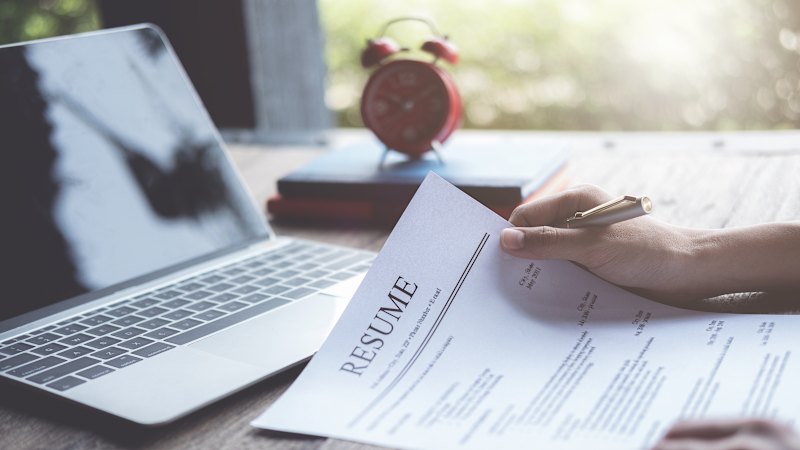
Job seekers are increasingly voicing their frustrations as artificial intelligence (AI) systems, employed by companies to streamline the hiring process, are rejecting applications at record speeds. This trend has sparked concerns over potential discrimination and the ethical implications of relying too heavily on automated systems for recruitment.
Victoria-based human resources professional Leighan Morrell recently shared her experience on LinkedIn, revealing that she was rejected for a job within two hours of applying. “I am absolutely shocked and baffled,” Morrell stated. “I applied for the role at 1.13pm today, it is now 3.17pm, and I have just been rejected from the role. How can a recruiter review my application along with all the others and reject me within two hours?” Morrell noted that her qualifications matched the job description perfectly, leading her to suspect the use of AI in the hiring process.
AI in Recruitment: Efficiency vs. Equity
The use of AI in recruitment is becoming increasingly common, with companies employing these systems to scan and screen CVs, as well as conduct one-way chat and video interviews. Sapia, a prominent AI interview platform, has facilitated nine million AI interviews for major employers such as Qantas, Woolworths, and Bunnings. The platform claims to enhance the experience for both hiring teams and candidates, boasting a 95 percent satisfaction rate among job seekers.
Sapia’s founder, Barb Hyman, argues that their platform promotes fairness by not capturing demographic information such as age, gender, or appearance. “In hiring, particularly high-volume hiring, there’s just a huge amount of bias,” Hyman explained. “Sapia is built on fairness. Everyone gets an interview, everyone gets to share their story of who they are, in their words and in their own time. There’s no personal data. It’s a truly blind, fair way to evaluate someone.”
Concerns and Criticisms of AI Hiring Practices
Despite the purported benefits, the use of AI in hiring has not been without criticism. The Australian HR Institute’s chief executive, Sarah McCann-Bartlett, acknowledges that while AI can help reduce bias by removing personal information from applications, it can also lead to frustration among candidates who feel unfairly screened out.
Meanwhile, Australian Services Union national secretary Emeline Gaske highlights the potential pitfalls of AI-driven recruitment. “We know algorithms are riddled with bias and prejudice. That’s why we need human judgment, not just machines making recruitment decisions,” Gaske stated.
Research supports these concerns. Adelaide University associate professor in human resource management, Connie Zheng, emphasizes the need for human oversight and legal safeguards. “We found organisational guidelines and legal requirements such as non-discriminative human resources policies, are more effective [than AI] in improving diversity and inclusion,” Zheng noted.
Legal and Ethical Implications
University of Melbourne lawyer Natalie Sheard has identified risks associated with AI hiring systems, warning that they may facilitate “algorithm-facilitated discrimination.” The limited data used to train these systems can perpetuate traditional forms of discrimination, failing to reflect the diversity of the population and potentially creating new forms of bias.
“Algorithm-facilitated discrimination is especially problematic because the predictions and outcomes generated from these systems are often difficult to contest and the processes they use tend to be opaque,” Sheard explained.
In response to these challenges, the federal government has committed $30 million to establish an AI Safety Institute. This initiative aims to monitor, test, and share information on emerging AI technologies, focusing on their risks and potential harms. Additionally, a national AI plan introduced in December outlines voluntary guidelines for the adoption of generative AI.
The ongoing debate over AI in recruitment underscores the need for a balanced approach that leverages technology’s efficiencies while safeguarding against its potential biases. As companies continue to integrate AI into their hiring processes, the importance of human oversight and ethical considerations remains paramount.