

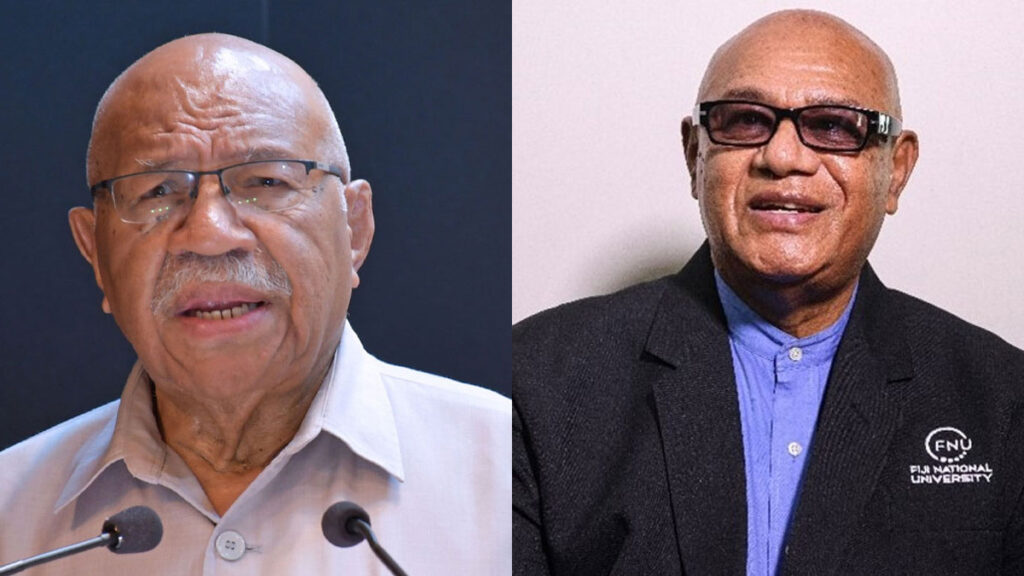
The Fiji National University (FNU) Council, led by Chancellor and Chair Semesa Karavaki, has expressed significant concerns over governance issues within the university. The Council is urgently seeking a meeting with the Prime Minister following a series of unilateral decisions that have bypassed the institution’s lawful governance structures, creating uncertainty and division within the university community.
Karavaki highlighted that the Council’s ongoing initiatives, including a critical review of the FNU Act and an external HR audit, have been abruptly disrupted. Central to the Council’s concerns are governance issues that predate the recent reassignment of ministerial responsibility for FNU from the Minister for Education to the Prime Minister.
Governance and Decision-Making Concerns
On January 13, 2026, the Council resolved to address formal complaints against the Vice-Chancellor concerning governance and decision-making processes. These complaints, originating from whistleblowers and academic staff, focus on contentious appointments and the awarding of academic titles within the College of Medicine, Nursing and Health Sciences, along with unilateral engagements with the government on legislative review.
In line with its fiduciary duty, the Council initiated a thorough and impartial investigation into these allegations, including placing the Vice-Chancellor on leave and mandating Council oversight for senior appointments. However, the Council was troubled to learn that the submission to the government, which triggered the reassignment, was made unilaterally by the Vice-Chancellor without a Council resolution or its knowledge.
Response to Government Reassignment
The Council acknowledges the government’s decision to reassign ministerial responsibility for FNU to the Prime Minister. Karavaki stated that the Council is prepared to engage constructively with the Prime Minister’s Office to support national development objectives. However, the manner in which this significant transition was initiated has raised profound concerns.
As the statutory governing body of FNU, established by the FNU Act to act in the university’s best interest, the Council was not consulted prior to this decision. Instead, they were informed post facto and instructed to “put everything on hold.”
Call for Constructive Engagement
The FNU Council has formally requested an urgent meeting with the Prime Minister to understand the strategic vision for the reassignment and to outline how the Council, as the accountable governance body, can effectively contribute to a stable and prosperous future for FNU. The Council asserts its role as the legally constituted authority governing the university and reaffirms its commitment to transparency, fairness, and the best interests of students, staff, and the nation.
Furthermore, the Council insists that the serious allegations of governance failures within the university management must be resolved through a proper, independent, and lawful process. Karavaki emphasized that the Council’s initiated audit must proceed without interference to restore trust, calling on all parties to act with maturity and respect.
“The Council’s initiated audit must be allowed to proceed without interference to restore trust,” said Karavaki.
Government’s Stance
When approached for comments, Acting Prime Minister Filimoni Vosarogo expressed his willingness to meet with the FNU Council. This development suggests an opportunity for dialogue and resolution, which may help address the governance challenges currently facing the university.
The situation at FNU highlights the critical importance of adhering to established governance structures and the potential consequences of bypassing these frameworks. As the university navigates this period of uncertainty, the outcomes of the Council’s efforts and the government’s response will be closely watched by stakeholders both within and outside the academic community.