

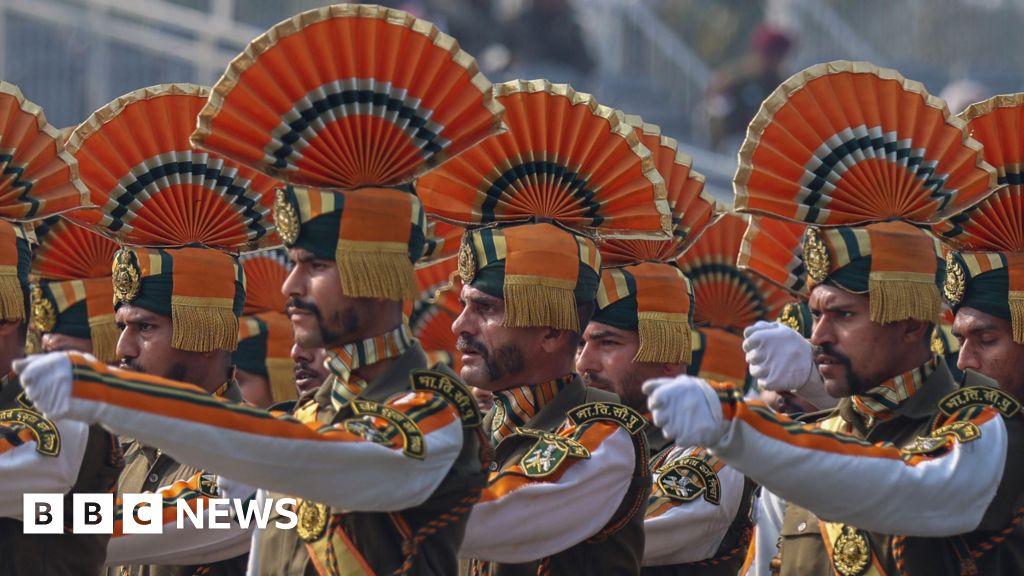
India will celebrate its 77th Republic Day on January 26, marking the day when the nation adopted its constitution and officially became a republic, shedding its colonial past. The annual parade, held along Delhi’s iconic central boulevard, is a grand spectacle featuring military tanks, roaring fighter jets, and vibrant cultural performances. However, much of the attention is focused on the chief guest, a position of significant diplomatic importance. This year, European Commission President Ursula von der Leyen and European Council President António Costa will occupy these prominent seats, highlighting the European Union’s central role in India’s foreign policy agenda.
The parade is a stage where India showcases its military prowess and cultural diversity, with thousands of troops marching down the Kartavya Path, formerly known as Rajpath. The event is presided over by the Indian president, with the chief guest seated closer to the presidential chair than even the highest-ranking government officials. The choice of chief guest has long been a barometer of India’s foreign policy priorities, offering insights into the relationships Delhi seeks to emphasize at specific moments in time.
The Chief Guest Tradition: A Diplomatic Indicator
The tradition of inviting a chief guest began in 1950 with Indonesian President Sukarno attending the first Republic Day parade. In its formative years, India focused on strengthening ties with other newly-independent nations, a focus reflected in its early selections. Over the decades, the guest list has evolved to include leaders from neighboring countries like Bhutan and Sri Lanka, as well as heads of state from major powers such as the United States and the United Kingdom.
The United Kingdom has been featured five times, including visits from Queen Elizabeth II and Prince Philip, underscoring the complex historical ties between the two nations. France and Russia have also been frequent invitees, reflecting India’s long-standing strategic relationships with these countries.
The Selection Process
The process of selecting the Republic Day chief guest is largely conducted behind closed doors. Former diplomats and media reports suggest that the foreign ministry initiates the process by preparing a shortlist of potential invitees. The final decision rests with the prime minister’s office, with official communication extending to the selected countries, a process that can span several months.
“Strategic objectives, regional balance, and whether a country has been invited before are all taken into account,” a former foreign ministry official stated on condition of anonymity.
Navtej Sarna, a former Indian ambassador to the US, emphasized the thoughtfulness of the selection process. “It’s a balance between important partners, neighbors, and major powers,” he said, noting that the availability of the state leader during the event also plays a crucial role.
Reflecting Global Engagement
Foreign policy analyst Harsh V Pant highlighted how the evolving list of chief guests mirrors India’s changing global engagement. “If you think of the EU delegation this year, with its leadership coming, it’s very clear that we are doubling down on our engagement with the EU,” he explained. Pant suggested that a trade deal announcement could be imminent, signaling alignment between India and the European bloc on current geopolitical issues.
This development comes as India continues to negotiate a trade deal with the United States. These talks, ongoing for nearly a year, have been strained by the US imposing 50% tariffs on Indian goods, the highest in Asia, alongside penalties related to India’s purchase of Russian oil.
“The choice of the parade’s chief guest gives you a sense of India’s priorities at that particular point – which geography it wants to focus on, or whether there is a milestone it wants to mark,” Pant noted, emphasizing India’s continued engagement with the global south.
In 2018, for instance, leaders of the Association of Southeast Asian Nations (ASEAN) were invited as chief guests, marking 25 years of India’s engagement with the bloc. Conversely, some absences from the guest list have also reflected strained relationships. Pakistani leaders attended twice before the two countries went to war in 1965, and have not been invited since. China has only been represented once, in 1958, four years before the Sino-Indian War.
Beyond Diplomacy: A Celebration of Sovereignty
While the diplomatic significance of Republic Day is undeniable, analysts assert that India’s parade stands apart from similar military displays worldwide. Unlike other nations that commemorate military victories, India’s celebration is centered on the constitution and the establishment of a constitutional democracy.
“For many other countries, these celebrations are related to victories in war. We don’t celebrate that. We celebrate becoming a constitutional democracy – the coming into effect of the constitution,” Pant explained.
India’s Republic Day parade uniquely blends military displays with cultural performances and regional tableaux, projecting both power and diversity. Beyond strategy and symbolism, the parade often leaves a lasting personal impression on visiting leaders. A former official recalled how the Obamas were particularly struck by the camel-mounted contingents, a moment that resonated long after the formal ceremonies concluded.
As India prepares to host its 77th Republic Day, the choice of chief guest once again underscores its strategic priorities and diplomatic aspirations, while the parade itself remains a vibrant celebration of the nation’s sovereignty and cultural heritage.