



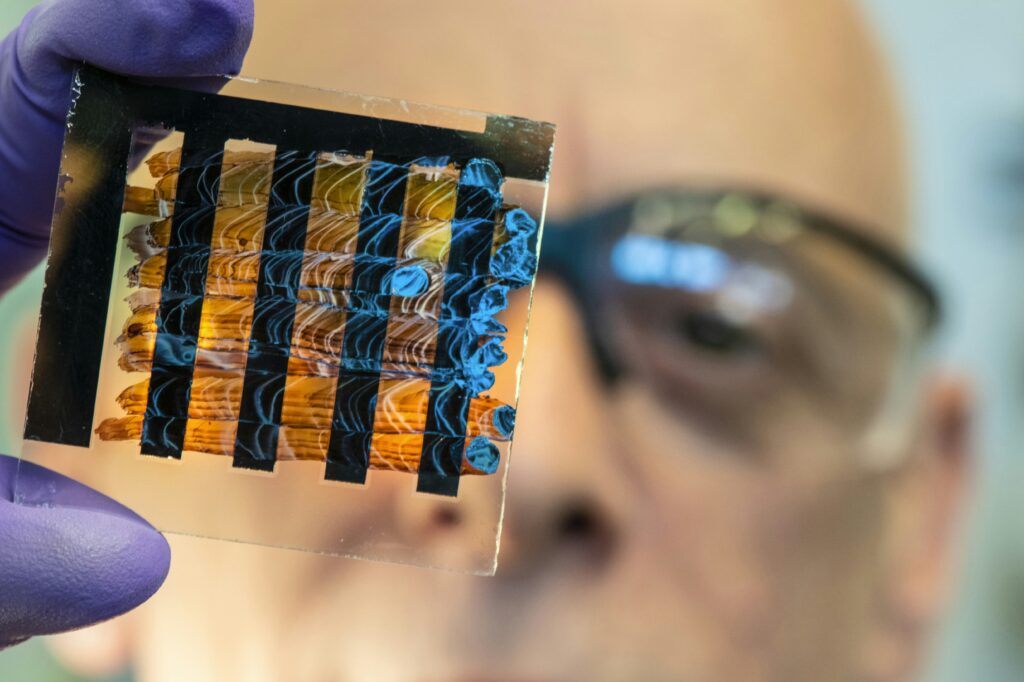
As the demand for artificial intelligence continues to surge, the limitations of traditional von Neumann architecture—particularly in terms of energy efficiency and processing speed—are becoming increasingly evident. In response, researchers from the School of Integrated Circuits at Shandong University, led by Professor Jialin Meng and Professor Tianyu Wang, have conducted a comprehensive review of low-power memristors and their potential applications in neuromorphic computing. This groundbreaking work offers valuable insights into the development of next-generation computing technologies that could overcome these constraints.
Why Low-Power Memristors Matter
Low-power memristors are emerging as a critical component in addressing the “energy wall” problem inherent in traditional computing architectures. These devices are capable of significantly reducing energy consumption in computing systems, making them an attractive solution for the future of technology.
- Energy Efficiency: Memristors drastically cut down on energy usage, which is crucial for sustainable computing.
- In-Memory Computing: By integrating computational functions within storage, memristors enable in-memory computing, reducing data transfer delays and enhancing efficiency.
- Neuromorphic Applications: Mimicking the human brain, memristors function as artificial synapses and neurons, making them ideal for developing neuromorphic systems that perform complex tasks with lower power requirements.
Innovative Design and Features
The review by Shandong University researchers delves into various types of low-power memristors, each with unique properties suitable for different applications. These include resistive random access memory (RRAM), phase change random access memory (PCRAM), magnetoresistive random access memory (MRAM), and ferroelectric memristors.
Functional Materials and Array Structures
Choosing the right functional materials is crucial for achieving low power consumption. The review discusses ion transport materials, phase change materials, magnetoresistive materials, and ferroelectric materials as key components for low-power memristors.
Additionally, two common types of memristor arrays—1T1R (one transistor one resistor) and 1S1R (one selector one resistor) crossbar arrays—are introduced. These structures are essential for realizing large-scale neuromorphic computing systems.
Applications and Future Outlook
Low-power memristors hold promise for a wide range of applications, from high-density data storage to advanced computing systems.
- Multi-Level Storage: Memristors can store multiple resistance states, enabling high-density data storage with reduced power consumption compared to traditional memory technologies.
- Digital Logic Gates: They can implement various digital logic gates, offering a new approach for in-memory computing and reducing the energy consumption of logic operations.
- Artificial Synapses and Neurons: By mimicking the plasticity of biological synapses, memristors can be used to build artificial neural networks, including ANNs, CNNs, and SNNs, capable of tasks such as pattern recognition and decision-making with high efficiency and low power consumption.
Despite their potential, the development of low-power memristors faces several challenges, including material degradation, device variability, and the need for more efficient programming schemes. The review emphasizes that future research will focus on overcoming these challenges and exploring new materials and architectures to fully realize the potential of memristors in neuromorphic computing.
The review highlights the importance of interdisciplinary research in materials science, electronics, and computer science to drive innovation in this field.
This comprehensive review provides a roadmap for the development and application of low-power memristors in neuromorphic computing. It underscores the need for continued collaboration across various scientific disciplines to unlock new possibilities in computing technology. As the research progresses, the work of Professor Jialin Meng and Professor Tianyu Wang at Shandong University remains at the forefront of this exciting field.