



Flying first class has long been considered the pinnacle of luxury in commercial travel. From quieter cabins and fine dining to spacious seating, the experience offers a sense of exclusivity that many travelers dream of but few can afford. However, what ‘first-class’ means today has changed dramatically since its debut on TWA’s Super Constellation New York to London route in 1955.
Initially a glamorous social affair for the wealthy in the 1960s, first class evolved into a symbol of corporate power in the 1980s. Today, it is a finely tuned product attainable for those with money to spare or the right number of air miles or loyalty points. The evolution of first-class air travel reflects broader changes in society and consumer expectations.
From Glamour to Corporate Power
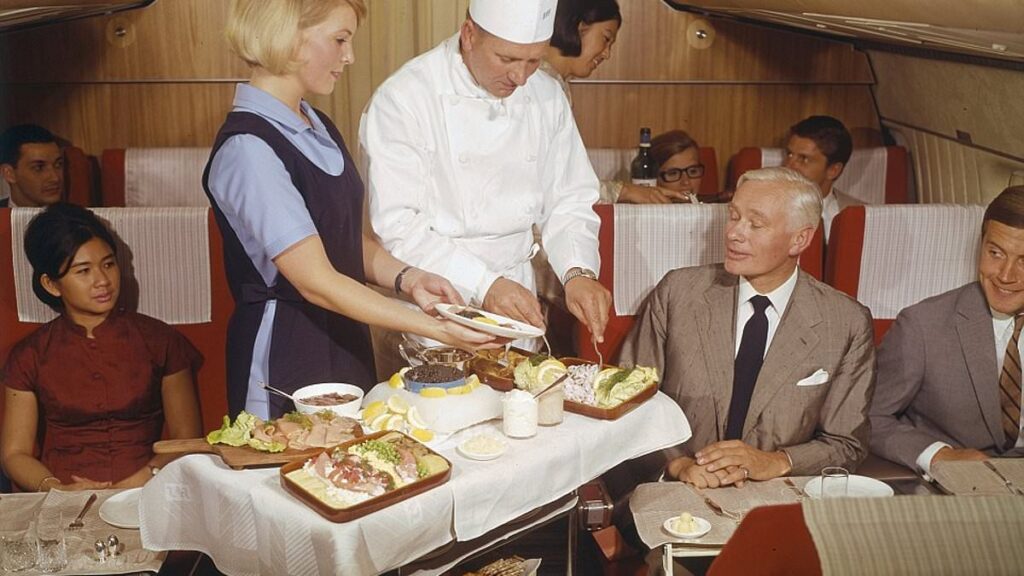
In the ‘golden age’ of flying during the 50s and 60s, first-class passengers could expect hand-carved roasts, spacious lounge chairs, and glitzy cocktail bars designed for socializing. This era was marked by strict dress codes and an air of exclusivity, with passengers often enjoying a cigarette in hand.
By the 1980s and 90s, the rise of corporate travel transformed first class into a status symbol for executives. Companies paid premium fares to showcase their success, and the experience became more about privacy and productivity than socializing.
Cost and Accessibility
In the 1950s and 60s, flying first class was a privilege reserved for the ultra-wealthy, with tickets from New York to London costing the equivalent of around £10,000 today. Passengers typically included diplomats, movie stars, and business moguls, all dressed in their finest attire.
Today, loyalty schemes and upgrades have made first-class seats more accessible, though prices remain high. A round-trip first-class fare from London to Singapore can easily cost between £6,000 and £12,000, depending on the season and airline. Despite the high costs, the allure of first-class travel remains strong for those seeking comfort and exclusivity.
Service Evolution
In aviation’s golden age, first-class service was almost theatrical. Between the 1950s and the 1970s, passengers enjoyed extravagant multi-course meals served on fine chinaware, with silver cutlery and linen tablecloths. Flight attendants, impeccably groomed, carved roasts by hand and poured champagne into crystal flutes.
Today’s service is personalized and discreet, focusing on subtle luxury rather than an elaborate show. Airlines like Etihad, Japan Airlines, and Singapore Airlines greet passengers by name and offer tailored experiences, such as private dining with onboard chefs.
Seating and Amenities
The 1960s were the benchmark of in-flight socializing, with wide reclining chairs and cocktail lounges where passengers mingled freely. By the 1980s, seating became more corporate, with large armchairs and privacy dividers. The introduction of flat-beds in the mid-1990s revolutionized long-haul luxury travel.
Today, first-class cabins on airlines like Etihad and Singapore Airlines offer fully enclosed suites, sliding doors, and even double beds. Passengers can adjust lighting, temperature, and mattress firmness, a far cry from the open lounge areas of the 1960s.
Amenity kits have also evolved. In the 1960s, kits were simple and practical, but by the 1990s, luxury brands like Givenchy and Bulgari entered the mix. Today’s offerings include designer pyjamas and high-end skincare products, reflecting a partnership between airlines and high fashion.
Changing Rules and Social Etiquette
The 1950s to 1970s were indulgent times for first-class passengers, with smoking allowed onboard and alcohol flowing freely. Dress codes were strictly formal, with men in suits and women in cocktail dresses. By the 1980s, smoking began to fade under public health pressure, and dress codes softened.
Today, smoking is banned entirely on commercial planes, and formal wear has been replaced by comfort, with passengers often boarding in designer loungewear. Modern first class emphasizes privacy and seclusion, with fully enclosed suites and digital entertainment discouraging mingling.
While first class has seen numerous advancements, some argue it has lost its exclusivity and personal flair. The evolution reflects broader societal changes and raises the question: has first class truly evolved for the better, and is it still worth the splurge?