




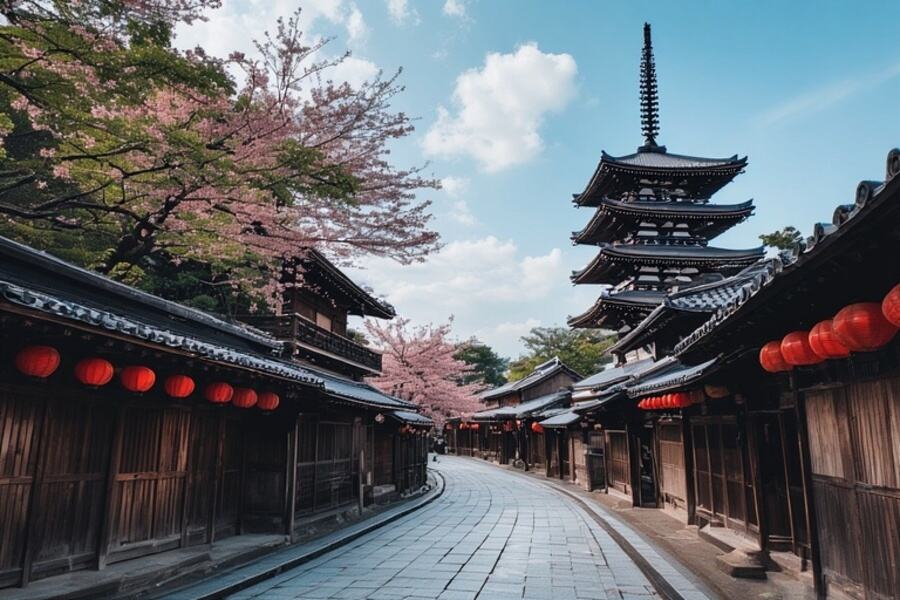
In 2025, Japan joined the ranks of Thailand, Indonesia, China, Malaysia, Vietnam, and other Asian nations as one of the world’s most sought-after travel destinations. This achievement comes amid record-breaking tourist arrivals and a surge in global demand. The increase in visitors is attributed to several factors, including a weak yen that made Japan more affordable and strategic governmental efforts to promote lesser-known regions and diverse cultural attractions.
Despite a slight decline in Chinese visitors towards the end of the year, Japan’s overall tourism numbers soared, contributing significantly to the region’s dominance in global tourism. Similarly, other Asian countries, including Thailand and Indonesia, have witnessed explosive growth, underscoring Asia’s appeal as a top-tier travel destination with vibrant cultures, rich histories, and a growing emphasis on sustainable tourism.
Japan’s Record-Breaking Tourist Arrivals: A Phenomenal Surge
Japan, consistently ranked among the world’s most beloved destinations, made headlines in 2025 with a staggering 42.7 million tourist arrivals. This marked a significant increase from the previous year’s record of nearly 37 million visitors, setting a new benchmark for the country. The primary driver of this growth has been the weak yen, which has made Japan more affordable for international travelers, particularly those from Europe, the United States, and Australia.
The Japanese government’s promotion of diverse attractions—from the majestic slopes of Mount Fuji to tranquil shrines and vibrant sushi bars in rural areas—has also played a crucial role in this surge. Authorities have extended their efforts beyond the usual urban hotspots like Tokyo and Kyoto, aiming to distribute tourism more evenly across the country to alleviate congestion. This aligns with Japan’s goal of reaching 60 million visitors annually by 2030.
However, Japan faced challenges in December 2025, with Chinese visitors declining by 45%, largely due to escalating geopolitical tensions. Despite this setback, tourism revenue remained robust, thanks to an increase in repeat visitors and higher prices for accommodation and services.
Thailand’s Undeniable Position as Southeast Asia’s Top Destination
Thailand has solidified its position as one of the most visited countries in Asia and the world. In 2025, Bangkok claimed the title of the most-visited city worldwide, surpassing iconic cities like Paris and New York, with over 30 million visitors. The city’s bustling streets, cultural landmarks, and thriving street food scene continue to captivate travelers from across the globe.
Beyond the capital, Thailand’s diverse attractions, including the idyllic islands of Phuket, Koh Samui, and Koh Phi Phi, have significantly contributed to the country’s tourism boom. Thailand has also benefitted from a steady influx of tourists from the Middle East, Europe, and the U.S., aided by competitive airfares, strong promotional efforts, and visa-free access for many nationalities.
Despite facing challenges such as overtourism in popular destinations like Phuket, Thailand has been actively working to improve sustainability efforts and diversify the tourist experience. Initiatives include promoting eco-tourism in places like Chiang Mai and new attractions in Northeastern Thailand.
Indonesia’s Bali: The Jewel of Southeast Asia
Indonesia’s tourism, particularly the island of Bali, has experienced a massive resurgence in 2025. Bali, long favored by both backpackers and luxury travelers, has reclaimed its position as one of the world’s most beloved destinations. Recently, Bali was named #1 in Tripadvisor’s Best Destinations for 2026, based on millions of user reviews.
The island’s breathtaking landscapes—ranging from lush rice terraces to stunning coastlines—along with its rich cultural heritage, continue to attract travelers seeking a unique mix of natural beauty and tradition. In addition to Bali’s popularity, Jakarta and Yogyakarta have also seen growing visitor numbers, thanks to improved infrastructure and the promotion of Indonesia’s vibrant historical and cultural offerings.
The government’s efforts to improve connectivity through the expansion of Bali’s Ngurah Rai Airport and enhanced transportation networks have supported this boom. Indonesia is also focusing on sustainable tourism, ensuring that its natural wonders are preserved while providing economic benefits to local communities.
China: A Global Leader in Tourism, Despite Challenges
China remains one of the world’s top destinations for travelers seeking both modernity and ancient heritage. In 2025, China’s tourist arrivals remained strong, driven by its major cities—Beijing, Shanghai, and Hong Kong—along with vast historical and natural attractions like the Great Wall, the Terracotta Army, and Zhangjiajie National Forest Park.
Although China’s international tourism has faced a decline from some regions, particularly due to post-pandemic geopolitical tensions, the country still remains an economic powerhouse in tourism. As a result of more flexible visa policies, Chinese cities are growing in popularity for both business and leisure travel.
Hong Kong and Macau continue to be key hubs for international tourism, attracting millions of visitors each year with their luxury shopping, entertainment options, and world-class dining experiences. Despite a decrease in Chinese visitors to Japan in December, outbound tourism from China remains resilient, with more travelers exploring Southeast Asia and Europe.
Looking Ahead: The Future of Asian Tourism
As we look ahead to 2026, the future of Asian tourism seems incredibly promising. Countries like Japan, Thailand, Indonesia, China, Malaysia, Vietnam, and South Korea are not only holding their positions as top global destinations but are also adapting to new challenges and evolving traveler preferences. From the thriving cities of Tokyo and Bangkok to the serene landscapes of Bali and Halong Bay, these countries are showcasing the diverse richness that Asia has to offer.
With sustainability and responsible tourism at the forefront, the region is set to continue drawing millions of visitors from all over the world, shaping the future of global travel for years to come.