




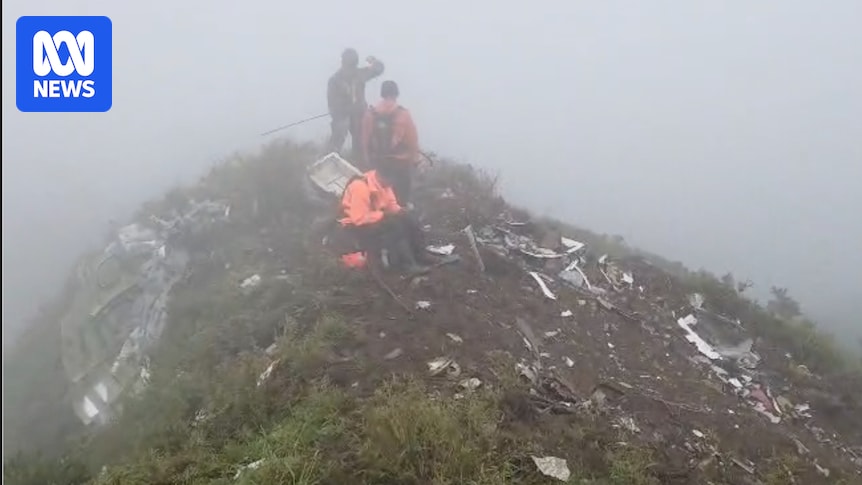
In a tragic conclusion to a harrowing search, Indonesian rescuers have recovered the bodies of all 10 individuals aboard a fishery surveillance plane that went missing over the weekend in South Sulawesi province. The aircraft, an ATR 42-500 turboprop, lost contact with air traffic control on Saturday around 1:30 PM local time near the Maros region, according to Indonesia’s search and rescue agency.
The plane, operated by Indonesia Air Transport (IAT), was chartered by the Marine Affairs and Fisheries Ministry for air surveillance of the nation’s fisheries. Onboard were seven crew members and three passengers, all of whom were ministry staff members. The discovery of the bodies brings a somber end to the search efforts, which had been ongoing since the aircraft disappeared from radar.
Search and Recovery Efforts
Andi Sultan, an official at South Sulawesi’s rescue agency, confirmed the recovery of the ninth and tenth bodies early on Friday. Speaking in a video statement, Sultan expressed his grief, noting that the evacuation process was still in progress. The search operation had been challenging due to the plane’s crash site on the fog-covered slopes of Mount Bulusaraung, a rugged area in the Maros region.
The agency also communicated the successful recovery of all victims via its Instagram account, marking the end of a difficult search operation. The wreckage was found scattered across different locations around the mountain, approximately 1,500 kilometers northeast of Jakarta, Indonesia’s capital.
Investigation and Historical Context
As the nation mourns, the focus now shifts to understanding what went wrong. Indonesia’s National Transportation Safety Committee (KNKT) has launched an investigation into the crash, with officials examining the contents of the recently recovered black box. The ATR 42-500, manufactured by Franco-Italian planemaker ATR, had not been involved in a fatal crash in Indonesia for over a decade.
The last deadly incident involving an ATR 42 in Indonesia occurred in 2015, when a Trigana Air Service ATR 42-300 crashed into a mountainside in Papua, resulting in the loss of all 54 people on board. More recently, in 2021, a Boeing 737-500 operated by Sriwijaya Air crashed into the Java Sea, killing 62 people.
“This incident underscores the ongoing challenges in aviation safety within Indonesia, a country with a complex geography and rapidly growing aviation sector,” said a spokesperson from the KNKT.
Implications and Next Steps
The recovery of the black box is crucial for investigators as they seek to piece together the final moments of the flight. The KNKT’s findings will be eagerly anticipated, as they may provide insights into potential mechanical failures or human errors that led to the crash. The investigation’s outcomes could influence future aviation safety protocols in Indonesia.
Meanwhile, the families of the victims are left to grieve their losses. The Indonesian government has pledged support to the bereaved families and reiterated its commitment to improving aviation safety standards.
As Indonesia grapples with this latest tragedy, the aviation community worldwide will be watching closely, hoping for answers that could prevent similar incidents in the future. The findings of the KNKT will not only impact local aviation practices but could also contribute to global discussions on aviation safety.