




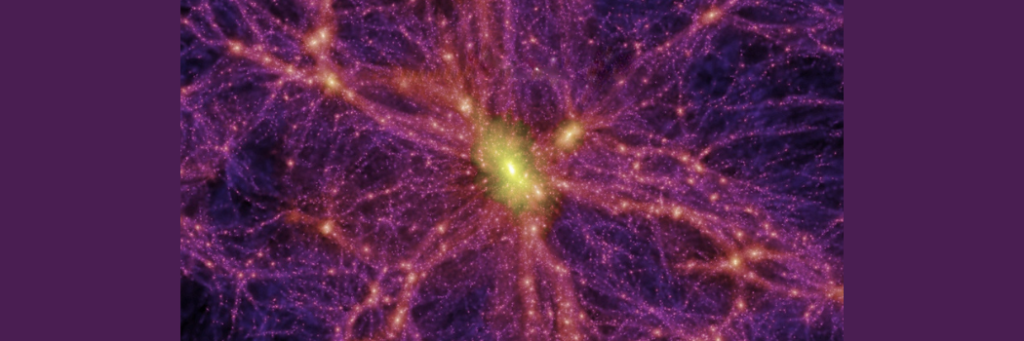
Our scientists are at the forefront of global space missions, crafting essential instruments and unveiling new cosmic phenomena. Durham University recently hosted the UK’s National Astronomy Meeting in 2025, drawing nearly 1,000 space scientists from across the globe to discuss the latest advancements in astronomy.
Mapping the Cosmos and Beyond
Durham’s researchers are part of a UK-led team working on designs for a core imaging instrument for NASA’s Habitable Worlds Observatory. This groundbreaking mission aims to discover and study Earth-like planets beyond our Solar System. The focus at Durham is on developing high-resolution cameras capable of measuring planet masses and detecting atmospheric signs of water, oxygen, or methane.
In Chile, the 4MOST telescope, with significant involvement from Durham, has captured its first light, signaling a new era in large-scale spectroscopic surveys. This instrument can simultaneously record spectra from thousands of stars and galaxies, providing invaluable insights into their chemical compositions and movements.
Celebrated Global Astronomy Collaborations
The DESI (Dark Energy Spectroscopic Instrument) team, where Durham scientists play a leading role, was awarded the 2026 Berkeley Prize for outstanding contributions to astronomy. DESI’s extensive 3D cosmic maps are transforming our understanding of dark energy and the Universe’s evolution.
Furthermore, Durham contributes to the Vera Rubin Observatory’s Legacy Survey of Space and Time, managing vast data and spearheading global efforts to track black holes and dark matter. Meanwhile, a major study utilizing Hubble and Gaia data has challenged the long-held theory that the Milky Way will collide with the Andromeda galaxy in 4.5 billion years. Simulations by Durham physicists suggest only a small chance of such a merger in the next 5 billion years, with many scenarios indicating both galaxies may continue undisturbed.
Science Showcased at National Astronomy Meeting 2025
Durham University welcomed hundreds of global space experts during the National Astronomy Meeting 2025. Researchers presented cutting-edge work covering the entire spectrum of astronomy and cosmology, including new insights into galaxy growth, the universe’s nature, and the physics of growing black holes.
The conference’s theme of community reflected NAM 2025’s broader engagement ethos, involving school students, community groups, industry, artists, and the general public through talks, workshops, exhibitions, and outreach events.
Implications and Future Prospects
The work being done at Durham and through its collaborations is not only advancing our understanding of the cosmos but also setting the stage for future explorations. The development of instruments capable of detecting life-sustaining conditions on distant planets could revolutionize our search for extraterrestrial life.
As global collaborations in astronomy grow stronger, the insights gained from projects like DESI and the Vera Rubin Observatory are expected to provide a deeper understanding of the universe’s fundamental forces and structures. The continued support for these initiatives will likely yield discoveries that could redefine our place in the cosmos.
Looking ahead, Durham’s contributions to space exploration and astronomy are poised to inspire future generations of scientists and researchers, ensuring that the quest to understand our universe continues unabated.