



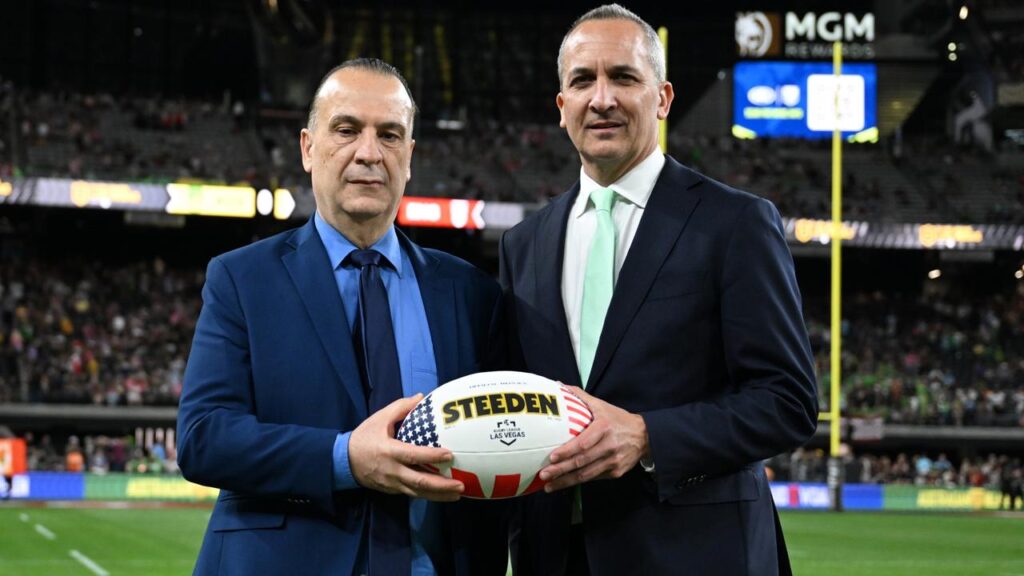
ARLC Chairman Peter V’landys has thrown his support behind a proposed kick-off rule change designed to inject tactical excitement into the National Rugby League (NRL) as it prepares for upcoming broadcast negotiations. This change, which allows teams conceding tries to choose who kicks off, is met with resistance from most NRL clubs, with the notable exception of South Sydney Rabbitohs coach Wayne Bennett.
V’landys, speaking to The Daily Telegraph, emphasized that while the NRL is in a consultation phase with all stakeholders, the ultimate decision will prioritize the sport’s growth. “We’re in the consultation period, so we’re listening to everybody’s views,” he stated. “Once we consider it all, we’ll make the decision.”
Consultation Amidst Opposition
NRL CEO Andrew Abdo is scheduled to meet with club representatives this week to address the initial resistance to the proposed rule changes set for the 2026 season. Despite the pushback, V’landys remains steadfast in his belief that innovation is crucial for the sport’s evolution, arguing against stagnation.
“What people have to understand is that we have to make the game exciting for the fans,” V’landys noted. Highlighting the league’s growth, he added, “We had 137 million viewers in 2019. Now we’ve got 224 million.”
Historical Success of Rule Changes
V’landys’ tenure as ARL Chairman is marked by successful implementations of controversial rules, such as the “six-again” rule and the “two-point field goal.” Despite initial opposition, these changes have enhanced the on-field product, attracting more fans and investors, and transforming the NRL into a financial powerhouse.
As negotiations for a new broadcast deal, projected to exceed $5 billion, approach, V’landys is acutely aware of the need to keep the game engaging. “Sometimes leadership means you’ve got to make tough decisions,” he said. “You listen to people, but at the end of the day, as custodians, you do what you believe is in the best interests of the game.”
Strategic Unpredictability
The proposed kick-off rule is seen as a means to introduce strategic unpredictability and mitigate lopsided scorelines, potentially enhancing the overall quality of the game. “The fact you can choose to kick off or receive is tactical,” V’landys explained. “It brings unpredictability to the game.”
Expert Opinions and Fan Reactions
Experts and analysts have weighed in on the potential impacts of the rule change. Some argue that it could level the playing field by allowing teams to strategize more effectively after conceding points. Others caution that it may disrupt the traditional flow of the game.
Fan reactions have been mixed, with some welcoming the change as a fresh tactical element, while others fear it could complicate the game unnecessarily. The NRL’s decision will likely hinge on balancing these perspectives with the overarching goal of enhancing the sport’s appeal.
Looking Ahead
The NRL’s exploration of rule changes underscores its commitment to evolving the game in line with modern entertainment demands. As discussions continue, the league’s leadership will need to navigate the complex landscape of club interests, fan expectations, and financial imperatives.
The outcome of these consultations and the eventual decision on the kick-off rule will be closely watched by stakeholders across the sport, setting the stage for how the NRL positions itself in the competitive sports entertainment market.