



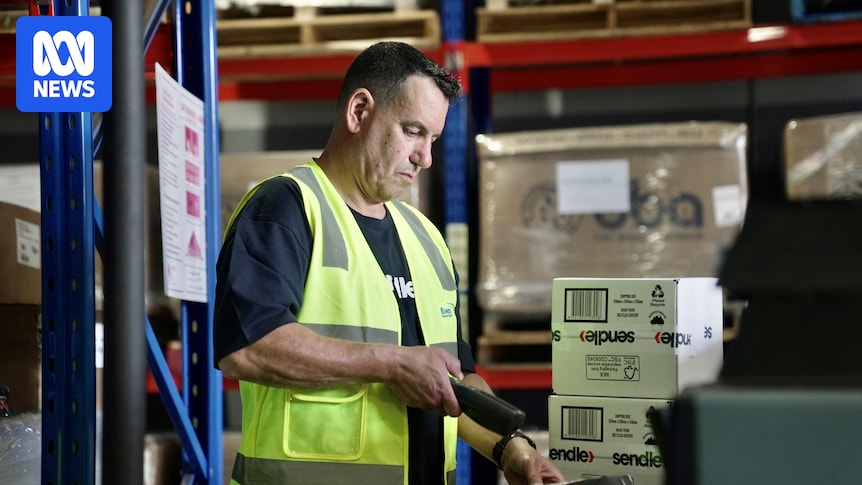
The sudden collapse of Australian shipping company Sendle has left its customers and staff feeling abandoned, while investors are grappling with uncertainty about the future. The company, which had positioned itself as a cost-effective shipping solution for small online retailers, ceased operations abruptly, leaving many in the lurch.
Sendle, which launched over a decade ago, gained significant traction during the COVID-19 pandemic, particularly among Shopify and Etsy sellers. To support its operations, the company raised at least $US70 million ($100 million) in private equity investment, according to Reuters data. Despite its claims of facilitating billions of dollars in retail sales, Sendle’s sudden shutdown has left many scrambling.
Customer and Employee Fallout
Jewellery designer Natasha Wilton, a long-time Sendle customer, expressed her frustration, stating, “We’ve been a bit blindsided and ghosted.” Wilton, who had used Sendle for six years, was left with parcels worth over $350 in limbo after receiving an email halting all parcel pickups and deliveries.
Similarly, Diana Gilgorov, whose reusable straw brand had recently gone viral, found herself in a difficult position. “I’ve got no idea if I’m going to get that money back,” she lamented, highlighting the lack of communication from Sendle.
Meanwhile, Sendle’s Australian staff were informed of their job losses over the same weekend. An anonymous employee shared, “Everybody is disappointed it went this way. Lots of anger. Lots of speculation about what went wrong.” Overseas, at least 80 call center employees in the Philippines are also facing redundancy.
The Business Model and Expansion Efforts
Founded in 2014 by former CSIRO executive James Chin Moody, Sendle branded itself as Australia’s first 100% carbon-neutral shipping service. Its business model involved booking shipping slots in bulk and reselling them to customers at a margin. This approach allowed Sendle to offer competitive prices against larger players like Australia Post.
Sendle’s expansion into North America was supported by several capital raising rounds, with backers including Afterpay-linked Touch Ventures and Australian firm Federation. However, the company’s ambitious growth strategy hit a snag following a merger with two US companies, ACI Logistix and FirstMile, forming FastGroup.
Merger Complications
The merger, intended to redefine logistics capabilities, quickly unraveled. Federation accused ACI Logistix of providing inaccurate financial information during the merger process, leading to strained supplier relationships and financial difficulties for the merged entity.
“Since the merger it has emerged that ACI Logistix was not current on its financial obligations at the time of the merger,” Federation stated.
Touch Ventures also reported to the ASX that it had written down its investment in Sendle to “nil” and noted a dilution of its stake after the last cash injection in 2023.
Looking Ahead
The FastGroup board ultimately decided to wind down the company, leaving former Sendle employees and investors with more questions than answers. Attempts to contact Sendle’s founding CEO and other executives have been unsuccessful, and the company’s press agent has not responded to inquiries.
Despite the turmoil, staff were reportedly paid on time and received redundancy notices. Call center staff in the Philippines will receive entitlements under local law, according to ZigZag Offshoring.
The collapse of Sendle serves as a cautionary tale of rapid expansion and the complexities of international mergers. As the dust settles, affected parties are left to navigate the fallout, with many questioning the decisions that led to this outcome.
“I don’t think we’ll hear from them again ever,” a former Sendle employee remarked, capturing the sentiment of uncertainty and finality shared by many.