




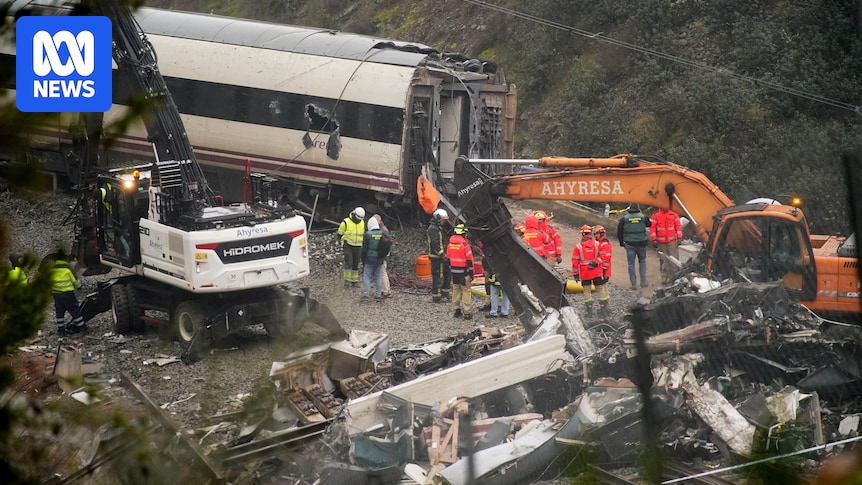
Spanish investigators have discovered two additional bodies in the wreckage of a high-speed train involved in a catastrophic collision last weekend, raising the death toll to 45. The incident has intensified scrutiny over the safety of train travel in Spain, a nation renowned for its extensive high-speed rail network and its status as a major tourist destination.
The collision, which occurred in the southern region of Andalusia, is now the deadliest rail accident in Spain in over a decade. In response, the country observed three days of national mourning. The crash involved two high-speed trains: one operated by the state company Renfe and the other by the private firm Iryo, which had derailed and crossed onto the Renfe train’s track.
An emergency services spokesperson from Andalusia confirmed to AFP that the bodies recovered were likely the last of those reported missing. “In theory, they are the two people” yet to be recovered from a total of 45 reported as missing, the spokesperson stated. The disaster also left more than 120 people injured, with the victims including three women from Morocco, Russia, and Germany, alongside Spanish nationals.
Investigating the “Extremely Strange” Disaster
Spain is grappling with the aftermath of what the transport minister has described as an “extremely strange” disaster. The collision took place on a recently renovated stretch of straight, flat track and involved a modern Iryo train, raising questions about the causes of the accident.
This tragic event follows another rail incident on Tuesday, when a train driver was killed and 37 passengers were injured after a commuter service collided with a retaining wall near Barcelona. The wall had fallen onto the tracks, reportedly due to recent heavy rainfall.
Safety Concerns and Union Response
The second accident prompted a suspension of the Rodalies commuter network in Catalonia, affecting hundreds of thousands of daily commuters. Although services were expected to resume, they remained suspended as train drivers did not report for duty.
Diego Martin Fernandez, the secretary general of the Semaf train driver union, expressed concerns over infrastructure safety. “To restore confidence that the infrastructure meets safety conditions, we need guarantees,” he told RAC 1 radio, citing fresh landslips on the lines.
In response to ongoing safety issues, Semaf has called for a national strike from February 9 to 11, highlighting repeated safety failings. Spain’s Transport Minister Oscar Puente has pledged to negotiate in hopes of averting the strike, emphasizing that the two recent tragedies are unrelated and defending the public transport system.
Additional Incidents Raise Alarm
Adding to the list of rail incidents, a commuter train in the south-eastern region of Murcia collided with a crane mounted on a truck, resulting in six minor injuries. The accident occurred in the municipality of Alumbres, where the train, fortunately, did not derail. Murcia emergency services reported that the injured were transported to a hospital for treatment.
The mayor of Cartagena, Noelia Arroyo, commented on social media that the truck involved belonged to an electricity company working on cables near the track.
Looking Ahead: Ensuring Rail Safety
As Spain seeks answers and solutions, the focus is now on ensuring the safety of its rail infrastructure. The recent accidents have sparked a national conversation about the reliability of the country’s transport systems, with experts calling for comprehensive safety reviews and upgrades.
Historically, Spain has been proud of its high-speed rail network, which is second only to China’s in terms of size. However, these recent incidents have highlighted vulnerabilities that must be addressed to maintain public confidence and ensure passenger safety.
As investigations continue, the nation is left to ponder the implications of these tragedies and the steps necessary to prevent future occurrences. The outcomes of these inquiries and the government’s response will likely shape the future of rail travel in Spain.