



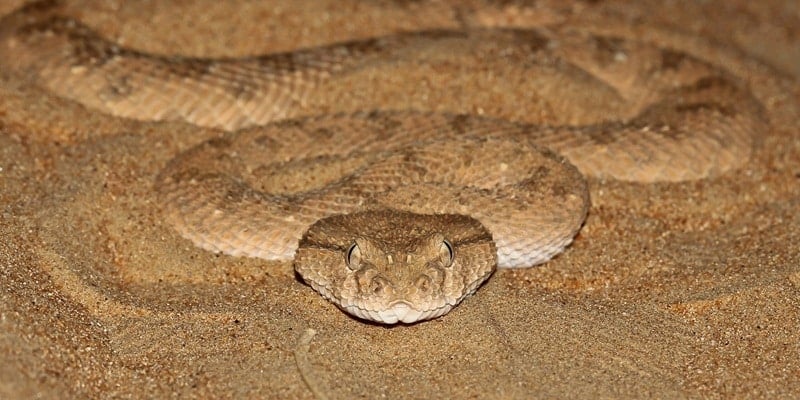
Four million years ago, the landscape of Northern Greece was the domain of a colossal serpent, Laophis crotaloides, a prehistoric viper that remains the heaviest venomous snake ever discovered. This biological titan roamed the region, dwarfing modern-day venomous snakes in both size and weight.
While today’s giant snakes like the King Cobra can reach lengths of up to 18 feet, their slender bodies pale in comparison to the robust build of the ancient Greek viper. Estimated to be between 10 to 13 feet (3 to 4 meters) long, Laophis weighed an astonishing 57 pounds (26 kilograms), nearly three times the weight of a modern King Cobra. This formidable “heavyweight” had no equal among venomous snakes today.
The Mystery of the Prehistoric Snake in Greece
The story of Laophis crotaloides is a 150-year-old scientific detective tale that has intrigued paleontologists and historians alike. It began in 1857 when the renowned paleontologist Sir Richard Owen described the species based on thirteen vertebrae found near Thessaloniki. However, shortly after his discovery, the fossils were lost, leading many scientists to doubt the snake’s existence, dismissing it as a “paleontological ghost.”
It wasn’t until recently that a single, massive vertebra was unearthed at the same site in Northern Greece. This “missing link” finally confirmed Owen’s giant viper was real, solidifying its place in the annals of paleontological history.
Survival in a Changing Climate
What fascinates scientists most is how Laophis grew so large during a time of climatic change. Typically, reptiles require intense tropical heat to reach massive sizes. However, four million years ago, prehistoric Greece was entering the Pliocene Epoch, characterized by cooling temperatures and seasonal changes.
While most snakes would have shrunk to conserve energy, the Greek viper evolved to be a giant. Researchers propose that it may have had a unique metabolism that allowed it to hunt large mammals across the Macedonian plains, even during chilly winters, making it a true evolutionary outlier.
A Lost World of Megafauna
The presence of Laophis crotaloides serves as a reminder that prehistoric Greece was a land teeming with “megafauna.” This giant viper shared its habitat with other colossal creatures, including:
- Deinotherium: Massive elephant-like creatures with downward-curving tusks.
- Hipparion: Ancestral three-toed horses.
- Sabertooth cats: The apex mammalian predators of the era.
Today, the only traces of this “Last Paradise” are the fossilized remains found beneath the soil of Northern Greece, revealing a history even deeper and more dramatic than the myths of old.
According to experts, the discovery of Laophis crotaloides not only enriches our understanding of prehistoric ecosystems but also highlights the adaptability and resilience of life in the face of environmental challenges. As paleontologists continue to unearth clues from this bygone era, they piece together a more comprehensive picture of Earth’s dynamic history.
Looking forward, these findings may offer valuable insights into how current species might adapt to today’s rapidly changing climate, providing a historical context that could inform future conservation efforts.