


A material touted as a candidate for next-generation solar technology is showing more promise, with Australian scientists behind its success. The next generation of solar technology could be cheaper, more efficient, and a step closer to reality after advances by a team of Australian scientists.
The group, from the University of New South Wales (UNSW), published evidence this week that they had improved performance from a promising solar cell material, breaking international records in the process. However, the achievement, verified by the Commonwealth Scientific and Industrial Research Organisation (CSIRO), will require further research before it can be deployed on rooftops or even windows.
Breakthrough in Solar Cell Efficiency
The announcement comes after Australia set a record for solar energy generation last year, accounting for more than 12 percent of the nation’s power, with over 4.2 million households installing rooftop solar panels. The researchers from UNSW’s School of Photovoltaic and Renewable Energy Engineering investigated ways to boost the efficiency of a material called antimony chalcogenide, which has been tipped for use in future solar technology.
The findings, published in the journal Nature Energy, showed the group was able to boost the power conversion efficiency of the material to 11.02 percent in a university lab and to a rate of 10.7 percent as certified by the CSIRO.
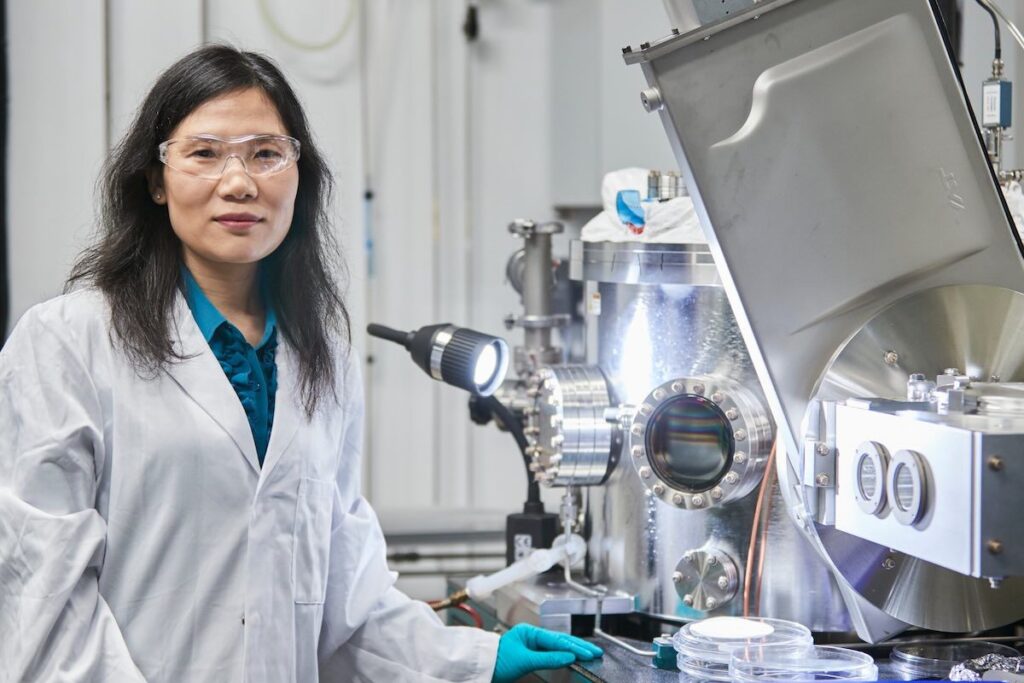
The world-leading result could keep antimony chalcogenide in the running as a candidate for more efficient solar technology, UNSW Professor Xiaojing Hao stated.
The Science Behind the Success
The next generation of solar panels would be designed with tandem cells, Professor Hao explained, in which two or more solar cells are stacked on top of one another. “What researchers around the world are trying to work out is what material is best to use as the top cell in partnership with a traditional silicon cell,” she said. “Antimony chalcogenide is one of those and seems very positive, especially given its distinct properties.”
The material is abundant and inexpensive to use, is more stable than other candidates, and can be deployed in a layer much thinner than a human hair to improve energy efficiency. The researchers identified a barrier to its use in the uneven distribution of sulfur and selenium, which Dr. Chen Qian addressed by adding sodium sulphide during the manufacturing process.
“It was like driving a car up a steep slope,” Dr. Qian explained. “If you do that, you need more fuel to get to the end, whereas if the road is flat it’s more efficient to reach there.”
Future Prospects and Industry Implications
Further research will involve adding chemical treatments to the material to improve its output, Dr. Qian noted, with efforts continuing over the “next few years.” “We believe an achievable aim is to increase the efficiency up to 12 percent in the near future by addressing the challenges that still remain, one step at a time,” he said.
Further breakthroughs could be utilized by the university’s spin-off company, Sydney Solar, which is developing transparent solar stickers that promise to generate energy from windows. This innovation could revolutionize the way solar energy is harnessed in urban environments, making it more accessible and integrated into everyday structures.
The move represents a significant step forward in renewable energy technology, aligning with global efforts to reduce carbon emissions and transition to sustainable energy sources. As the world grapples with climate change, advancements in solar technology like those from UNSW could play a crucial role in shaping a cleaner, more sustainable future.
As research continues, the potential for antimony chalcogenide to transform the solar industry remains promising. With ongoing support and development, these innovations could soon become a staple in both commercial and residential energy solutions, further solidifying Australia’s position as a leader in renewable energy technology.