




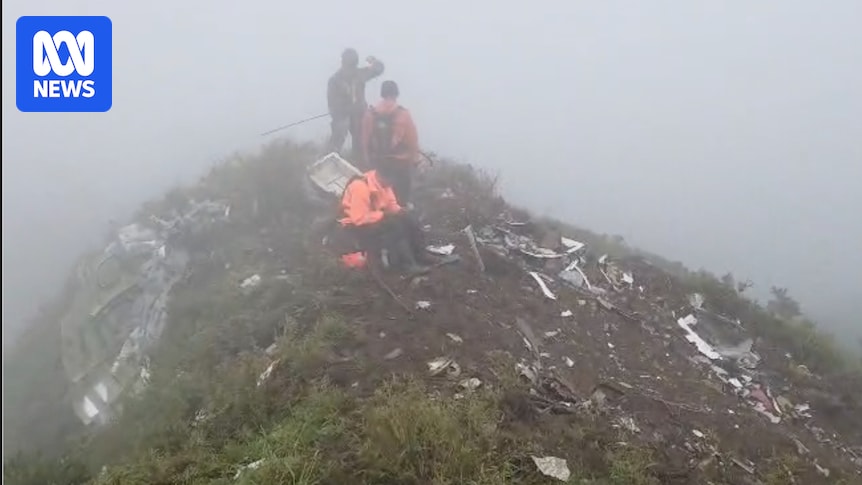
Indonesian authorities have successfully recovered the bodies of all 10 individuals aboard a fishery surveillance plane that lost contact mid-flight over South Sulawesi. The ATR 42-500 turboprop, operated by Indonesia Air Transport (IAT), was chartered by the Marine Affairs and Fisheries Ministry and went missing on Saturday afternoon.
The plane, carrying seven crew members and three passengers, vanished around 1:30 PM local time near the Maros region. The passengers, all ministry staff, were conducting air surveillance on fisheries when the aircraft disappeared from radar.
Rescue Efforts and Recovery
The discovery of the final two bodies was announced early Friday by Andi Sultan, an official from South Sulawesi’s rescue agency. Fighting back tears, Sultan confirmed that the evacuation process remains ongoing. The agency also communicated the recovery of all victims via its Instagram account.
The wreckage was found scattered across various locations around Mount Bulusaraung, approximately 1,500 kilometers northeast of Jakarta. The challenging terrain and fog-covered mountains made the rescue efforts particularly arduous.
Investigation and Historical Context
Indonesia’s National Transportation Safety Committee (KNKT) is currently examining the black box retrieved from the crash site. This investigation aims to uncover the cause of the accident, marking the first fatal incident involving an ATR 42 in Indonesia in over a decade.
Historically, Indonesia has faced several aviation tragedies. In 2015, a Trigana Air Service ATR 42-300 crashed in Papua, resulting in 54 fatalities. More recently, in 2021, a Boeing 737-500 operated by Sriwijaya Air plunged into the Java Sea, claiming 62 lives.
“This incident underscores the ongoing challenges in aviation safety within Indonesia, a nation with a complex geography and a growing aviation sector,” said a spokesperson from the KNKT.
Implications and Future Steps
The crash has reignited discussions about aviation safety standards in Indonesia, a country with a history of air travel incidents. The KNKT’s findings will be crucial in implementing measures to prevent future accidents.
Meanwhile, the Marine Affairs and Fisheries Ministry is reviewing its protocols for chartering flights, ensuring that such tragedies are avoided in future surveillance missions. The ministry also plans to provide support to the families of the victims.
As the investigation progresses, the international community watches closely, hoping for insights that could enhance global aviation safety standards.
The recovery of the bodies and the ongoing investigation mark significant steps in addressing this tragic event. The findings will likely influence future aviation policies and safety measures in Indonesia and beyond.