



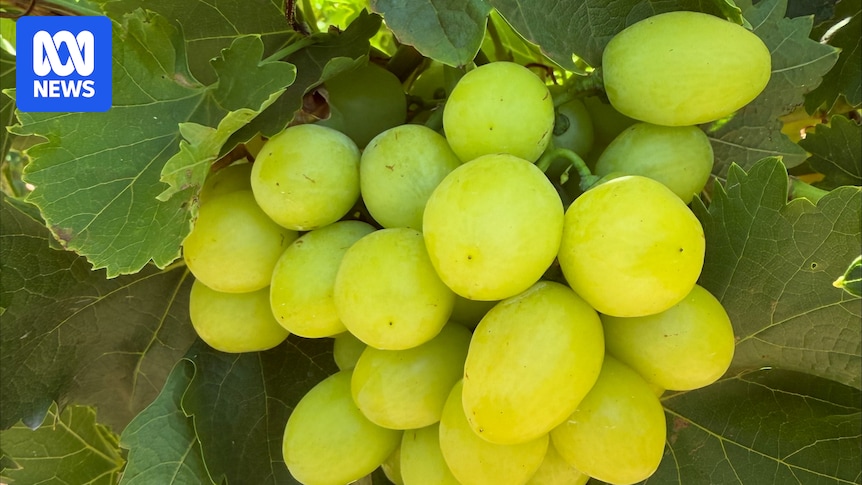
Despite recent heatwaves, Australian table grapes are set to make a significant impact on global markets this year, particularly in Asia. The local industry has commenced its picking season, with a substantial portion of the produce destined for international markets. This development comes as Australia gains full varietal access to Japan, a key market in the region.
Australian Table Grape Association Chief Executive Jeff Scott expressed optimism about the season, noting strong demand signals from recent trade briefings across five or six Asian countries. “It’s still early days, but the indications are that the demand is going to be very strong again,” he stated.
Breaking Barriers in the Japanese Market
Previously, Australian exports to Japan were limited to three varieties: crimson seedless, red globe, and Thompson seedless. However, a successful campaign to dismantle these trade barriers now allows over 130 varieties to enter the Japanese market. This breakthrough led to a remarkable 300% increase in exports to Japan last year, with volumes rising from approximately 3,500 tonnes to nearly 10,000 tonnes.
“Japan last year increased our exports by 300 per cent,” Jeff Scott said.
Australia’s trade relationship with Japan has been bolstered by a free trade agreement, with the first exports of table grapes occurring in 2014. Scott also highlighted the industry’s inclusion in the federal government’s Trade Diversification Network, which could lead to enhanced promotional activities and support for trade missions.
From Vine to Table: The Journey of Australian Grapes
Ensuring the delivery of high-quality fruit to international markets involves sophisticated logistics and a dedicated workforce. At Talia Farms in South Australia’s Riverland, one of the largest table grape farms in the country, the process from vine to shelf can take as little as 48 hours.
Farm Manager Bill Avery described the operation as a round-the-clock effort, with workers beginning their day as early as 2:30 AM under headlamps to pick in the dark. “By 9 AM, the pickers are finished, and the pack shed is full,” Avery explained. “We go right through to 6 PM, so our fruit is then stored ready for dispatch that night.”
“We’re looking at 48 hours from dispatch to being in a fruit shop in South-East Asia,” Avery noted.
While the farm is currently on the market, Avery assured that existing management would remain in place post-acquisition. Despite a robust growing season, he cautioned that Australian consumers might not see a corresponding drop in local grape prices due to market control by a few major players.
Implications and Future Prospects
The expansion of Australian grape exports, particularly to Japan, represents a significant opportunity for the industry. As demand continues to grow, the focus will likely remain on maintaining quality and efficiency in the supply chain. The inclusion in the Trade Diversification Network could further enhance Australia’s reach in Asian markets.
Looking ahead, the challenge will be to sustain this momentum and navigate the complexities of international trade. With strategic partnerships and continued innovation, the Australian table grape industry is well-positioned to capitalize on these opportunities.
As the season progresses, stakeholders will be closely monitoring market responses and adjusting strategies to ensure the continued success of Australian table grapes on the global stage.