

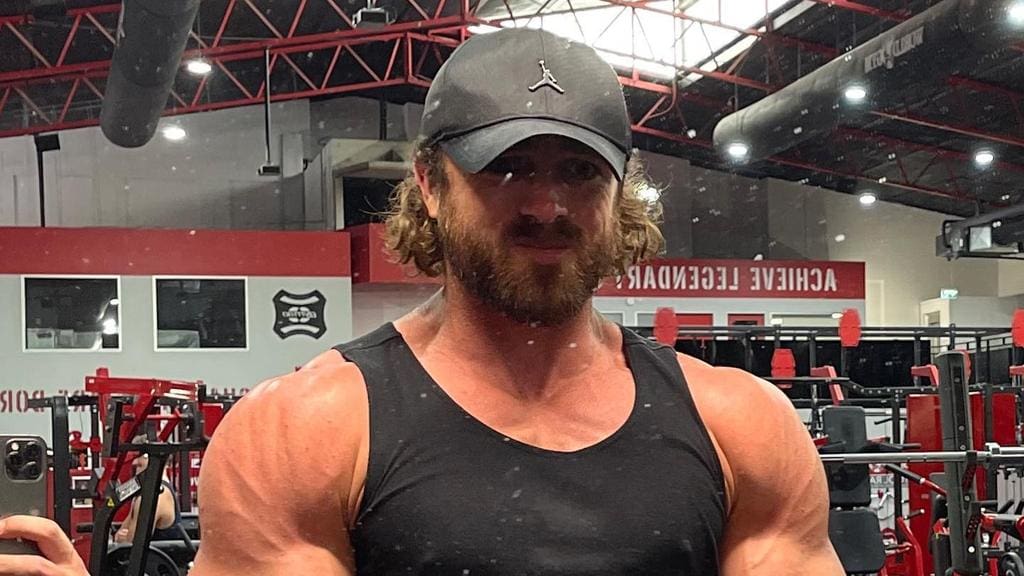
Former Brisbane Lions midfielder Rhys Mathieson has been handed a three-year suspension following a positive test for performance-enhancing drugs. The 28-year-old, who played 72 games for the Lions, tested positive for the anabolic steroid oxymetholone, as initially reported by the Herald Sun. Mathieson is barred from returning to competitive football until August 10, 2027, although he may resume training in June of that year.
In a candid discussion on his podcast, Rip Through It, with former teammate Mitch Robinson, Mathieson opened up about the circumstances surrounding his suspension. “Before we get started, I don’t want this to be a feel sorry for me or I’m a victim in this. I take full responsibility for what happened,” Mathieson stated. “This is why I’d like to tell the story because some things just didn’t add up, but at the same time, I fully agree with whatever we went through, but some bizarre events happened.”
From AFL to Bodybuilding: A New Passion
Since retiring from the AFL in 2023, Mathieson has transitioned into the world of bodybuilding, documenting his journey on social media. He has gained over 10 kilograms in muscle mass, a transformation that caught the attention of many. His last competitive appearance was in the Queensland Australian Football League (QAFL) in 2023, where he was provisionally suspended following the positive test.
Mathieson explained that his use of the substance was for non-football purposes, a factor considered during the ruling of his ban. “When the trades didn’t go through, I thought, ‘Look, I am going to follow my passion, the dream is sort of over for footy now. So I’m going to follow my next passion, which was bodybuilding,” he said. “I dived into a lot of gym supplements, I mean a lot – a lot of them.”
Understanding the Suspension
The suspension highlights ongoing challenges within sports regarding the use of performance-enhancing drugs, even outside professional competition. Mathieson’s case is particularly complex because it involves substances taken for bodybuilding, a sport with different regulations than professional football.
Mathieson expressed a deep interest in the science of bodybuilding, noting, “I liked the science behind transforming your body. I really have a passion for it, I like to see these guys competing. Once I started doing it, I fell in love with it.” He acknowledged the risks, understanding that certain substances are banned, but justified his actions by the context of local football, where he perceived the stakes to be lower.
Reactions and Future Implications
Mathieson’s suspension has sparked discussions about the boundaries between professional and amateur sports and the role of substances in athletic performance. Experts argue that the line between acceptable and banned substances can be blurry, especially when athletes transition between sports with differing regulations.
According to sports analyst Dr. Emily Carter, “This case underscores the need for clearer guidelines and education for athletes transitioning out of professional sports. The pressures to maintain a certain physique or performance level can lead to decisions that have long-term consequences.”
“I am going to take whatever pre-workout. I am going to take whatever substance I want. I am going to be OK,” Mathieson said, reflecting a mindset that may resonate with many athletes in similar situations.
As Mathieson navigates the fallout from his suspension, the broader sports community continues to grapple with the implications of doping across different levels of competition. The case serves as a reminder of the importance of vigilance and education in maintaining the integrity of sports.
Looking ahead, Mathieson remains focused on his bodybuilding journey, while acknowledging the lessons learned from his suspension. His story adds to the ongoing dialogue about the challenges athletes face in balancing passion with the rules governing their sports.