



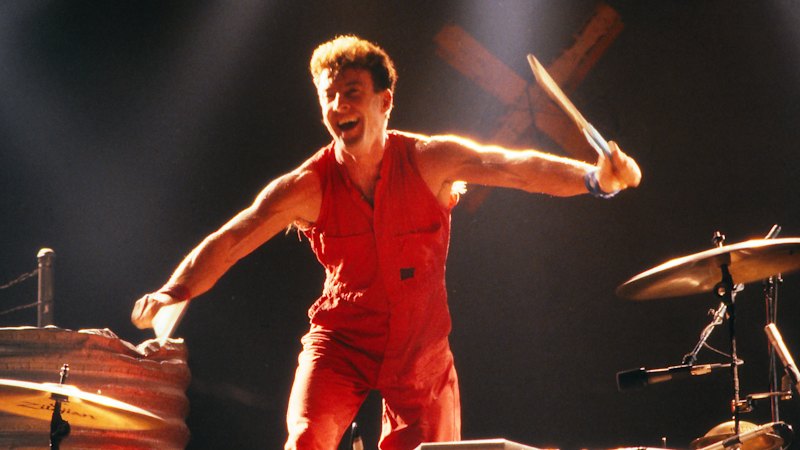
Rob Hirst, the powerhouse drummer for the iconic Australian rock band Midnight Oil, passed away this week at the age of 70. Known for his extraordinary ability and ferocious power behind the drum kit, Hirst’s influence on music, both in Australia and globally, is undeniable. His death marks the end of an era for fans who have followed the band since its explosive beginnings in the 1970s.
Hirst’s dynamic performances were legendary, often described as exhilarating. A scene from Ray Argall’s documentary, Midnight Oil: 1984, captures the essence of his impact. A roadie recalls his first experience with the band, questioning why the drum kit was being nailed to the floor. The answer became clear as Hirst unleashed his energy, nearly collapsing the stage with his performance. Such was the intensity that defined his career.
The Rise of Midnight Oil
Born in 1955 and raised in Camden, south-west of Sydney, Hirst formed a musical partnership with Jim Moginie in his youth. By 1973, they had formed a band called Farm, which later evolved into Midnight Oil with the addition of singer Peter Garrett and guitarist Martin Rotsey. The band quickly gained a reputation for their powerful live performances and politically charged lyrics.
Midnight Oil’s music was deeply influenced by the rock ‘n’ roll of the 1960s, with bands like The Kinks, Rolling Stones, and The Who shaping their sound. Hirst emphasized the importance of melody and beat, but also the need to address significant societal issues, a theme that resonated throughout their career.
A Legacy of Influence and Activism
Midnight Oil’s career was marked by their commitment to social and environmental causes. Their performance at the 2000 Sydney Olympic Games and the 2009 Sound Relief concert, which raised funds for bushfire victims, are just a few examples of their activism. Hirst lived by the same principles, using his platform to advocate for change.
Hirst’s songwriting contributions were significant, with his name appearing in the credits of many of the band’s hits. Songs like “Kosciusko,” “Hercules,” and “Forgotten Years” showcase his skill as both a drummer and a lyricist. His ability to weave important messages into compelling music left a lasting impact on fans and fellow musicians alike.
“Rob Hirst had a massive impact on Australian culture,” said musician Jimmy Barnes, describing Hirst as “irreplaceable” and “one of a kind.”
Final Tours and Lasting Impact
Despite battling pancreatic cancer for three years, Hirst remained energetic and passionate about music. Ahead of Midnight Oil’s final tour in 2022, he spoke about their latest album, Resist, and the band’s desire to deliver performances as fierce as those in their early years. His enthusiasm and dedication never waned, even as he faced personal challenges.
Hirst was also deeply committed to Indigenous reconciliation, as demonstrated by his work on the 2020 album The Makarrata Project, which featured collaborations with First Nations artists. The album’s cover, displaying the Uluru Statement From the Heart, symbolized Hirst’s advocacy for a First Nations Voice and his belief in the power of music to drive social change.
“From our point of view, we’re just doing our bit alongside so many other people,” Hirst said. “We have no doubt in 10 or 15, 20 years every school kid in this country will be able to recite lines from this amazing statement.”
A Generous Spirit and a Lasting Legacy
Hirst’s generosity extended beyond his music. Last year, he auctioned his black Ludwig drum kit, used on every tour since 1979, raising $77,500 for First Nations musicians in the Northern Territory. This act of giving was typical of Hirst’s character, prioritizing the needs of others over personal sentimentality.
Rob Hirst’s legacy is not just in the music he created, but in the spirit of activism and generosity he embodied. His influence will continue to inspire musicians and activists for generations to come, ensuring that his contributions to music and society are never forgotten.