




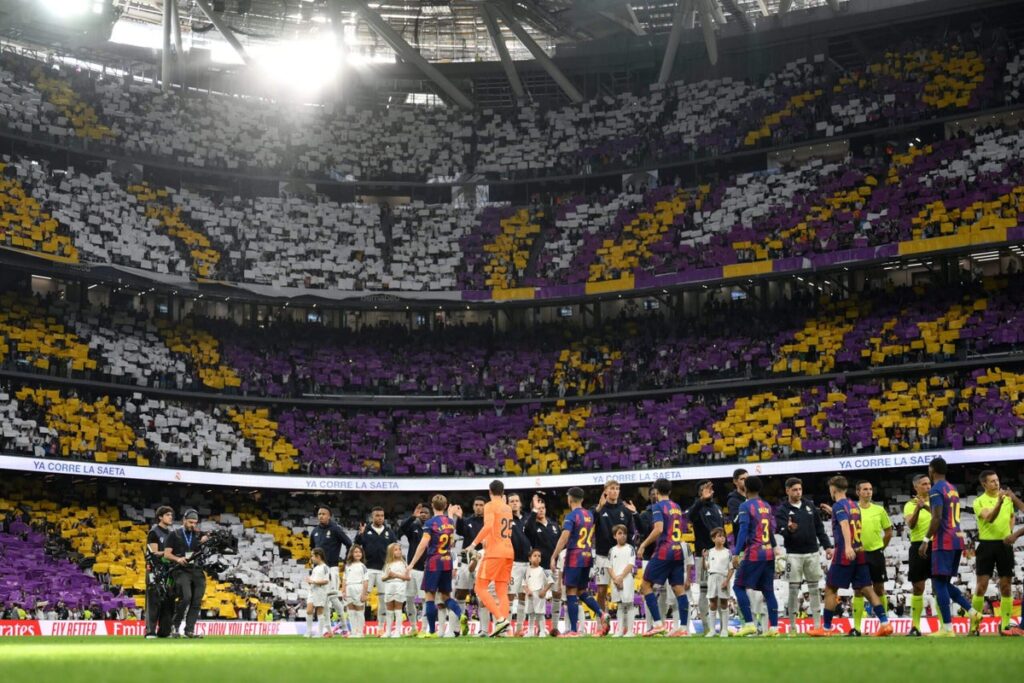
Real Madrid and Barcelona have once again cemented their status as football’s financial powerhouses, topping Deloitte’s latest Football Money League report. For the 2024-25 season, Real Madrid led the rankings with an impressive revenue of £975 million ($1.309 billion), marking their third consecutive year at the summit and their 15th in 21 seasons. Barcelona followed in second place, trailing by over £150 million.
Liverpool emerged as the second English club to surpass £700 million in revenue, yet their earnings only secured them the fifth spot worldwide. Notably, this is the first time in the report’s 29-year history that no English club has featured in the top four, a significant shift in the financial landscape of European football.
Understanding the Financial Landscape
The clubs on Deloitte’s annual list are often labeled as football’s ‘richest’, a term that can be misleading. High revenues do not necessarily equate to profitability, as substantial costs can quickly deplete even the largest earnings. Of the ten clubs that disclosed full accounts for the 2024-25 season, four reported a pre-tax loss.
Barcelona serves as a prime example. Despite their substantial revenues, they turned £819 million of income into a £7 million pre-tax deficit. This figure included £60 million from one-off sales of 30-year personal seat licenses at the refurbished Camp Nou, a revenue stream that cannot be repeated for decades.
Commercial Income Takes Center Stage
Deloitte’s report highlights a shift towards commercial income as the primary revenue source for top clubs, a trend mirrored in the women’s football sector. For the 2024-25 season, commercial revenues for the top 20 clubs reached £4.46 billion, up from £4.2 billion the previous year. Of the £261 million increase, £226 million came from the top 10 clubs.
Real Madrid and Barcelona led this commercial revenue surge, generating £499 million and £438 million, respectively. Bayern Munich, Manchester City, Manchester United, Paris Saint-Germain, and Liverpool also reported significant commercial earnings, each exceeding £300 million.
The Role of Broadcast Revenues
While commercial income has taken the lead, broadcast revenues remain a critical component, totaling £3.95 billion across the top clubs. Real Madrid again topped this category with £281 million, followed closely by Manchester City, Arsenal, and Liverpool.
Tim Bridge, lead partner in the Deloitte Sports Business Group, emphasized, “On-pitch performance remains a primary driver for clubs to progress to the upper echelons of the ranking.”
The expanded Club World Cup also played a role, with several clubs, including Chelsea, benefiting financially. However, clubs heavily reliant on broadcast income, such as Aston Villa and West Ham United, face vulnerabilities if their on-field performance declines.
Challenges and Future Prospects
The absence of English clubs in the top four highlights the shifting dynamics of football’s financial hierarchy. Manchester United, once a perennial top-five presence, fell to eighth, overtaken by domestic and international rivals. Liverpool’s rise to the top of the English revenue chart underscores the competitive nature of the Premier League.
Despite the record-breaking revenues, Deloitte’s report also points to improved cost control among elite clubs. The wages-to-revenue ratio for 19 clubs decreased to 55.5%, driven by revenue growth rather than wage cuts.
James Savage from Deloitte noted, “The sight of no English clubs in the top four reemphasizes the importance of on-pitch performance.”
Looking ahead, the financial landscape of football remains complex. While high revenues are celebrated, they represent only part of the story. The next few seasons will test the sustainability of these financial models, particularly as clubs navigate the challenges of maintaining profitability alongside competitive success.