



For years, tales of exorbitant Bugatti repair bills have circulated online, often resembling urban legends with stories of five-figure oil changes and shockingly priced components. However, according to Bugatti CEO Mate Rimac, many of these horror stories don’t withstand scrutiny. The truth, he asserts, is far less dramatic.
Of course, the definition of “expensive” is subjective. For those who find a $6,000 key fob or a $20,000 spark plug replacement outrageous, you’re not alone. These figures, reported in recent years, are undeniably staggering for the average person. Yet, for Bugatti owners, such costs are often considered negligible.
Rimac recently shared a video on social media to highlight the intricate nature of Bugatti components. His aim was to caution independent builders against attempting to restore damaged Bugattis without professional assistance. He also noted that the Bugatti Chiron comes with four years of complimentary service and warranty, effectively eliminating maintenance costs during that period.
The Bugatti Rebuild Dispute
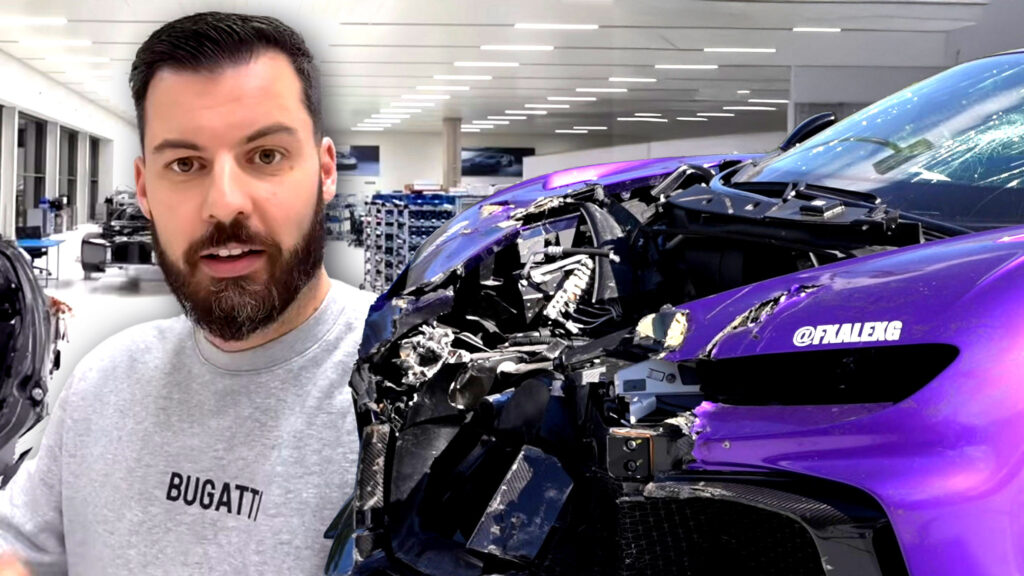
The video was a direct response to YouTuber Mat Armstrong, who embarked on a mission to revive a heavily damaged Bugatti Chiron Pur Sport. The hypercar, owned by Alex Gonzalez, was repurchased from Copart after a crash and insurance payout. Gonzalez is now attempting to make it roadworthy again.
Gonzalez has publicly requested that Bugatti lift the car’s blacklisted status, even threatening to 3D print replacement parts. Although Rimac reached out to offer assistance, the effort seems to have stalled. The project risks becoming a prohibitively expensive and potentially unsafe DIY build, lacking both the resources and approval of Bugatti’s Molsheim headquarters.
Among the myths Rimac addressed was the claim that Bugatti Chiron headlights cost €150,000 (around $174,000). Rimac clarified that the actual cost is closer to €50,000 ($58,000). He explained that developing and homologating these parts requires tens of millions of euros in R&D, spread across just 500 cars.
The Danger of Using Different Parts
In his latest video, which has amassed 6.8 million views in just four days, Armstrong points out that some Bugatti airbags share part numbers with those used in the Audi A3. However, Rimac warns that this does not make them interchangeable. He cautioned that swapping parts into a hypercar without proper precautions can be dangerously misleading.
Rimac revealed that during cold-weather testing of the new Tourbillon at -20°C (-4°F), they discovered that the leather upholstery on the dashboard could stiffen enough to interfere with airbag deployment. Bugatti had to adjust how the leather is treated during production to avoid compromising safety, a process no DIY rebuild could realistically replicate.
Why Bugatti Doesn’t Approve
Rimac emphasized his admiration for Armstrong and his videos, expressing willingness to support the project as a fellow car enthusiast. However, he drew a clear line: Bugatti cannot approve this repair, and for good reason.
The damage to Gonzalez’s Chiron Pur Sport wasn’t merely cosmetic. The crash shattered the gearbox housing and caused structural damage to the monocoque, issues that extend beyond bodywork or component swaps. According to Rimac, repairs that fall short of factory standards pose serious risks to both current and future owners, which is why Bugatti refuses to endorse them.
Rimac described the Chiron as a “very valuable asset” that demands exceptional care due to its engineering complexity, adding that Bugatti wants its cars to remain on the road for 50 or even 100 years. Bugatti reportedly made a “fair offer” to carry out the repairs, but Gonzalez declined, a decision Rimac speculated was driven by the allure of online attention.
Despite the challenges, Rimac expressed hope for a resolution that preserves the car’s integrity without compromising its future. The Chiron Pur Sport is too important and too complex to become a cautionary tale on wheels.