


Andrew Forrest’s Fortescue Metals Group has announced a breakthrough in its renewable energy strategy, claiming to have secured the lowest cost pricing for large-scale battery storage in Australia. This development is a crucial component of Fortescue’s ambitious plan to eliminate fossil fuel use and achieve “real zero” emissions across its mining operations by the end of the decade.
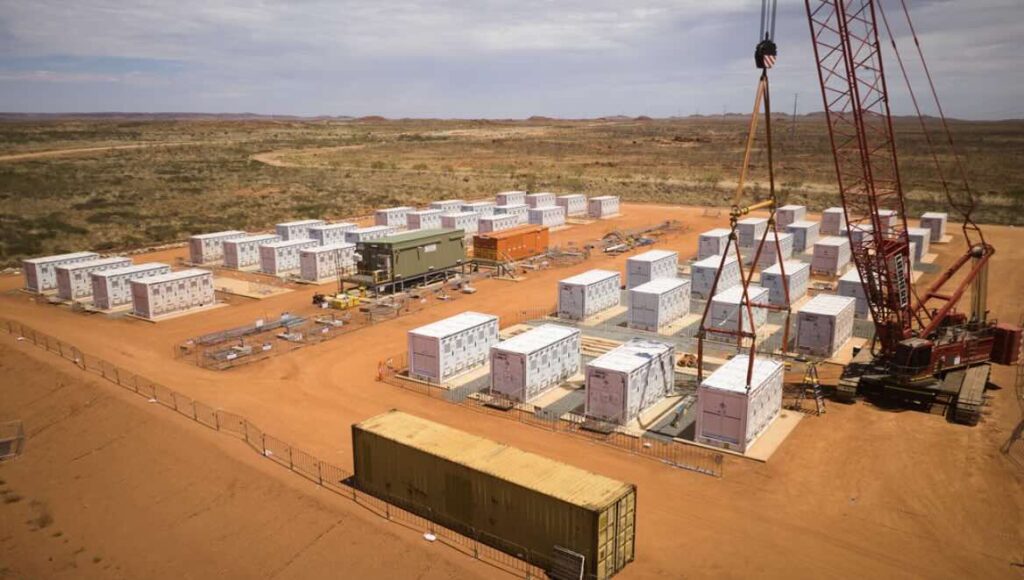
Fortescue recently commissioned its first significant battery project, the 50 megawatt (MW), 250 megawatt-hour (MWh) North Star Junction battery. This installation marks the beginning of a series of projects aimed at deploying up to five gigawatt-hours of storage. The stored energy will support wind and solar power initiatives designed to energize Fortescue’s mining sites and charge its electric transport and mining equipment.
Strategic Partnerships and Cost Efficiency
The company is leveraging its partnerships with leading Chinese manufacturers, including BYD for battery technology, Envision for wind turbines, Longi for solar panels, and XCMG for electric mining equipment. These collaborations are instrumental in driving down costs, as battery storage prices have plummeted by approximately 40% in Australia over the past year.
Fortescue CEO Dino Otranto expressed confidence in the financial advantages of these deals during a recent investor call. “Without disclosing the amazing commercial outcomes that we’ve got, we’re pretty confident that we’ve secured large scale best at pricing that hasn’t really been seen, certainly in Australia,” he stated.
Operational Benefits and Performance Improvements
The North Star battery is already proving beneficial by stabilizing energy supply at Fortescue’s mining sites, which have historically relied on gas and diesel generators. Otranto highlighted the simplicity and efficiency of the battery systems, likening them to “Lego bricks” that can be easily scaled and implemented.
“They’ve already saved our bacon many times when you have the usual power fluctuation that you have in the Pilbara,” Otranto noted, emphasizing the battery’s role in preventing shutdowns of critical processing facilities.
These improvements are not only enhancing operational performance but also reducing reliance on aging infrastructure. “The battery stack is remarkable, and I invite anyone to come and have a look at it. It’s working. It’s economic. It’s 24/7, it’s exactly what we want, and really it’s what this country needs,” Otranto added.
Future Plans and Economic Impact
Fortescue’s future plans include the installation of five gigawatt-hours of battery storage, provided by BYD, to complement the multiple gigawatts of wind and solar power it intends to develop. The company has already installed half of the solar modules for the Cloudbreak solar project and has commenced its first wind project at Nullagine, utilizing innovative self-lifting tower technology from its Spanish acquisition, Nabrawind.
The transition to electrified mining equipment is also expected to yield significant cost savings. Fortescue’s mining costs were reported at $US19.10 per tonne last quarter, influenced by high diesel prices. However, the electrification strategy is projected to reduce these costs by “three to four bucks” per tonne by 2030, primarily through the deployment of nearly 400 electric haul trucks.
“We’re really at the start of that. We’ve got about a dozen or so electric excavators running, which proportionately don’t use that much diesel, relative to the high consuming mobile fleet, which is where really you see the benefits coming through,” Otranto explained.
Fortescue anticipates receiving substantial volumes of electric equipment from partners Liebherr and XCMG over the next two to three years, which will further enhance cost efficiency and environmental sustainability.
Implications for the Mining Industry
This strategic shift by Fortescue underscores a broader trend within the mining industry towards sustainable and cost-effective energy solutions. By investing in renewable energy and electrification, Fortescue not only aims to reduce its carbon footprint but also to set a precedent for other mining companies globally.
The implications of Fortescue’s initiatives extend beyond its operations, potentially influencing energy policies and encouraging further investment in renewable technologies. As the company continues to roll out its ambitious plans, it remains to be seen how these efforts will reshape the landscape of the mining industry and contribute to global sustainability goals.