

“I used to think that, if there was reincarnation, I wanted to come back as the President or the Pope,” remarked James Carville, a former advisor to Bill Clinton. “But now I want to come back as the bond market. You can intimidate everybody.”
Carville’s words resonate now more than ever as President Donald Trump finds himself on a collision course with a formidable adversary: the bond market. This confrontation comes amid escalating tensions with the US Federal Reserve, an institution that plays a pivotal role in the global financial system.
The bond market has historically been a force capable of influencing government policies, toppling economies, and even ending political careers. Trump’s recent actions suggest he may be underestimating the power of this financial giant.
The Federal Reserve: A Critical Institution
Trump’s disregard for institutions is well-documented, but his recent focus on the Federal Reserve marks a significant escalation. The US Federal Reserve, akin to Australia’s Reserve Bank, has a profound impact on the global economy by managing inflation, influencing interest rates, and stabilizing the US dollar.
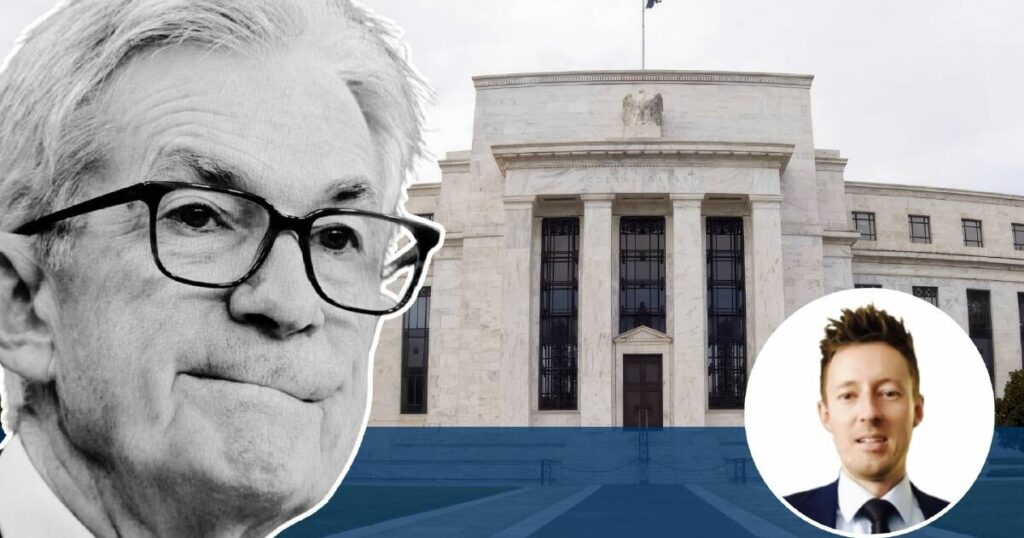
Trump has long criticized the Fed for maintaining high interest rates, but tensions reached a new peak last week when the Department of Justice launched a criminal investigation into Fed Chair Jerome Powell. Officially, the investigation concerns alleged misstatements about renovations at the Fed’s headquarters. However, many view it as a pretext to remove Powell, whose adherence to the Fed’s independent mandate has frustrated Trump.
Potential Consequences of Undermining the Fed
If Trump succeeds in replacing Powell with a more compliant chair, the repercussions could be severe. A chair who lowers interest rates excessively could trigger runaway inflation. While a subsequent rate correction might alleviate some pain, the greater risk lies in failing to adjust rates appropriately.
The collapse of the Fed’s independence and the politicization of monetary policy could lead to a financial crisis. Inflation expectations, a crucial stabilizing factor, might become unanchored, causing unpredictable spirals in inflation and asset prices.
With $38 trillion in debt, even a small increase in borrowing costs could be catastrophic for the US economy.
Furthermore, the bond market could demand higher premiums on US government borrowing, and the volatility of the US dollar might increase. In the long term, these developments could push global markets to seek alternative safe haven currencies and assets, a shift that would have profound implications for the US’s economic standing.
Historical Context and Expert Opinions
Historically, the bond market has wielded significant power. In Argentina, bond market pressures contributed to economic collapse. During the eurozone crisis, bond market dynamics exacerbated regional instability. Even in the UK, former Prime Minister Liz Truss’s tenure was cut short, in part, due to market reactions.
Experts warn that Trump’s approach could lead to similar upheavals. Adam Triggs, a partner at the economics advisory firm Mandala, cautions that tampering with the Fed is fraught with danger. “The problem with being a bully is that you eventually pick a fight you can’t win,” he notes, suggesting that 2026 might be the year Trump learns this lesson.
Looking Ahead: The Stakes for the US Economy
While there are measures that could mitigate the impacts of a politicized Fed, such as altering debt maturities or bond purchases, these are temporary fixes with significant trade-offs, often leading to higher inflation.
The moral of the story is clear: meddling with the Federal Reserve is a perilous endeavor. Even the best-case scenarios entail substantial risks, and the bond market’s capacity for damage is immense.
As Trump continues to challenge the Fed, the world watches closely. The implications of this confrontation extend far beyond US borders, with potential repercussions for the global financial system.
Adam Triggs is a partner at the economics advisory firm Mandala, a visiting fellow at the ANU Crawford School, and a non-resident fellow at the Brookings Institution.