



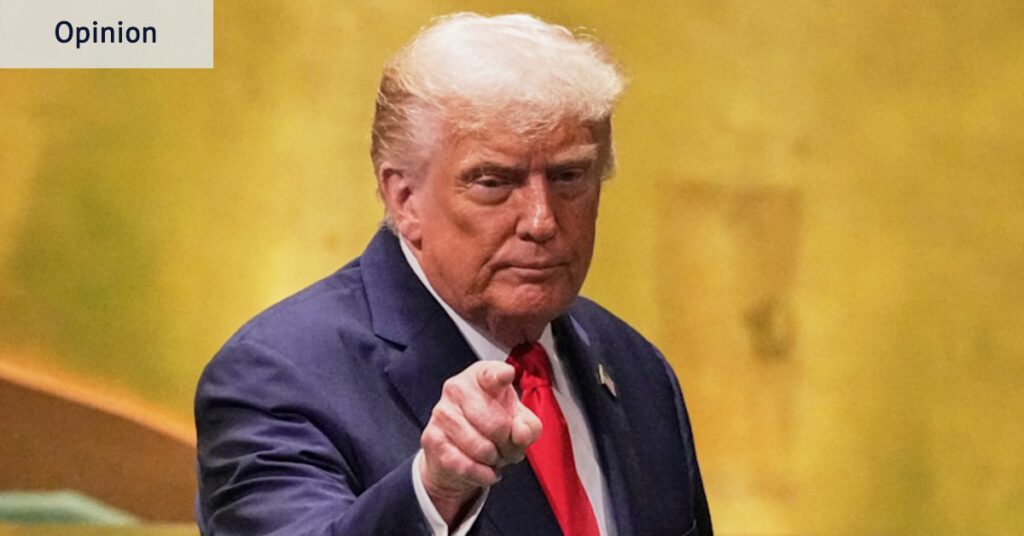
On the first full day of his presidency, Donald Trump withdrew the United States from the Trans-Pacific Partnership (TPP), a 12-nation trade deal. This move, though not unexpected, marked a significant shift in U.S. trade policy, reflecting a broader skepticism towards multilateral agreements. Fast forward to today, and the international community is once again scrutinizing Trump’s approach to global governance with his latest initiative: the “Board of Peace” for overseeing Gaza.
This initiative, ostensibly a multilateral effort to address the devastation in Gaza, has raised eyebrows for its underlying motives. Prime Minister Anthony Albanese of Australia, among other world leaders, has been invited to join this board. However, beneath its seemingly inclusive structure lies a core group dominated by U.S. interests, featuring figures like U.S. Secretary of State Marco Rubio and Trump’s son-in-law Jared Kushner.
Unpacking the “Board of Peace”
At first glance, the “Board of Peace” appears to be a collaborative effort, with a diverse lineup of international leaders. Yet, the true power seems to reside with a select few, including American and Israeli business interests. This setup has led critics to describe it as a “Potemkin village,” designed to mask American control with an international facade.
The board’s composition includes a “founding executive board” and a “Gaza executive board,” the latter of which involves Turkish and Qatari officials alongside Israeli businessman Yakir Gabay. The National Committee for the Administration of Gaza, headed by former Palestinian official Ali Shaath, is tasked with implementing the board’s decisions.
“We are looking at a series of shell companies, a Potemkin village designed to dress up American control in internationalist clothes.” – Maher Mughrabi
The Historical Context of U.S. Foreign Policy
This development is not without precedent. The U.S. has a long history of shaping international orders to its advantage, often sidelining multilateral frameworks. Trump’s actions echo past administrations’ tendencies to prioritize American interests, sometimes at the expense of international norms.
For instance, Trump’s withdrawal from the TPP was part of a broader strategy to renegotiate trade agreements on a bilateral basis, aiming to secure more favorable terms for the U.S. This approach aligns with his belief that multilateral arrangements often disadvantage the United States.
Implications for Global Governance
The “Board of Peace” represents a critical juncture for global governance. It forces leaders like Albanese to choose between supporting the current international rules-based order or acquiescing to a U.S.-dominated system. This decision has significant ramifications, particularly for the Palestinians, whose rights and claims to statehood are at stake.
Albanese’s recognition of Palestinian statehood in September, despite U.S. opposition, underscores the delicate balance he must maintain. The board’s focus on Gaza’s economic potential, as highlighted by Kushner’s real estate ambitions, risks overshadowing the fundamental issues of justice and sovereignty for Palestinians.
“The choice facing Albanese and other world leaders is between this architecture and a mercantilist ‘mafia world order’ in which the US plays landlord and arbiter.” – Maher Mughrabi
Global Reactions and Future Prospects
International reactions to Trump’s initiatives have been mixed. European allies, wary of Russian aggression, have been hesitant to confront the U.S. directly. Meanwhile, countries like Australia are navigating complex diplomatic waters, balancing strategic alliances with national interests.
Political and business leaders worldwide, from Apple’s Tim Cook to FIFA’s Gianni Infantino, have engaged with Trump’s administration, hoping to secure favorable outcomes. This dynamic highlights the broader trend of global actors adapting to the unpredictable nature of U.S. foreign policy under Trump.
As protests and political debates continue, the world watches closely to see how leaders like Albanese will respond. Will they challenge the U.S.-centric model, or will they find ways to work within it? The decisions made in the coming months will have lasting impacts on international relations and the future of global governance.
Maher Mughrabi is an editor and senior writer, providing insightful analysis on international affairs. His work challenges conventional narratives and offers a nuanced perspective on global issues.