



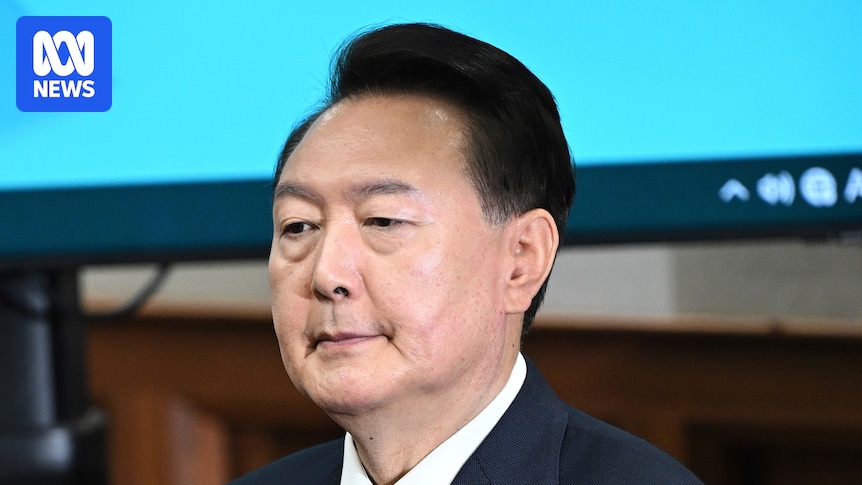
In a landmark ruling, former South Korean President Yoon Suk Yeol has been sentenced to five years in prison following his failed attempt to impose martial law in late 2024. The decision by the Seoul Central District Court marks the first resolution in a series of trials related to the controversial declaration that plunged the nation into political chaos.
Yoon, who served as president until his impeachment, was found guilty of several charges, including obstruction of official duties, abuse of power, falsification of official documents, and destruction of evidence. The court revealed that Yoon had resisted arrest by barricading himself within the presidential compound for weeks following his impeachment.
Political Turmoil and Impeachment
The attempt to impose martial law in December 2024 saw military personnel deployed across South Korea’s streets, sparking widespread protests. Citizens flocked to the National Assembly, demanding the rollback of what many saw as a draconian measure. Yoon defended his actions, claiming he aimed to eliminate “anti-state” forces within the nation, amidst a struggle with an opposition-controlled parliament.
Despite his justifications, the South Korean parliament swiftly rejected the martial law declaration, leading to Yoon’s impeachment and eventual removal from office. The political upheaval highlighted deep divisions within the country, exacerbated by Yoon’s accusations against the opposition of sympathizing with North Korea.
Legal Proceedings and Future Implications
The sentencing is the first of four trials related to Yoon’s martial law declaration. The most serious charge, launching an insurrection, is set to be addressed in February. Prosecutors have indicated they will seek the death penalty for this charge, underscoring the gravity of the situation.
Yoon has consistently denied all allegations, maintaining his innocence throughout the legal proceedings. His defense argues that the charges are politically motivated, a claim that resonates with some of his remaining supporters.
Expert Opinions and Historical Context
Legal experts suggest that the case against Yoon could set a precedent for how South Korea handles future political crises. “This trial is not just about Yoon Suk Yeol,” said Dr. Kim Hyun-jin, a professor of political science at Seoul National University. “It is a test of the strength and resilience of South Korea’s democratic institutions.”
Historically, South Korea has experienced significant political turbulence, with past leaders facing similar charges. The nation’s transition to democracy in the late 20th century was marked by military coups and authoritarian rule, making Yoon’s case a stark reminder of its tumultuous past.
Public Reaction and the Road Ahead
The public’s reaction to Yoon’s sentencing has been mixed. While many South Koreans view the ruling as a victory for democracy, others see it as a continuation of the political polarization that has gripped the country. The case has reignited debates about the balance of power between the presidency and parliament, and the role of the military in civilian affairs.
As the nation awaits the next phase of Yoon’s legal battles, the implications of this case continue to unfold. The outcome could redefine the boundaries of executive power in South Korea, influencing future administrations and their approach to governance.
Meanwhile, the international community watches closely, keen to see how South Korea navigates this complex political landscape. The resolution of Yoon’s trials will likely have lasting effects on the country’s democratic trajectory and its role on the global stage.