




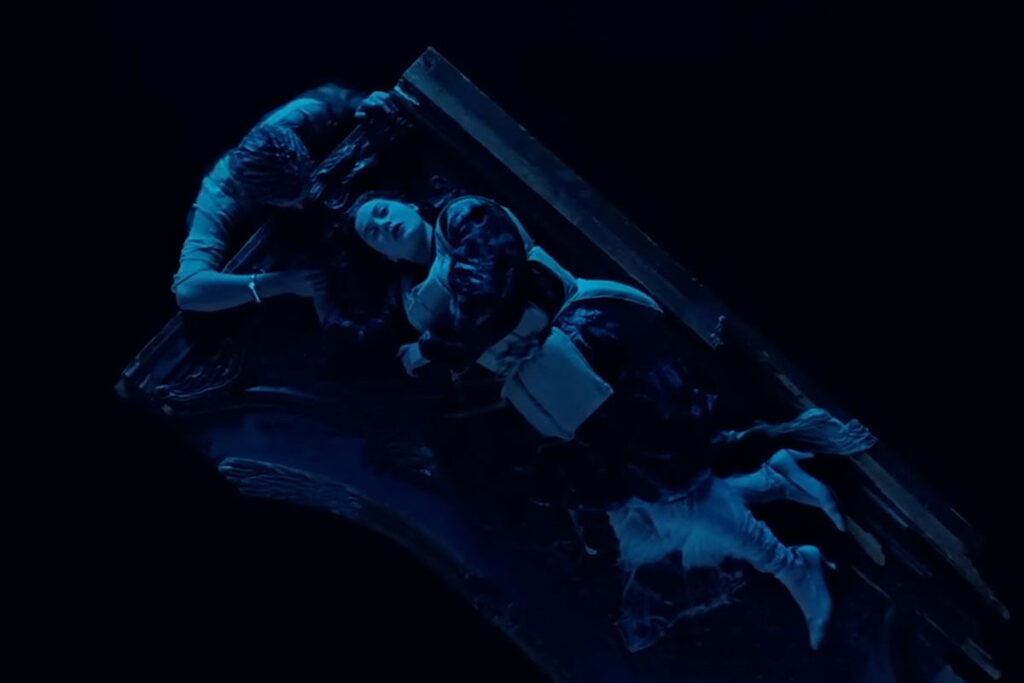
One of the most enduring debates in modern cinema, second perhaps only to the question of whether “Die Hard” is a Christmas movie, revolves around the climactic ending of James Cameron’s 1997 epic “Titanic.” The film famously concludes with Leonardo DiCaprio’s character, Jack, sacrificing himself in the icy Atlantic so that his beloved Rose, played by Kate Winslet, can survive on a makeshift raft fashioned from a floating door.
Since the film’s release, audiences have speculated that the door was large enough to support both characters, potentially allowing for a happier ending. In early 2023, National Geographic aired a documentary special featuring Cameron himself, which included a scientific study aimed at resolving this cinematic controversy once and for all.
Scientific Experiment Puts Debate to Rest
To address the persistent speculation, Cameron enlisted the help of two stunt performers with similar body dimensions to DiCaprio and Winslet at the time of filming. The experiment, conducted in a controlled pool environment, tested various scenarios to determine if both Jack and Rose could have survived on the door.
The results were conclusive: survival for both characters was essentially impossible under the conditions depicted in the film. Cameron noted that only one scenario offered a slim chance of survival, hinging on a series of highly improbable factors.
“The answer is, if Jack somehow was an expert in hypothermia and somehow knew what science now knows back in 1912, it is theoretically possible, with a lot of luck, that he might have survived. Therefore, the answer is no, he could not have. There’s no way. The conditions were not met. He couldn’t have known those things.” – James Cameron
Cameron Draws the Line
Three years after the experiment and amidst the promotion of his latest project, “Avatar: Fire and Ash,” Cameron has declared he will no longer entertain questions about the “Titanic” ending. Speaking candidly on THR’s Awards Chatter podcast, he expressed his frustration over the ongoing debate.
“Don’t ask me about the f—ing raft, people! Look, we even went to the lengths of doing an experiment to see if Jack could have in any way survived, or if they could have both survived, and people didn’t even hear the answer when I told them the answer.” – James Cameron
Legacy of a Cinematic Giant
“Titanic” remains one of the most successful films in history, nearly three decades after its release. It grossed a staggering $2.3 billion worldwide, holding the record for the highest-grossing film until it was surpassed by Cameron’s own “Avatar” in 2009. The film’s enduring popularity is a testament to its emotional impact and the timeless nature of its storytelling.
While the door debate may finally be settled, the legacy of “Titanic” continues to captivate audiences around the world. As Cameron moves forward with new projects, the film’s place in cinematic history remains secure, a testament to its director’s vision and the power of storytelling.
Meanwhile, fans of the film can rest assured that the question of Jack and Rose’s survival has been thoroughly examined, allowing the story to stand as it was originally intended.