




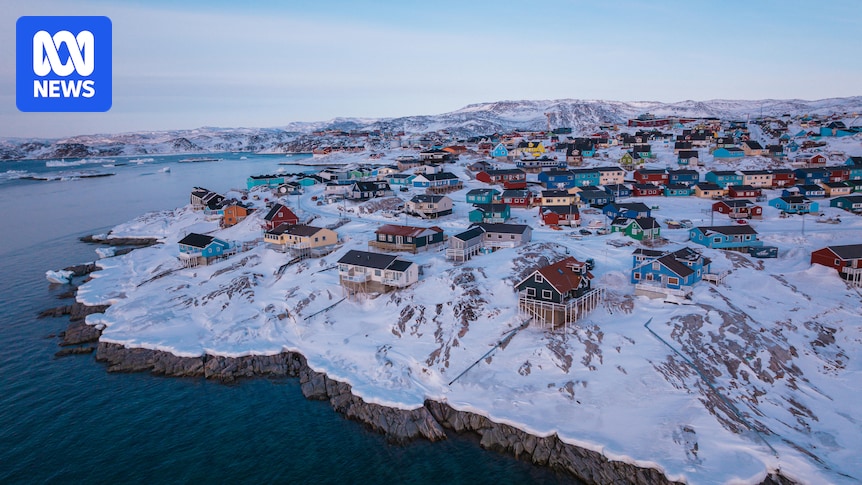
US President Donald Trump has reignited a contentious debate over the strategic importance of Greenland, asserting that acquiring the Danish territory would bolster NATO’s capabilities. Just hours before a pivotal White House meeting, Trump emphasized on social media that the United States needs Greenland for national security purposes, specifically mentioning its role in his proposed “Golden Dome” missile defense system.
Trump’s renewed interest in Greenland has prompted a swift response from Danish and Greenlandic officials. The island’s Prime Minister, Jens-Frederik Nielsen, reaffirmed Greenland’s allegiance to Denmark, stating unequivocally, “We choose NATO. We choose the Kingdom of Denmark. We choose the EU.” Standing alongside Danish Prime Minister Mette Frederiksen in Copenhagen, Nielsen dismissed the possibility of Greenland becoming a US territory.
Geopolitical Tensions and Strategic Interests
The US President’s remarks come amid heightened geopolitical tensions and have raised concerns about the stability of the NATO alliance. Greenland, an autonomous territory under the Kingdom of Denmark, is strategically located in the Arctic, an area of increasing interest due to its untapped natural resources and military significance.
Since 1945, the US military presence in Greenland has dwindled from thousands of soldiers across multiple bases to the solitary Pituffik Space Base, which plays a crucial role in missile warning and space surveillance operations for both the US and NATO. Despite this reduced footprint, the strategic value of Greenland remains high, particularly as global powers vie for influence in the Arctic region.
Diplomatic Reactions and Military Implications
Greenland’s Minister for Business and Mineral Resources, Naaja Nathanielsen, expressed deep concern over the US’s intentions, urging the Trump administration to heed the voices of Greenland’s inhabitants. “For others, this might be a piece of land, but for us, it’s home,” she stated, highlighting the anxiety and fear permeating the island’s population.
Meanwhile, Danish officials have reiterated their commitment to the US-Denmark alliance, underscoring recent cooperation with US military operations in the Atlantic. A Danish government official, speaking anonymously, confirmed Denmark’s support in intercepting an oil tanker suspected of violating US sanctions, showcasing the ongoing collaboration between the two nations.
Historical Context and Expert Perspectives
The notion of acquiring Greenland is not a novel concept within US foreign policy. Historically, the United States has shown interest in the territory, with President Harry Truman reportedly offering to purchase it in 1946. However, the current geopolitical landscape presents unique challenges and opportunities that differ significantly from the post-World War II era.
Experts argue that while Greenland’s acquisition could enhance US strategic capabilities, it risks alienating key allies and destabilizing NATO. “The move represents a significant shift in US Arctic policy, one that could have far-reaching implications for international relations,” noted Dr. Emily Larsen, a geopolitical analyst specializing in Arctic affairs.
Looking Ahead: The Future of US-Greenland Relations
As the situation unfolds, the international community remains watchful of the potential consequences of Trump’s Greenland ambitions. The upcoming meeting between Greenlandic and Danish foreign ministers and US officials in Washington could shape the future trajectory of this geopolitical saga.
While Trump has suggested a willingness to negotiate a deal for Greenland, his rhetoric has also hinted at more forceful measures. The outcome of these discussions will likely influence not only US-Danish relations but also the broader dynamics within NATO and the Arctic region.
The world awaits the next steps in this unfolding narrative, as both diplomatic and strategic considerations continue to play a pivotal role in shaping the future of Greenland and its place on the global stage.