



In the aftermath of wildfires, a crucial micronutrient in soil can transform into a toxic heavy metal, posing a potential threat to groundwater. This alarming discovery is the result of new research conducted by the University of Oregon, which highlights how chromium changes from a harmless form in rocks and soil to a carcinogenic variant when exposed to the extreme heat of wildfires.
The study, published on November 25 in the journal Environmental Science & Technology, details how simulated wildfire experiments on chromium-rich soils demonstrated that temperatures between 750 and 1,100 degrees Fahrenheit produced the highest levels of the harmful contaminant. The location of the soil, whether on a summit or in a valley, significantly influenced the temperature required for this conversion.
Understanding the Chromium Conversion
Chromium exists in two primary forms in the environment: chromium 3, which is essential for human metabolism, and chromium 6, a known carcinogen linked to lung, sinus, and nasal cancers. The conversion from chromium 3 to chromium 6 occurs through oxidation, a process accelerated by extreme heat or over time as rocks weather.
Chelsea Obeidy, the study’s lead author and a soil scientist now at California State Polytechnic University, Humboldt, explained the motivation behind the research. “In the Pacific Northwest, the number of fires and their severity have been increasing,” she said. “We wanted to determine if there was a link between fires and the mobilization of contaminants.”
Experimental Insights and Findings
Obeidy and her team collected soil samples from Eight Dollar Mountain in the Rogue River-Siskiyou National Forest, an area rich in chromium 3 deposits. They sampled various elevations to capture a range of soil weathering, with more weathering found near the summit. The samples were then subjected to controlled burns in the lab, with temperatures ranging from 400 to 1,500 degrees Fahrenheit.
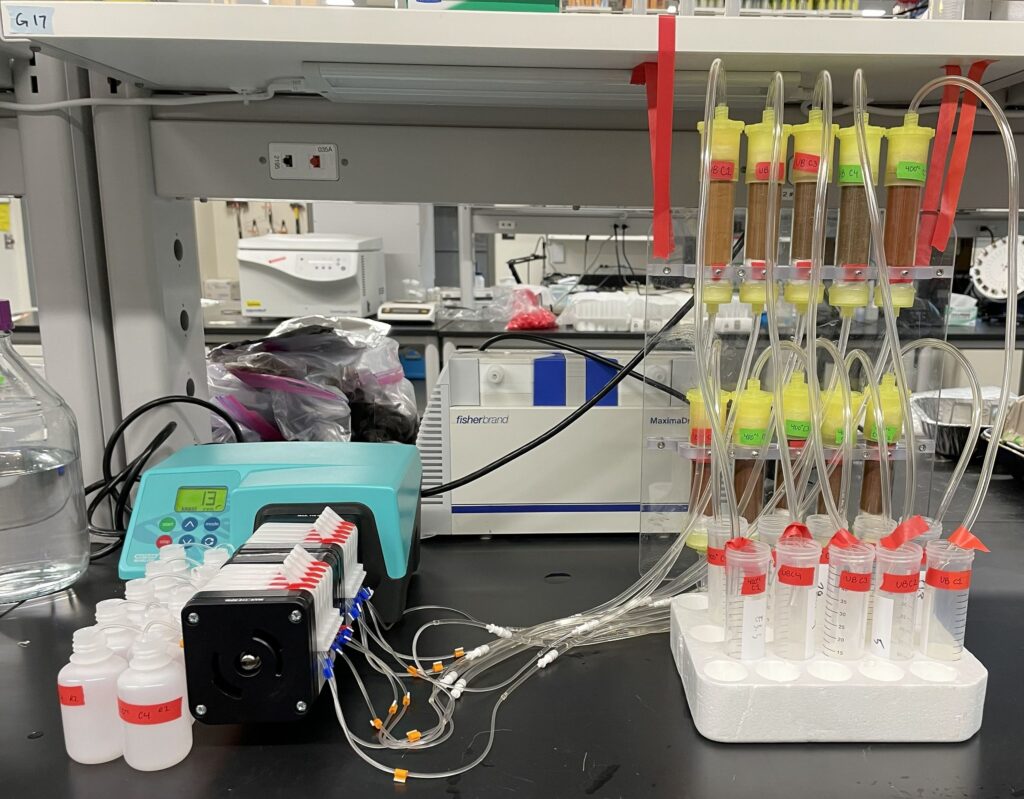
To simulate the effect of rainwater leaching, the team packed plastic columns with the burned soil and passed rainwater through them for a week, representing about half a year’s worth of rain. The water collected was analyzed for chromium 6 to assess which soil locations could impact groundwater quality.
“Soils tend to be very variable,” noted Matthew Polizzotto, an earth scientist and environmental chemist at the University of Oregon. “If we want to assess risks, we have to know the extent to which things might vary from place to place.”
Implications for Environmental Safety
The study found that soils from the summit contained the most chromium 6 when burned at around 750 degrees Fahrenheit. In contrast, soils closer to the base of the slope produced chromium 6 at higher temperatures, around 1,100 degrees Fahrenheit. These findings indicate that wildfires, which can vary in intensity, could indeed lead to significant chromium 6 production under certain conditions.
Obeidy pointed out that lower-intensity burns, such as prescribed or cultural burns, did not seem to produce much chromium 6, although further investigation is needed. Depending on the slope position of the soil, chromium 6 could contaminate groundwater above EPA standards for periods ranging from six months to nearly two and a half years.
“This could have a lasting impact on a burned landscape,” Obeidy said. “We may need to conduct more sampling after fires in areas with these specific rock types.”
Future Directions and Broader Impacts
Currently, the U.S. Forest Service evaluates post-fire environments for erosion risk and safety issues but does not routinely test for chromium 6. The study suggests a need for broader testing of heavy metals in post-fire environments, as other elements like manganese, lead, and nickel can also contaminate soil and water sources.
Polizzotto emphasized the nascent stage of understanding the full scope of post-fire soil contamination. “We’re really at the infancy of establishing all the things we need to know,” he said, underscoring the importance of continued research in this area.
This development underscores the complex challenges posed by wildfires, not only in terms of immediate destruction but also in their potential to introduce long-term environmental hazards. As climate change continues to increase the frequency and intensity of wildfires, understanding these impacts becomes ever more critical.