



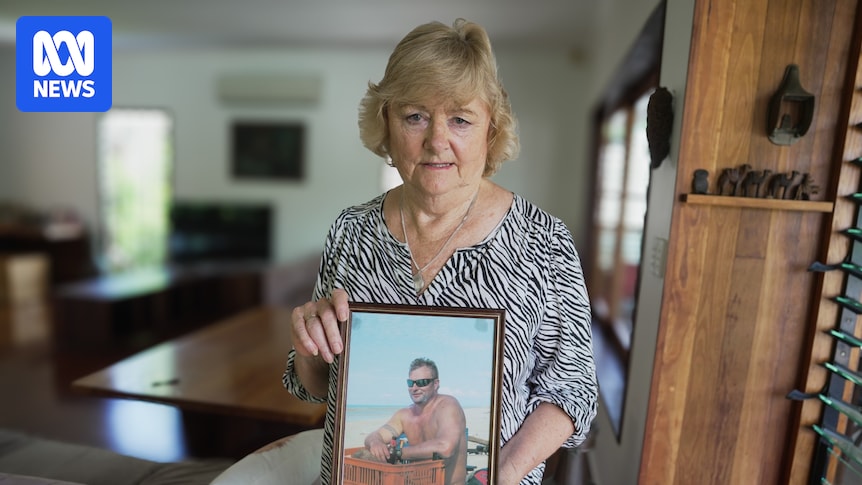
It has been 13 years since Jenny Newport’s son, Glenn Newport, tragically died from extreme heat while working on a construction site in Queensland. Despite the passage of time, Ms. Newport believes that little has changed in terms of workplace heat safety. Her son’s death, which occurred during a three-day heatwave in 2013, highlighted the urgent need for a comprehensive heat policy across all worksites in the state.
On that fateful day, temperatures soared above 40 degrees Celsius as Mr. Newport worked on a coal seam gas pipeline construction project near Roma. Despite taking regular breaks, the 38-year-old succumbed to the oppressive heat, eventually collapsing in his room. He died from hyponatraemia while en route to the hospital.
“If he’d been allowed to stop work, or if there had been that duty of care, he would still be here,” Ms. Newport lamented. She has since advocated for stronger measures to safeguard workers from the increasing threat of extreme heat, questioning why more hasn’t been done to “future-proof our workforce” against climate change.
Current Heat Management Practices
In Queensland, there is no set maximum temperature at which work must cease. Instead, employers are required to manage heat risks in accordance with the Health and Safety Act. Previously, the Best Practice Industry Conditions (BPICs) allowed workers to stop work at 35 degrees Celsius, or 29 degrees with 75 percent humidity. However, these standards were suspended for new major government projects by the newly-elected LNP government in 2024.
Jared Abbott, a CFMEU Queensland executive, argues that a standardized heat policy would not only protect workers but also enhance productivity. “A heat policy would drive companies to have better productivity and certainly drives better behavior on site,” he stated.
Workplace Health and Safety Queensland provides resources, including an online heat stress calculator, to help businesses assess and manage heat stress risks. However, experts warn that more comprehensive measures are necessary as extreme heat events become more frequent.
Expert Recommendations for a Graded Approach
Professor Ollie Jay, director of the Heat and Health Research Centre at the University of Sydney, advocates for a “graded approach” to managing heat stress on worksites. He emphasizes the need to focus on “hot people in hot environments” rather than just hot weather conditions.
Professor Jay’s work on the Australian Open’s heat policy, which includes measures such as applying ice towels and increasing water intake, offers a potential model for worksites. This policy considers multiple factors, including air temperature, humidity, and wind speed, to mitigate heat stress while maintaining productivity.
“It’s such a pressing need. We know it’s getting hotter and these are things that need to be put in place to protect workers,” Professor Jay said.
He points out that standard meteorological measures often underestimate the radiant heat experienced on worksites, suggesting that the Australian Open’s policy could be adapted for broader application in the industrial sector.
Looking Forward: Implementation and Impact
The push for a standardized heat policy comes as Australia faces increasingly severe and frequent heatwaves, a phenomenon closely linked to climate change. Implementing such policies could not only save lives but also improve working conditions and productivity.
As governments and industries grapple with the realities of a warming climate, the call for comprehensive heat management strategies becomes ever more urgent. For families like the Newports, who have already paid the ultimate price, the hope is that future tragedies can be prevented through proactive measures and policies that prioritize worker safety.
Moving forward, the collaboration between government, industry, and research institutions will be crucial in developing and implementing effective heat policies. As the climate continues to change, the protection of workers from extreme heat must become a priority on both state and national levels.