




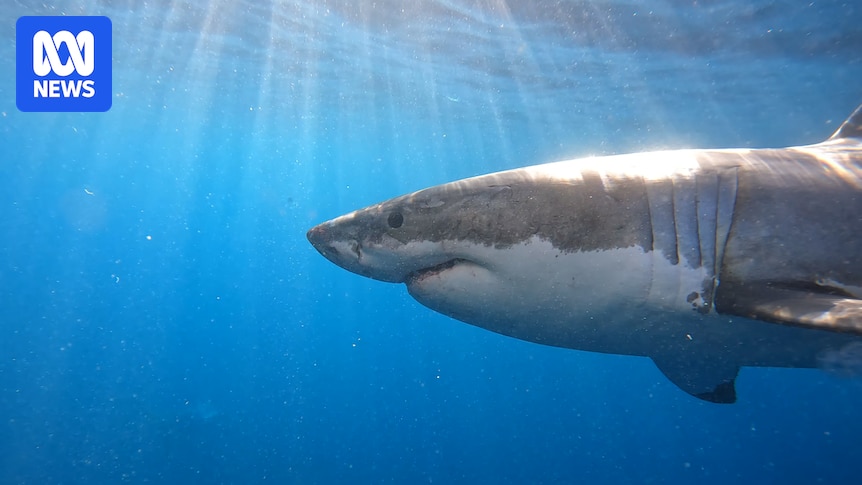
Many sharks in Australia are exhibiting migration patterns akin to the country’s “grey nomads,” moving northward in winter to escape the cold and reversing their course in summer to avoid excessive heat. This migration is particularly crucial for ectothermic, or “cold-blooded,” sharks and rays that depend on external temperatures to regulate their body heat. As climate change accelerates, rapidly warming waters along Australia’s east coast are poised to significantly impact shark populations and their distribution.
Marine ecologist and professor Jessica Meeuwig from the University of Western Australia highlights that as oceans warm, marine megafauna are moving towards the Earth’s poles. “So in Australia’s case, that means south,” she explains. “And so that means that we have to think about the implications for how we manage these animals and our interactions with them.”
Bull Sharks Extending Summer Stays in Sydney
Bull sharks (Carcharhinus leucas), which are common in coastal waters and rivers from Western Australia to New South Wales, generally prefer tropical environments with water temperatures above 22°C. Typically found north of Sydney, some bull sharks venture as far as the Paramatta River during the summer months.
Nicolas Lubitz, an ecologist at James Cook University, tracks these sharks along the east coast from Cape York southward. He notes that while Cape York has resident sharks year-round, others are seasonal visitors. “They sort of do this whole thing where they go to southern NSW, Sydney area, in the summer,” Lubitz explains.
Research from five years ago predicted a three-month increase in seasonally suitable habitat for bull sharks in NSW by 2030. Separate studies by Lubitz show that migrating bull sharks have been adding an extra day each year to their summer stays in Sydney, meaning they stayed 15 days longer in 2024 compared to 2009.
This trend doesn’t necessarily indicate an increase in shark numbers, but rather that existing sharks are lingering longer. Additionally, bull shark nurseries appear to be expanding south, with sightings of pups in the Hawkesbury River increasing over the past decade.
Tiger Sharks Reaching Tasmania
Similar to bull sharks, tiger sharks (Galeocerdo cuvier) are found from Western Australia around the tropics and down to southern NSW. Their distribution along the east coast is influenced by age and gender, with female sharks typically remaining in Queensland waters, which are thermally optimal.
Yuri Niella, a science officer at the IMOS Animal Tracking Facility in Sydney, led a study tracking tiger sharks from 2002 to 2020. The study suggests that the range of tiger sharks could expand to Tasmania’s east coast by 2030. “We last year serviced our line down in Maria Island and for the first time in 20 years of this program we got tiger sharks detected,” Niella reports, indicating a southward expansion in response to climate change.
Future distribution of tiger sharks could also depend on changes in prey distribution, such as sea turtles, which are moving southwards into NSW.
White Sharks and Habitat Compression
Unlike their counterparts, white sharks (Carcharodon carcharias) are regionally endothermic, capable of generating warm blood in certain muscles. They inhabit cooler southern waters from Western Australia to Tasmania and up to southern Queensland. Juvenile and sub-adult white sharks have been tracked traveling thousands of kilometers annually, typically staying within 20 kilometers of the coastline in waters between 16 to 24°C.
Marine ecologist Adrienne Gooden from Southern Cross University warns that warming oceans could lead to a loss of wintering habitat for these sharks. “So it is likely that we will see a compression of habitat where they can’t move as far north, but they also are not getting increases in available habitat in that southern region,” she notes.
The Twofold Shelf region could become increasingly important for young sharks, potentially leading to shifts in shark abundances and distributions along the NSW coast.
Challenges for Cold Water Species
While many large species like scalloped hammerheads, zebra sharks, and manta rays are moving south, cold water species along Australia’s south coast face challenges. They cannot simply migrate further south to Antarctica. Louisa Graf, a marine scientist at Deakin University, examines the potential impacts of climate change on smaller shark and ray species in Victoria’s temperate waters.
Graf’s recent study suggests a decline in suitable habitat for Victorian shark and ray species by 2090 under moderate warming scenarios. This could result in a decrease in fiddle ray populations, although some species like gummy sharks might experience a boost. “Our research did indicate that marine protected areas may serve as potential refuge sites in the future,” Graf concludes.
The ongoing shifts in shark migration and distribution underscore the broader ecological impacts of climate change, necessitating adaptive management strategies to protect these vital marine species and their habitats.