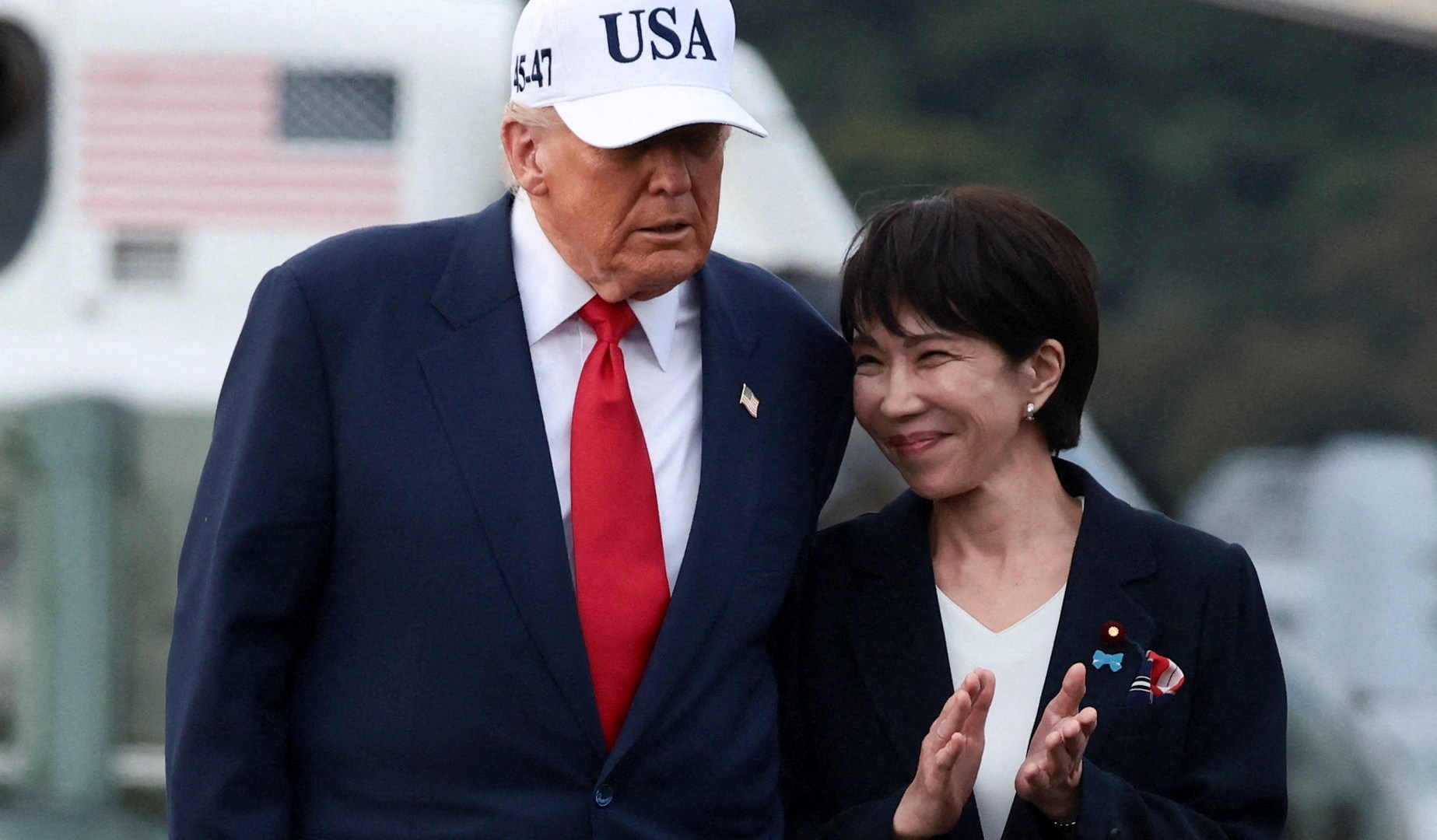




“A Spirit of Dialogue” – the theme for this year’s World Economic Forum (WEF) in Davos – appears ambitious, particularly given the presence of star guest Donald Trump, who has spent the past year challenging the global order. The president arrives in the Swiss Alps with the largest U.S. delegation ever seen at the WEF, including Secretary of State Marco Rubio, Treasury Secretary Scott Bessent, Commerce Secretary Howard Lutnick, and Special Envoy Steve Witkoff.
Last year, just days after his second inauguration, Trump appeared via video at Davos, delivering a speech that threatened across-the-board tariffs, urged NATO countries to increase defense spending, and called for immediate interest rate cuts by the Federal Reserve. This set the tone for a tumultuous year, with the already fraying rules-based global order further jeopardized by Russia’s invasion of Ukraine and the rising influence of Beijing’s autocratic regime.
Geopolitical Turmoil and Economic Confrontation
This year’s meeting occurs amid extraordinary geopolitical upheaval. War continues in Ukraine, with President Volodymyr Zelenskyy attending Davos to rally support. Just days before the forum, Trump suggested Ukraine was less eager for peace than Russia. The WEF surveyed over 1,300 politicians, business leaders, and academics, identifying “geoeconomic confrontation” as the top risk for the next two years, followed by the threat of outright war between nations.
Recent weeks have seen Trump deploy troops to seize Venezuelan President Nicolás Maduro, escalate rhetoric on annexing Greenland, and threaten Iran over protest repression. Despite the apparent decline of multilateralism, a counter-movement is emerging. Central bankers recently intervened in the debate over Federal Reserve Chair Jerome Powell’s independence, publishing an unprecedented joint letter.
International Responses and Multilateral Efforts
While Trump arrives with a large entourage, other leaders are set to advocate for free trade, transatlantic cooperation, and Ukraine’s defense against Russian aggression. Notable attendees include NATO Chief Mark Rutte, French President Emmanuel Macron, and European Commission President Ursula von der Leyen. UN Secretary-General António Guterres, reflecting on his 2026 priorities, warned against leaders undermining international law, setting dangerous precedents.
“The erosion of international law is not happening in the shadows,” Guterres stated, highlighting the impact of U.S. actions on the postwar international order.
Global military spending has surged to $2.7 trillion, marking a 9.4% annual increase, the steepest since the Cold War’s end. Countries are ramping up defense budgets in response to perceived threats from Russia, China, and the U.S. However, senior diplomats believe American military actions could incite resistance globally, as China and other developing nations gain economic influence, shifting the long-term balance away from the U.S.
WEF’s Role and Challenges
Despite Trump’s failed attempts to enforce a pro-Russian peace in Ukraine, and his decision to halt an attack on Iran due to regional concerns, multinational cooperation persists. The UN plans to launch an independent scientific panel on artificial intelligence this year, aiming to moderate commercially driven AI models, prominently displayed along Davos’s Promenade.
More than 50 years after its inception, the WEF remains a magnet for the global elite, drawing over 60 heads of state, 55 finance ministers, and more than 800 corporate leaders. Companies pay 27,000 Swiss francs per delegate, plus annual membership fees, with some funds used to subsidize civil society participants. Attendees engage in public debates, private meetings, and late-night social events, with corporate sponsors hosting many resort venues.
Corporate giants attending include Nvidia’s Jensen Huang, Microsoft’s Satya Nadella, and Anthropic’s Dario Amodei, key figures in the AI boom enriching U.S. billionaires. Greenpeace-commissioned analysis revealed a tripling of private jet flights associated with Davos from 2023 to 2025, underscoring the event’s climate impact.
Leadership and Legacy
WEF President Børge Brende expressed hope for dialogue with Trump’s delegation, despite acknowledging the complex geopolitical backdrop. Winnie Byanyima, UNAids Executive Director and former Davos co-chair, criticized Trump’s presence as contradictory to WEF’s mission of a rules-based world.
“A world where the WEF would contribute is a rules-based world, where business works with governments,” Byanyima stated, emphasizing the need for predictability and cooperation.
This year marks a new era for WEF, absent its founder Klaus Schwab. The 87-year-old, who hosted the first Davos summit in 1971, stepped down amid allegations of unauthorized spending. Cleared of “material wrongdoing” by an investigation, Schwab is releasing a new book, “Restoring Truth and Trust,” coinciding with the forum.
Critics like Danny Sriskandarajah, former Young Global Leader, argue WEF has lost its relevance, becoming unaccountable and lacking legitimacy. However, Jamie Drummond, co-founder of One charity, remains hopeful, attending Davos to influence global leaders despite its perceived decline.
As the world navigates unprecedented geopolitical challenges, the WEF’s ability to foster dialogue and cooperation remains critical. Whether Davos can adapt and remain relevant in a rapidly changing world order is a question that will be closely watched by attendees and observers alike.