

Generations of Australians have relied on hazard reduction burns—targeted fires set to clear undergrowth, or “fuel loads”—as a key strategy to mitigate bushfire risks. However, a growing contingent of scientists is questioning the efficacy of this practice, arguing that climate change has rendered it less effective and potentially hazardous. These concerns are gaining traction as bushfires continue to devastate regions across Victoria, scorching over 404,000 hectares in recent weeks.
Before the fires erupted into uncontrollable firestorms, a coalition of farmers and firefighters sounded the alarm over what they described as a “critical lack of firefighting capability” in the state. Led by United Firefighters Union secretary Peter Marshall, CFA Volunteers Group president John Houston, and Across Victoria Alliance’s Andrew Weidemann, the group issued a stark warning to Premier Jacinta Allan, threatening legal action should any firefighter perish in the impending blazes.
Rising Concerns Over Firefighting Resources
In a letter to the premier, these groups expressed grave concerns about the availability of resources and equipment to combat the fires. “Premier, collectively we place you on notice that we do not have the resources or equipment to confront such a scenario,” they wrote. The letter highlighted the challenges faced by both career and volunteer firefighters who are being asked to risk their lives under increasingly dangerous conditions.
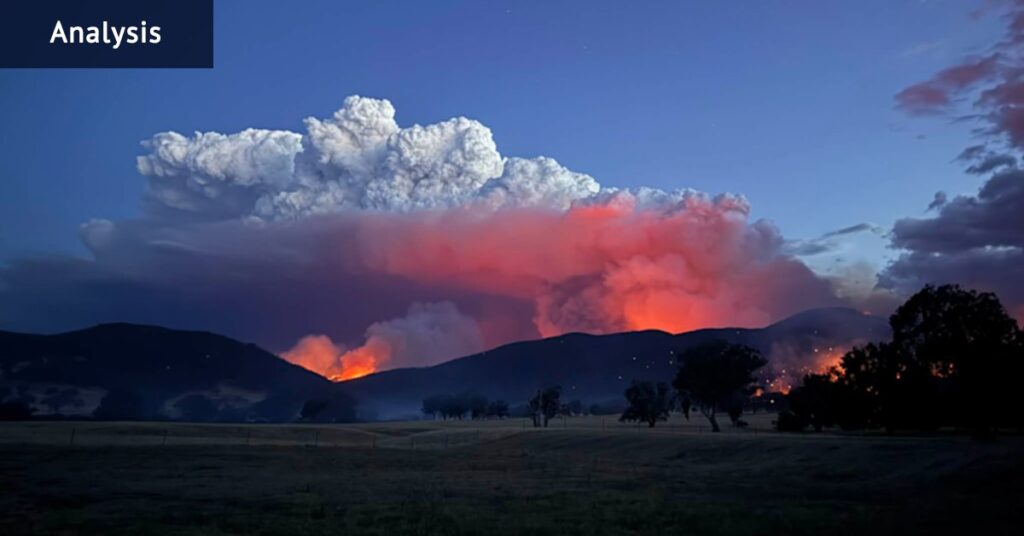
Their fears were realized when a fire near Corryong intensified to the point of creating its own weather system—a pyrocumulonimbus cloud capable of generating lightning and thunder. Such phenomena, first noted in 1998, are becoming more common as climate change exacerbates the conditions that lead to their formation.
Historical Context and Modern Challenges
Prescribed burns have been a cornerstone of Australian firefighting strategies since the 1950s. However, the practice of controlled burning dates back much further, as First Nations groups have employed cultural burns for tens of thousands of years. The modern debate centers around how these burns are conducted in today’s rapidly changing climate.
Associate Professor Grant Wardell-Johnson, a forest ecology expert, argues that the philosophies underpinning fuel reduction are outdated and urgently need revision. “The policy and management around fire stems from the 1950s when prescribed burning was being developed,” he explained. “And that was all fine, but we’ve had 2 degrees of global warming since then.”
“Now, with an extra 2 degrees, the window of opportunity is narrowed incredibly. And not only has the window narrowed for when you could conduct the burn safely, but also the time between mild or moderate conditions.” — Associate Professor Grant Wardell-Johnson
Scientific Debate and Cultural Perspectives
Recent writings by research associate Philip Zylstra and Distinguished Professor David Lindenmayer highlight the precision of First Nations’ burning practices, which involved small, targeted burns while leaving vast areas unburnt. In contrast, European settlers historically engaged in widespread burning to promote pasture for livestock, a practice recommended by the royal commission following the 1939 Black Friday bushfires.
Wardell-Johnson, Zylstra, and Lindenmayer argue that burning forests can increase their flammability by encouraging new undergrowth and thinning the forest’s mid-story, which allows fires to spread more quickly. They have published multiple papers suggesting that this increased flammability can persist for decades.
“There is a perception that forests are dangerous unless we interfere with them, unless we take control somehow; whether it’s by burning them or logging them, or grazing them … and that is a cultural thing where we’re scared of the idea of something that’s genuinely wild.” — Philip Zylstra
Looking Forward: Balancing Tradition and Innovation
As of Wednesday, over half of the 404,000 hectares affected by the fires are public lands, including national parks and state forests. The Department of Energy, Environment and Climate Action reports that Forest Fire Management Victoria conducted planned burns across more than 109,000 hectares of public land in 2024-25. However, the department acknowledged that dry conditions delayed some planned burns, particularly in western Victoria, which could have otherwise sparked larger fires.
Forestry Australia, however, disputes the notion that forests should be left to age naturally to increase moisture levels and create higher canopies. Dr. Tony Bartlett, writing for the organization, emphasized that excluding fire from most Australian forests for extended periods is unrealistic given the increasing frequency and intensity of wildfires.
“The notion that fire can be excluded from most Australian forests for more than 40 years is fanciful, given the increased frequency and extent of wildfires over the past 20 years under changing climatic conditions.” — Dr. Tony Bartlett
The debate over hazard reduction burns underscores a broader conversation about how best to adapt traditional practices to a rapidly changing climate. As communities brace for more intense fire seasons, the call for innovative strategies and improved firefighting resources grows ever more urgent.