

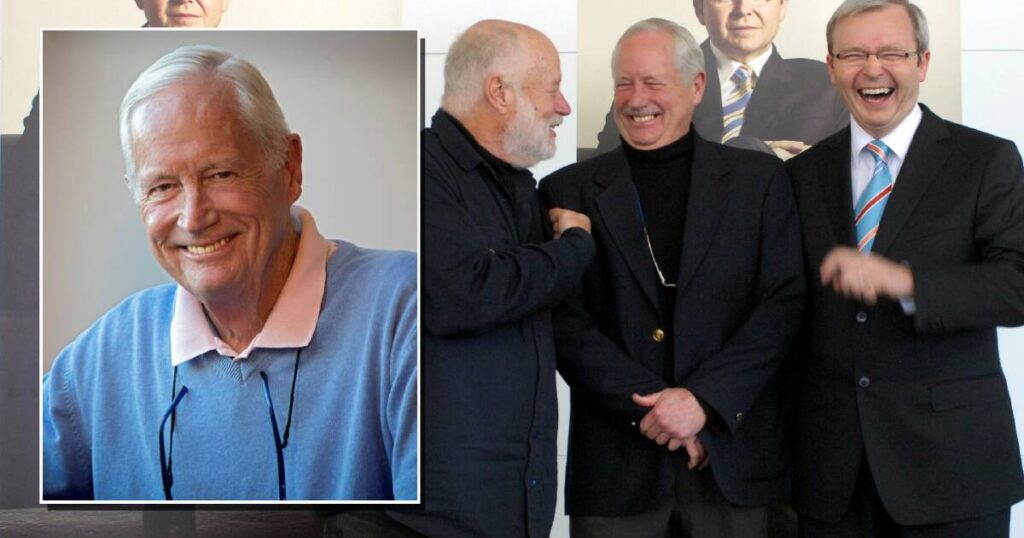
There’s sunlight streaming through the windows of Robert Macklin’s bedroom. He lies against the pillows, appearing content amidst the books, family, and the sounds of conversation and laughter emanating from the kitchen. It’s a poignant scene, as just 18 hours remain before Macklin’s scheduled death, a decision he faces without regret.
“I am so relieved. So relieved,” he says, reflecting on his choice to end his life on his own terms. It’s mid-afternoon on Thursday, January 15, and by this time tomorrow, Macklin will have departed this world, escaping the debilitating grip of chronic obstructive pulmonary disease (COPD), a condition he’s battled for eight years.
The 84-year-old journalist and writer, diagnosed in 2017 with COPD—a consequence of three decades of smoking—has seen his health deteriorate rapidly over the past year. Despite the grim prognosis, Macklin remains at peace, surrounded by the tangible reminders of a life well-lived, including the framed covers of his 30-plus published books adorning his study walls.
The Journey to Acceptance
Macklin’s decision to opt for voluntary assisted dying (VAD) comes after a life filled with accomplishments. His career as a journalist and author includes notable works such as a biography of Kevin Rudd and a novel adapted into a film starring James Spader. “I’ve done all of the things that I wanted to do,” he states, expressing no fear at the thought of leaving this world.
Despite his diagnosis, Macklin had not engaged deeply with the debates surrounding VAD until it became a personal reality. The legal processes established in Canberra since November have provided him with an option that he finds both liberating and dignified.
“The process of VAD is very considerable—you really have to be sure this is what you want,” he says, praising the compassionate professionals guiding him through the process.
Family Support and Reflections
Son Ben Macklin describes the rigorous checks and balances involved in accessing VAD, emphasizing the autonomy his father retains throughout. “At every step of the way, Dad has the opportunity to say, ‘I’m actually not ready. Let’s stop now and reassess later,'” Ben explains.
Wendy, Macklin’s wife of 60 years, acknowledges the peace that comes with choosing the timing of his departure. “It’s so beautifully organized,” she remarks, noting the absence of pressure from the VAD process. The atmosphere in their home remains one of calm and acceptance, even as they prepare for the inevitable.
Reflecting on past conversations about seeking illegal means for a dignified death, Wendy appreciates the legality and support of VAD in Canberra. “The prospect is so horrible, it makes the decision easy, really,” she says, recalling the prolonged suffering of loved ones in their final days.
The Broader Implications
Macklin’s story highlights the evolving landscape of end-of-life choices in Australia, where VAD laws continue to be a topic of intense debate. His experience underscores the importance of autonomy and dignity in the face of terminal illness, offering a personal perspective on a complex issue.
“It’s one step up in our evolution to have this capability,” Macklin asserts, commending the careful handling of VAD in Canberra.
As the Macklin family prepares for their final moments together, they find solace in shared memories and traditions, such as playing bridge—a game Robert has recently been unable to join. Wendy reflects on the surreal nature of their situation, finding moments of laughter amidst the gravity of their circumstances.
In the morning, they will gather to say their goodbyes, comforted by the knowledge that Robert Macklin leaves this world on his own terms, having lived an extraordinary life.