




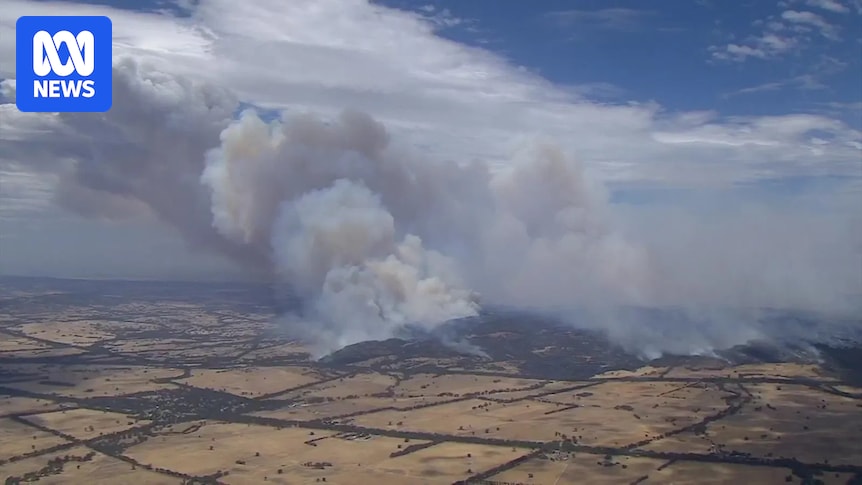
Residents in the northern regions of Victoria have been advised to minimize outdoor activities as bushfire smoke continues to impact air quality. The state’s Environment Protection Authority (EPA) issued a warning on Sunday, highlighting the poor air quality across Victoria and New South Wales due to a weather system pushing smoke northwards.
Victorian Premier Jacinta Allan confirmed a statewide air quality notice, urging those with respiratory conditions or vulnerabilities to remain indoors. “The air quality notice is subject to change based on wind conditions,” she stated. Meanwhile, parts of New South Wales, including the Riverina and the ACT, are experiencing smoke that could linger for several days.
Smoke Drifts Across State Borders
Reports from Sydney on Sunday morning indicated smoke presence, attributed to the Victorian bushfires and several fires in southern New South Wales. Emergency services have received numerous Triple Zero (000) calls concerning smoke and deteriorating air quality in Greater Sydney, with similar reports from the Central Coast and Newcastle.
The New South Wales Rural Fire Service (RFS) identified the smoke sources as the Brassknocker Fire on the state’s south coast and bushfires in Victoria. A southerly change is currently dispersing the smoke, but it remains a concern for residents.
Weather Patterns and Air Quality
Miriam Bradbury, a senior meteorologist at the Bureau of Meteorology, noted that the NSW Riverina is experiencing particularly smoky conditions. A NSW government website rated the region’s air quality as “very poor,” advising residents to avoid outdoor activities if they experience symptoms like coughing or shortness of breath.
Bradbury explained that a weather system over the Great Australian Bight is influencing current conditions. “Winds are expected to ease over the next few days as the high-pressure system moves over southeastern Australia,” she said. “This should help dissipate the smoke, though winds could strengthen again by Wednesday, potentially exacerbating the situation.”
Health Implications and Precautions
Jen Martin, chief environmental scientist at Victoria’s EPA, encouraged residents to monitor air quality via the EPA website. “Areas like Bendigo, Castlemaine, and Beechworth are experiencing poor air quality,” she noted.
Health experts are urging the public to take protective measures against smoke exposure. Brian Oliver, a professor of environmental health at the University of Technology, Sydney, described bushfire smoke particles as “little toxic packages” that can penetrate the body, affecting not just the lungs but also causing broader health issues.
“Anyone with pre-existing respiratory or heart conditions should seek medical attention if symptoms worsen,” Professor Oliver advised.
Even those without chronic conditions may experience temporary symptoms such as wheezing or eye irritation, though these typically subside.
Long-term Health Risks
Prolonged exposure to bushfire smoke has been linked to serious health conditions, including chronic obstructive pulmonary disease and increased risks of cardiovascular diseases, dementia, and cancers. Asthma Australia emphasized the heightened risk for asthma sufferers, noting that smoke can exacerbate symptoms like shortness of breath and wheezing.
“Even at low levels, bushfire smoke can significantly impact those with asthma,” stated Kate Miranda, CEO of Asthma Australia. “We urge residents to follow their Asthma Action Plan and seek medical care if necessary.”
Looking Ahead
As the situation develops, residents are advised to stay informed about air quality updates and take necessary precautions. Closing windows and doors, using air purifiers with HEPA filters, and setting air conditioners to recirculate can help mitigate indoor smoke exposure.
The coming days will be critical in determining the extent of air quality deterioration, contingent on both weather patterns and the intensity of ongoing bushfires. Authorities continue to monitor the situation closely, ready to provide further guidance as needed.