




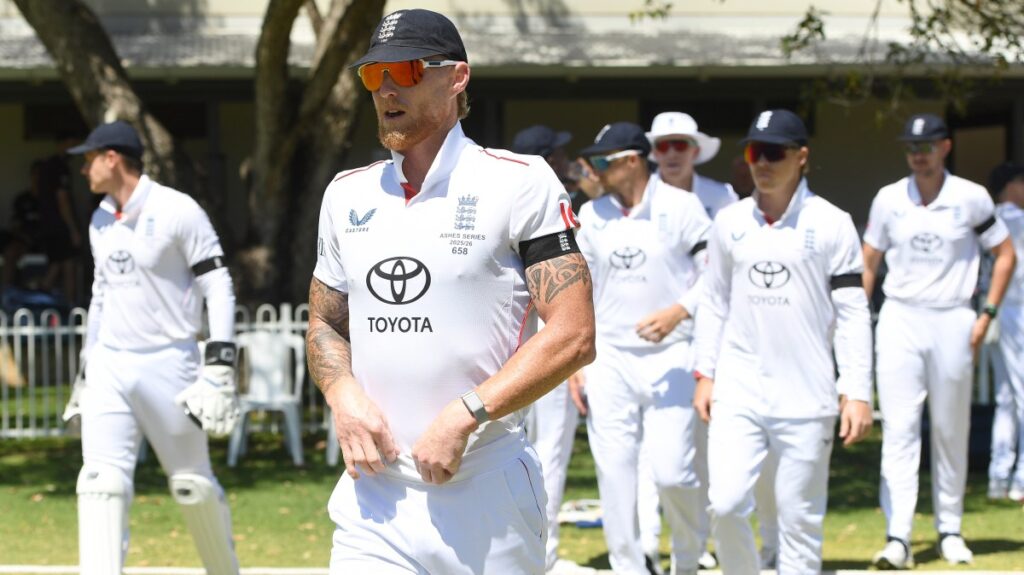
In the lead-up to the much-anticipated Ashes series, England’s cricket team finds itself grappling with a unique set of challenges. Despite captain Ben Stokes’s promise of a “balls to the wall” intra-squad match to simulate competitive conditions, the exercise fell short of replicating the intensity of an Ashes contest. The match, intended to provide vital match practice, highlighted concerns over the readiness of key players like Mark Wood, whose inability to complete his first day of competitive play on tour has raised alarms.
The prospect of Wood, 35, partnering with Jofra Archer, 30, in the series opener in Perth was always ambitious, given Wood’s nine-month hiatus from competitive cricket and a 15-month absence from red-ball matches. The fading hope now hinges on an early scan. Ideally, England would have fielded both players from the outset, but Brisbane, with its longer gap between the first and second Tests, may offer a more realistic target.
Strategic Decisions and Player Readiness
England’s lineup for the practice match offered clues about their strategic thinking. Ollie Pope’s position at No. 3 and the absence of a spinner suggest tactical considerations. Meanwhile, Jacob Bethell’s struggles with short deliveries, as noted by cricket analyst Steve James, underscore the challenges of adapting to high-pressure scenarios. Conversely, Ben McKinney, a promising young opener from Durham, showed potential, drawing comparisons to Zak Crawley for his ability to handle the bounce of higher-level cricket.
Despite these insights, the practice match atmosphere was worlds apart from what awaits England in the Ashes. The serene setting at Midland Guildford CC, with its eucalyptus trees and the Swan River, offered a stark contrast to the cauldron of noise and intensity expected next week. The relaxed environment served as a reminder of the mental fortitude required for the Ashes, where thousands of passionate fans will be eager to see England’s aggressive “Bazball” style tested.
The Mental Challenge of the Ashes
England’s preparation, or lack thereof, has become a hot topic. While more first-class cricket might have better positioned some players, history shows that extensive preparation does not guarantee success. Stokes argues that modern schedules are challenging, and unconventional preparation has benefited his team on previous tours. However, the mental aspect of preparation remains critical. Facing the first ball of an Ashes series, as Rory Burns learned in 2019, requires mental visualization and readiness.
Only five of England’s current squad have experienced Ashes cricket in Australia, where the pressure is unparalleled. The mental resilience required to withstand the initial skirmishes is crucial. As Stokes’s team prepares to face an Australian squad with extensive Sheffield Shield experience, the contrast in preparation approaches is evident. While Australia has embraced match practice, injuries to players like Sean Abbott and concerns over Josh Hazlewood’s hamstring highlight the inherent risks of pushing too hard.
Expert Opinions and Historical Context
Despite the challenges, England received unexpected praise from former Australian captain Ricky Ponting, who described Stokes’s team as “the best they [England] have had probably this century” during a local radio interview. This endorsement, though generous, comes amid a backdrop of unflattering headlines in Australian media. The mental and physical readiness of players like Wood and Archer remains a concern, but the team must focus on the task at hand.
As the Ashes approach, England’s preparation strategy will soon be tested. The debates and predictions of past players and analysts will fade as the series unfolds. For England, the mental challenge may prove to be the most significant hurdle, requiring resilience and adaptability in the face of Australia’s formidable home advantage.