




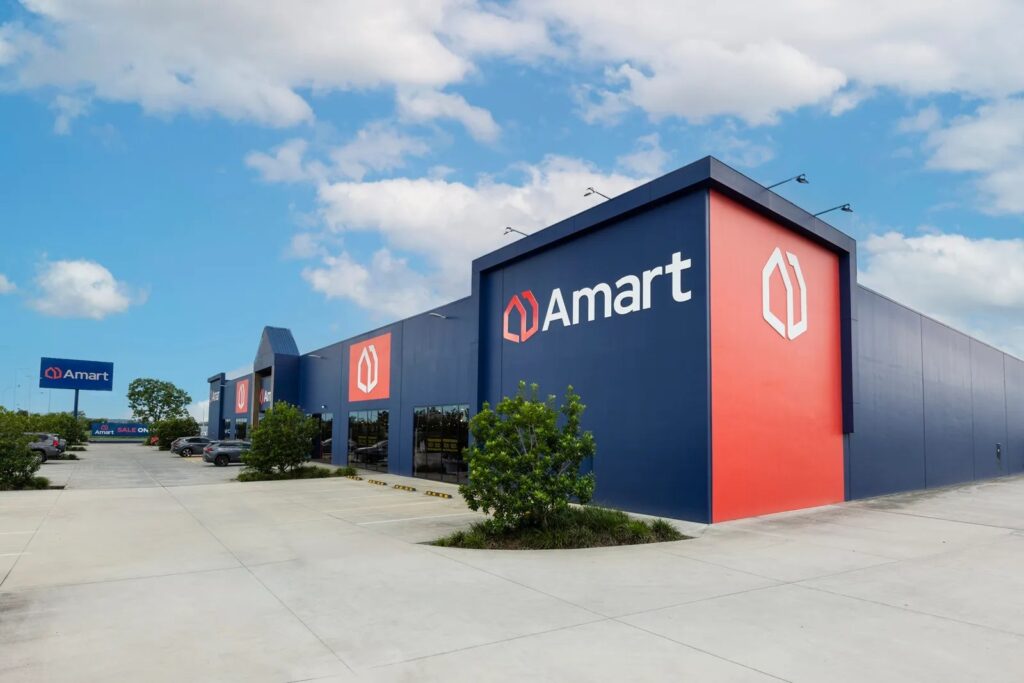
Amart has significantly upgraded its in-store and warehouse mobility technology by deploying Samsung’s Rugged Series devices. This strategic move replaces an outdated and fragmented fleet that was previously hindering operations and impacting productivity.
According to Shawn Kwon, Vice President of Integrated B2B at Samsung Electronics Australia, the previous technological setup at Amart created substantial inefficiencies across its stores and warehouses. “Prior to partnering with Samsung, Amart was constrained by an ageing fleet of devices that created significant inefficiencies across its operations,” Kwon explained to RetailBiz.
Overcoming Operational Challenges
Amart’s store teams had been relying on multiple devices for different tasks, such as order processing and payments, leading to cumbersome workflows. The existing tablets lacked built-in scanning capabilities, exhibited slow response times, and often failed to last through full shifts. In the warehouses, outdated devices proved unreliable for scan-intensive tasks, necessitating several hours of manual inventory validation each week.
With the introduction of the Galaxy Tab Active4 Pro and Galaxy XCover6 Pro, Amart has consolidated scanning, payments, and product look-ups into a single rugged device utilized across both stores and warehouses. “With Samsung’s support, Amart consolidated scanning, payment processing, and product lookup into a single Samsung Rugged Series device — transforming how teams worked across stores and warehouses,” Kwon noted.
Streamlining Workflows and Enhancing Customer Service
The shift to Samsung’s rugged devices has simplified workflows, reduced device failures, and expedited transactions, enabling staff to concentrate more on customer service rather than troubleshooting technology. The deployment was further supported by Scandit and Quest, which integrated scanning and payment functionalities into the devices.
“Together, these partners transformed the devices into multifunctional tools, supporting both operational efficiency and customer service excellence,” Kwon added. Since implementing the new platform, Amart has observed improvements in checkout speed, inventory accuracy, and audit times. Samsung reported that inventory checks, which previously took hours, have been significantly reduced, while staff can now build virtual baskets, check stock availability, and assist customers in real time.
Cost Reduction and Training Efficiency
The consolidation of hardware has also led to reduced device, maintenance, and training costs. “Consolidating multiple devices into one solution dramatically lowered hardware and maintenance costs,” Kwon stated. “Training became faster and simpler because staff only needed to learn one device and interface.”
Samsung highlighted that the rugged devices’ long-lasting, swappable batteries, robust durability, and improved performance are crucial in supporting full-day shifts and minimizing downtime in both retail and warehouse settings.
Looking Ahead: The Future of Retail Technology
This development follows a growing trend in the retail industry where companies are increasingly adopting rugged technology to enhance operational efficiency and customer service. As businesses strive to keep up with the rapid pace of technological advancement, the use of multifunctional devices like Samsung’s Rugged Series is likely to become more prevalent.
The move represents a significant step forward for Amart, positioning the company to better meet the demands of modern retail environments. As the retail landscape continues to evolve, the integration of advanced technology will be vital in maintaining competitive advantage and ensuring customer satisfaction.
For more updates on retail technology advancements, stay tuned to our latest coverage.