


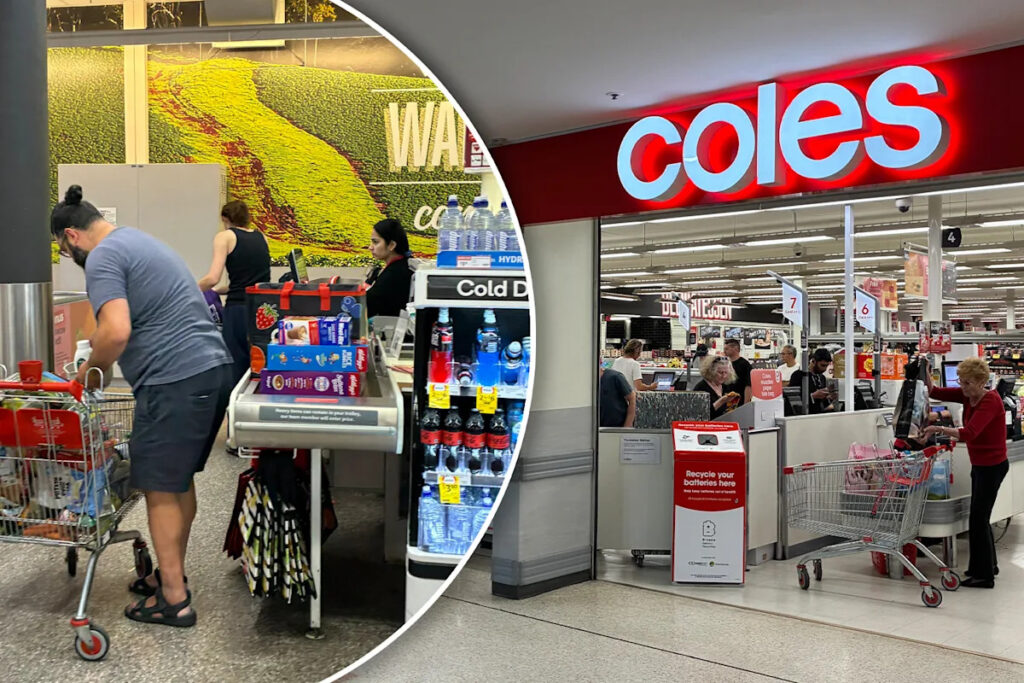
The debate over supermarket self-serve checkouts remains a contentious issue, even two decades after their introduction. These automated checkouts, which first appeared in Australian Woolworths and Coles stores in the early 2000s, have become a staple in the shopping experience. Despite their prevalence, they continue to divide public opinion, with some shoppers praising the technology for its convenience, while others criticize it for various reasons.
According to a spokesperson for Coles, self-serve checkouts are a preferred choice for more than 75% of customers due to their “convenience and efficiency.” This figure is reportedly on the rise, as most Coles stores now offer a combination of manned and self-service checkouts. “Over the past three years, we have seen greater customer satisfaction and uptake in our self-service options,” the spokesperson noted, highlighting the introduction of larger self-service checkouts with conveyor belts.
Customer Discontent with Self-Serve Checkouts
Despite these claims, many shoppers express dissatisfaction with the self-serve checkout system. Some customers feel compelled to use these machines due to the limited availability of staffed checkouts. Darren, a shopper, voiced his frustration, stating, “I personally do not like them, but when you walk into a supermarket and there are no manned checkouts, what choice do you have?” He also raised concerns about the impact on employment, arguing that self-serve checkouts are costing people jobs.
Ian from Queensland echoed these sentiments, suggesting that consumers are being forced into using self-service options. He also pointed out that when issues arise, customers can feel unfairly treated, either as ignorant or as potential shoplifters. Critics have long argued that self-serve checkouts not only threaten jobs but also increase theft and make shoppers feel like criminals.
A Yahoo Australia poll of over 14,000 people revealed that 66% prefer staffed checkouts to interact with a human.
The Growing Trend of Self-Serve Checkouts
Despite the ongoing debate, the trend of self-serve checkouts is expanding. Woolworths has reported that 98% of its supermarkets now feature self-serve checkouts. Meanwhile, Aldi Australia has integrated these checkouts into over 400 of its 600 stores nationwide, although it does not plan to expand this technology further except in new store openings.
In late 2022, Aldi Australia confirmed it would not remove self-serve checkouts from its network, despite some international stores discontinuing the service. This trend reflects a broader shift in retail, where automation is increasingly replacing human interaction.
Expert Insights on Retail Automation
Nitika Garg, a consumer behavior expert and professor of marketing at the University of New South Wales, has previously commented on the irreversible nature of this trend. “There’s no coming back from the rampant checkout trend,” she told Yahoo Finance, warning that shoppers can expect even fewer human interactions in retail settings in the future.
As technology continues to evolve, the retail industry faces a critical juncture. The balance between automation and human service remains a hot topic, with implications for employment, customer satisfaction, and the overall shopping experience.
The future of retail will likely see more innovations aimed at enhancing efficiency and convenience. However, the challenge will be to address the concerns of those who feel left behind by these technological advancements.
For further insights or to share your experiences, contact us at [email protected].